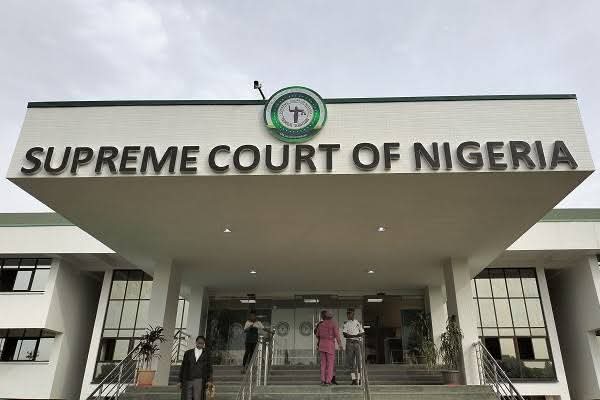
The Supreme Court has delivered what may become one of the most consequential constitutional judgments of the Fourth Republic.
While the court affirmed the president’s power to declare a state of emergency and temporarily suspend elected officials, it left unanswered a foundational question that goes to the heart of constitutionalism: was the emergency rule in Rivers State validly approved by the National Assembly in line with the Constitution?
EDITOR’S PICKS
That silence, critics argue, risks allowing a possible illegality to harden into precedent.
Background
The case arose from President Bola Tinubu’s declaration of a state of emergency in Rivers State and the subsequent suspension of elected state officials. Several states, led by PDP-governed ones, challenged the action at the Supreme Court, invoking its original jurisdiction over disputes between the federation and states.
At the centre of the challenge was Section 305 of the 1999 Constitution (as amended), which empowers the president to proclaim a state of emergency but subjects that proclamation to legislative control. Specifically, Section 305(6)(b) requires that such a declaration must be approved by a two-thirds majority of all members of each chamber of the National Assembly.
In its verdict, the apex court focused on whether the president can, under the Constitution, suspend elected officials during an emergency. By a majority decision, it answered in the affirmative, holding that extraordinary circumstances permit extraordinary measures.
However, the court largely treated the National Assembly’s approval as a settled fact, without interrogating how that approval was obtained.
The Question the Court Left Unanswered
The unresolved issue is straightforward but vital: did the National Assembly actually meet the constitutionally required two-thirds majority when approving the Rivers emergency rule?
The record raises serious doubts. Both chambers approved the proclamation using voice votes, a procedure where lawmakers shout “aye” or “nay” and the presiding officer subjectively declares the outcome. There was no roll-call vote, no electronic tally, and no official record of how individual lawmakers voted.
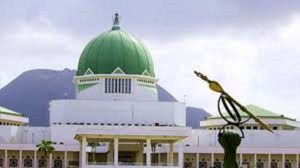
This matters because the Constitution does not require a mere majority of those present and voting. It requires a two-thirds majority of all members of each chamber — at least 73 of 109 senators and 240 of 360 members of the House of Representatives.
In the House, the Speaker relied on attendance records showing 243 members present, but presence is not the same as affirmative votes. Even then, there is no verifiable evidence that 240 members actually voted in favour. In the Senate, proceedings were even more opaque, preceded by a lengthy closed-door meeting and followed by a voice vote with no debate and no recorded opposition.
By endorsing the outcome without examining whether this strict constitutional threshold was met, the Supreme Court effectively sidestepped a key safeguard built into Section 305: legislative accountability through transparent, verifiable voting.
Implications and a Dangerous Constitutional Precedent
The implications of this omission are far-reaching. The judgment strengthens presidential emergency powers while weakening the enforcement of the conditions meant to restrain them. In practical terms, it signals that once the National Assembly announces its approval, even through procedures that fall short of constitutional clarity, the courts may be unwilling to probe further.
This sets a troubling precedent. A future president, less restrained and more opportunistic, could engineer or exaggerate a crisis, declare a state of emergency, and suspend elected officials deemed politically inconvenient. With the backing of a compliant and sycophantic National Assembly unwilling to conduct transparent, recorded votes, such actions could be dressed in the appearance of legality.
Emergency powers are, by design, exceptional. They are tolerated in constitutional democracies only because they are hemmed in by strict procedures and oversight. When those procedures, like the two-thirds approval requirement, are treated as technicalities rather than enforceable conditions, the balance tilts decisively toward executive dominance.
By failing to determine whether the Rivers emergency rule satisfied the Constitution’s explicit voting requirement, the Supreme Court may have allowed a procedural violation to stand uncorrected.
FURTHER READING
In doing so, it has left Nigeria with an unsettling question: if constitutional thresholds can be assumed rather than proven, how secure are the limits on power when the next emergency is declared?
Philip Ibitoye is a Special Correspondent with EKO HOT BLOG. Click here to find daily analysis and critical insight on trending issues in Lagos and other parts of Nigeria.
Click here to watch the video of the week below: