The United States Embassy in Abuja and the Consulate General in Lagos will be closed from Wednesday, December 24 through Friday, December 26, 2025, resuming normal operations on Monday, December 29, 2025, according to an official notice by the U.S. Mission.
The U.S. Embassy in Abuja and Consulate General in Lagos will be closed on Wednesday, December 24 through Friday, December 26, 2025. We will resume normal work operations on Monday, December 29, 2025. pic.twitter.com/Im0I0f6DNw
— U.S. Mission Nigeria (@USinNigeria) December 23, 2025
While the closure is in line with the Christmas and year-end holidays, it comes at a time of growing diplomatic unease between the US government and the federal government of Nigeria.
EDITOR’S PICKS
The brief shutdown coincides with mounting concerns in Nigeria over partial visa restrictions imposed by the US. In recent months, the American government has tightened non-immigrant visa conditions for Nigerians, reducing the validity of several categories, including business and tourist visas, to shorter, single-entry terms.
Last week, EKO HOT BLOG reported that the White House announced that a presidential proclamation had placed Nigeria under partial travel restrictions, citing security concerns and problems with visa overstays. The move meant that entry into the US was not completely closed to Nigerians, but certain categories of travel and visa processing will be restricted or more tightly screened.
The measures have drawn criticism from Nigerian officials and the public, who see them as punitive and inconsistent with the long-standing bilateral relationship between both countries.
The visa issue has added to a series of developments that have strained relations between Africa’s most populous country and its most important Western partner. Central among them is the US government’s decision to redesignate Nigeria as a Country of Particular Concern (CPC) under its International Religious Freedom Act, citing allegations of religious persecution, particularly against Christians. The designation has been strongly rejected by the Nigerian government, which argues that the violence facing the country is largely criminal and insurgent in nature, not state-sponsored or religiously driven.
Tensions have also been heightened by rhetoric from senior US political figures suggesting tougher action against Nigeria.
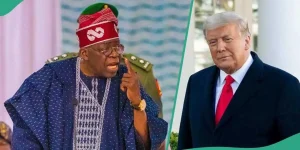
President Donald Trump recently warned of possible unilateral measures, including the use of US military assets, if Nigeria failed to curb violence against civilians. The federal government has described such comments as counter-productive, insisting that security challenges in the country require partnership, not threats.
Despite the sharp exchanges, the relationship has not been entirely adversarial. The US has continued to engage Nigeria on security matters, including intelligence sharing and surveillance operations aimed at tracking extremist groups such as Boko Haram and the Islamic State West Africa Province. US surveillance flights over parts of Nigeria in recent weeks have underscored the American government’s continued security interest in the country, even as diplomatic relations face strain.
At the same time, the US and Nigeria have maintained cooperation in other areas, including health and development. Both governments recently signed a multi-year health cooperation agreement, reflecting continued engagement despite political frictions.
The embassy’s holiday break, though routine, comes at a sensitive moment when visa restrictions, religious freedom concerns, security cooperation and diplomatic rhetoric are intersecting to test the resilience of US–Nigeria relations.
FURTHER READING
As embassy operations resume on December 29, attention will turn to how both governments manage these disputes while preserving a relationship that remains strategically important to both sides.
Click here to watch the video of the week below: