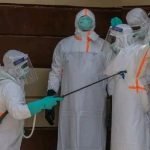
- FG Launches Panels to Review Resident Doctors’ Welfare, Locum Policies and Training Certification
- The Ministerial Committee on Work Hour Regulation and Locum Engagement Policy has been tasked with addressing the risks posed by exhausting work schedules
- Salako assured stakeholders that the committees’ recommendations would receive urgent attention
The Federal Government has inaugurated two ministerial committees to address excessive work hours, controversial locum engagement practices, and disputes over residency training certification, in a move aimed at resolving key demands of the Nigerian Association of Resident Doctors (NARD) and ensuring industrial harmony in the health sector, Eko Hot Blog reports.
Speaking in Abuja, the Minister of State for Health and Social Welfare, Dr Iziaq Salako, said the intervention demonstrates the government’s commitment to health sector reforms, improved welfare for health workers, and safer patient care.
EDITOR’S PICK
- FRS Redeploys Senior Officers Nationwide to Strengthen Operations
- 2026 BECE Registration Begins as Lagos Moves Process Online
- Lagos Lawmakers Justify Demolition of Illegal Structures in Makoko, Oworonsoki
Salako highlighted that prolonged duty hours, inconsistent locum practices, and certification concerns for resident doctors have repeatedly strained relations between the government and health unions, often triggering strikes.
The Ministerial Committee on Work Hour Regulation and Locum Engagement Policy has been tasked with addressing the risks posed by exhausting work schedules and the unregulated use of locum officers in public hospitals.
“Excessive work hours threaten not only the physical and mental well-being of health workers but also patient safety,” Salako said, noting that the World Health Organisation projects a global health workforce gap of 11 million by 2030. He added that Nigeria is particularly vulnerable due to the migration of health professionals to Europe, North America, and other developed regions.
Over the past 21 months, the Federal Government has taken steps to strengthen the health workforce, including introducing a Health Workforce Migration Policy, improving remuneration, expanding training quotas, and accelerating recruitment. In 2024, 14,444 health workers were employed, while 23,059 recruitments were approved in 2025, with more than 70 per cent being clinical staff.

Despite these measures, locum engagements, often used as stopgap solutions, have been inconsistently applied and, in some cases, abused, underscoring the need for a clear national policy framework.
The work-hour committee is mandated to conduct a nationwide audit of hospital work hours and shift patterns, assess their impact on patient outcomes and staff wellbeing, consult stakeholders, and develop a national policy on safe duty hours, rostering, and locum engagement. This will include recommendations on maximum duty hours, mandatory rest periods, and pathways from locum to permanent employment. The panel is expected to submit an interim report within 12 weeks.
Salako assured stakeholders that the committees’ recommendations would receive urgent attention and form part of a “new deal” for health professionals aimed at reducing industrial unrest and strengthening healthcare delivery nationwide.
The Work Hour Regulation and Locum Engagement Committee is chaired by Dr Abisola Adegoke, Director of Hospital Services at the Federal Ministry of Health and Social Welfare, and includes representatives from regulatory agencies, hospital management, health unions, and professional bodies.
The second panel, the Appraisal Committee on Certification and Recategorisation Policy, will review complaints by resident doctors over the non-issuance and recategorisation of membership certificates by the Medical and Dental Council of Nigeria (MDCN) and the National Postgraduate Medical College of Nigeria (NPMCN).
Chaired by Prof. Muhammad Mahmud, Chief Medical Director of the National Hospital Abuja, the committee will appraise existing policies and NARD’s demands, particularly regarding the issuance of membership certificates after Part I examinations. The committee is expected to submit its report within eight weeks.
Both committee chairpersons pledged diligence and fairness. Adegoke said the work-hour panel would put “a human face” to its assignment by drawing from the experiences of overworked resident doctors, while Mahmud assured that the certification review would be guided by principles of justice and equity.
Francisca Okafor, Director of the Regulatory and Professional Schools Division of the Hospital Services Department, commended the minister’s “decisive leadership,” describing the committees as a critical step toward restoring harmony, dignity, and stability in Nigeria’s health sector.
FURTHER READING
- Trump Pushes for Greenland Deal Amid EU Tensions
- Anthony Joshua Crash Driver’s Trial Adjourned to February 25
- Firdaus Prayers Held in Honour of Erelu Aminat Dosunmu
Click here to watch video of the week