- Makoko in Ruins as Forced Evictions Deepen Lagos Housing Crisis
- Concerned civil society groups accused the state government of inhumane treatment
- Government officials have defended the demolitions by citing safety and environmental concerns
At the waterfront in Makoko, the familiar rhythm of paddles slicing through the lagoon has been drowned out by the roar of bulldozers and the cries of displaced families. What the Lagos State Government calls urban renewal feels, to residents, like a direct assault on the poor, Eko Hot Blog reports.
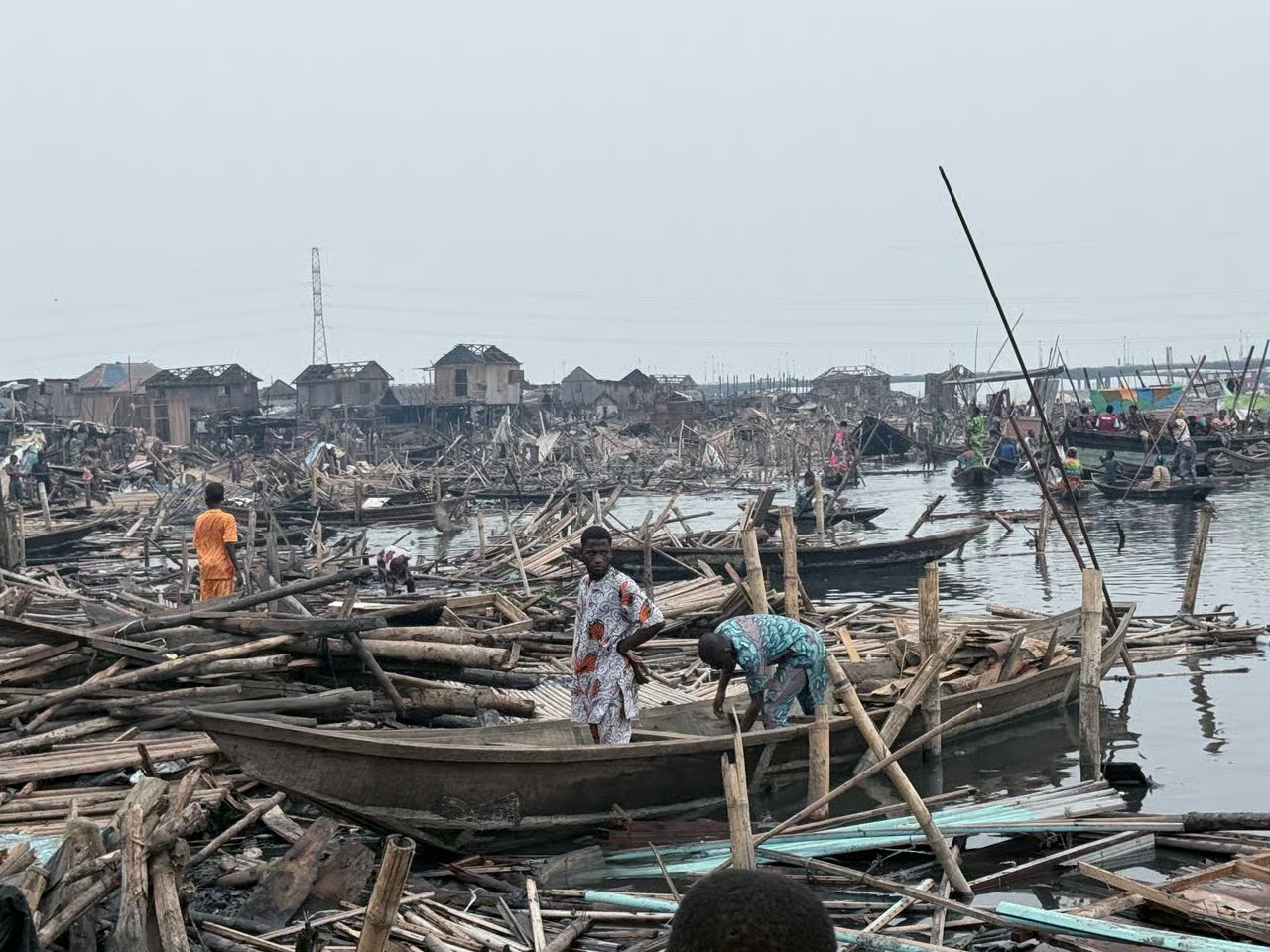
Across communities such as Makoko, Oworonshoki, Ilaje Otumara, Owode Onirin and Baba Ijora, thousands of people who once lived, traded and fished in peace are now sleeping in canoes, churches and open spaces. Many have been stripped of shelter, dignity and any sense of security.
EDITOR’S PICK
- FRS Redeploys Senior Officers Nationwide to Strengthen Operations
- 2026 BECE Registration Begins as Lagos Moves Process Online
- Lagos Lawmakers Justify Demolition of Illegal Structures in Makoko, Oworonsoki
At a press briefing held at the International Press Centre in Ogba, concerned civil society groups accused the state government of inhumane treatment and the forceful displacement of low income residents. The briefing was organised by organisations including the End Bad Governance Movement Lagos State, represented by Hassan Taiwo, Corporate Accountability and Public Participation CAPPA represented by Assistant Executive Director Zikora Ibeh, and the Makoko Waterfront Community led by coordinator Israel Idowu.
Speakers at the briefing alleged that residents were violently removed from their homes and means of livelihood, only for the land to be taken over by powerful and elite interests.
Makoko, home to over 100,000 people, has become the clearest symbol of what activists describe as state created homelessness. Since December 23, 2025, more than 3,000 homes have reportedly been demolished, leaving over 10,000 residents displaced.
Women clutching babies, elderly men who cannot swim, and children whose classrooms once floated on water now wander without shelter. Residents recount how demolition teams arrived with armed security operatives, firing tear gas and setting homes on fire, sometimes while families were still inside. At least 12 people, including two infants, are reported to have died during the operations.
For 38 year old fisherwoman Funke Adeyemi, Makoko was more than a settlement. It was survival.
“My parents lived here. My children were born here. My canoe is my office,” she said, standing beside the burnt remains of her home. “Now I have no house, no school for my children and no place to fish from.”
The same pattern, activists say, has played out across Lagos. In Ilaje Otumara and Baba Ijora, more than 10,000 people were displaced in March 2025 without notice. In Oworonshoki, residents say bulldozers arrived at night and demolished homes while families slept. Some who resisted were beaten or detained. Court orders restraining demolitions were allegedly ignored, fuelling public anger over what many see as contempt for the rule of law.
Government officials have defended the demolitions by citing safety and environmental concerns around waterfront settlements. Critics argue, however, that the state failed for decades to provide sanitation, clean water, healthcare and safe housing, and is now using that neglect as justification for destruction.
Rather than upgrading these communities, they say, the government appears to be clearing valuable waterfront land for private and elite projects, leaving the poor to pay the price for development.
Human rights groups have also raised questions about the whereabouts of a reported 200 million dollar World Bank loan earmarked for slum upgrading, including Makoko. Residents want to know whether the sand filling and new structures emerging on cleared land are meant for them or for investors who never lived on the lagoon.
Across the water, children who once paddled to school now miss classes, while parents struggle daily to find food.
“We are not against development,” a community leader said. “But development should not kill people or erase their lives.”
In cities such as Nairobi and Cape Town, informal settlements are upgraded rather than destroyed. For Makoko’s fisherfolk and displaced families across Lagos, the demands remain simple: justice, compensation and proper resettlement, not demolitions that turn citizens into refugees in their own state.
FURTHER READING
- Trump Pushes for Greenland Deal Amid EU Tensions
- Anthony Joshua Crash Driver’s Trial Adjourned to February 25
- Firdaus Prayers Held in Honour of Erelu Aminat Dosunmu
Click here to watch video of the week