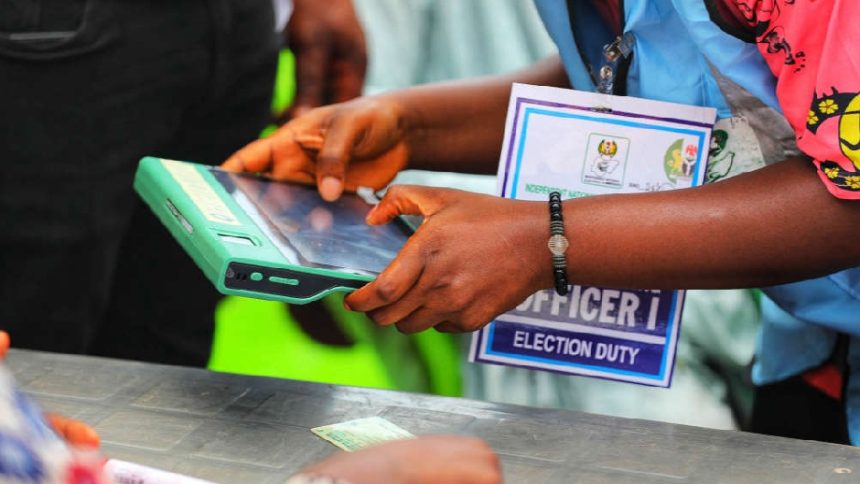
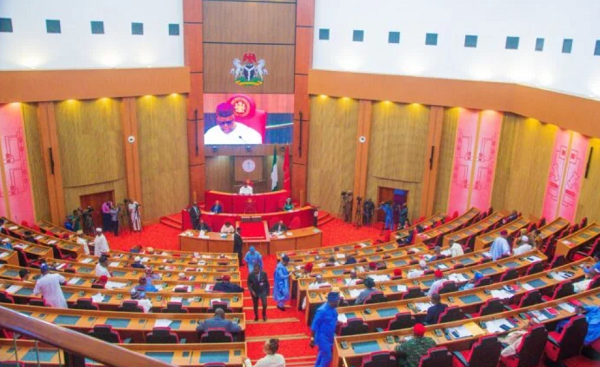
The Senate’s passage of the Electoral Act 2022 (Repeal and Reenactment) Amendment Bill 2026 has left civil society organisations questioning whether any meaningful reform has been achieved.
Despite years of advocacy, the upper legislative chamber on Wednesday rejected the provision that would have made electronic transmission of election results mandatory — the very cornerstone of demands for electoral reform.
EDITOR’S PICKS
The rejected Clause 60, Subsection 3, would have required INEC presiding officers to electronically transmit results from each polling unit to the IREV portal in real time. Instead, the Senate retained the existing provision allowing INEC to transmit results “in a manner as prescribed by the Commission” — the same ambiguous language that sparked controversy after the 2023 elections.
Senate President Godswill Akpabio insisted that “electronic transmission has always been in our act.” However, this explanation rings hollow to advocates who have pushed for mandatory, not discretionary, transmission.
The advocates’ case for reform
For organisations like Yiaga Africa, the Policy and Legal Advocacy Centre (PLAC), and the Nigeria Civil Society Situation Room — a coalition of over 70 civil society organisations — mandatory electronic transmission was non-negotiable. Their advocacy wasn’t arbitrary; it emerged from the painful lessons of past elections.
Samson Itodo, Executive Director of Yiaga Africa, has argued since 2020 that mandatory electronic transmission would enhance transparency and reduce result manipulation at polling units. In July 2025, his organisation urged timely Electoral Act amendments ahead of the 2027 elections, with electronic transmission at the heart of their demands.
By September 2025, Yiaga Africa and the International Press Centre were jointly demanding compulsory electronic transmission, intensifying pressure on legislators.
The Civil Society Situation Room released a “Credibility Threshold for 2027 General Election” document identifying mandatory electronic transmission as critical. In January 2026, weeks before the Senate vote, the coalition condemned delays and called for immediate action upon the Senate’s resumption.
Professor Attahiru Jega, former INEC chairman, stated at a June 2025 Democracy Day event that mandatory electronic transmission would “wipe out” fraud at various collation levels and restore public confidence in elections. His technical expertise lends considerable weight to these demands, that this is practical reform grounded in electoral administration experience, not mere idealism.
Senior Advocate of Nigeria (SAN) Femi Falana has been perhaps the most vocal critic.
He warned in February 2026 that Nigeria is “in trouble” if INEC retains discretion over result transmission, arguing that ambiguity invites manipulation.
The Supreme Court’s 2023 ruling that INEC wasn’t legally required to electronically transmit results exposed precisely this gap.
A PLAC survey showing 91 per cent of Nigerians supporting mandatory electronic transmission underscored the disconnect between public expectation and the Senate’s action.
A deal-breaker for transparency advocates
For these stakeholders, the Senate’s decision may be a deal-breaker.
The Civil Society Situation Room has warned that failure to pass meaningful reforms would “undermine the 2027 elections.”
Their language has grown increasingly urgent, suggesting that without mandatory transmission, other amendments — such as replacing smart card readers with BVAS or adjusting electoral timelines — amount to window dressing.
The frustration is palpable. After years of advocacy letters to all 469 National Assembly members, public hearings, stakeholder meetings, and coalition-building, civil society organisations watched the Senate reject the very provision they considered essential.
Yiaga Africa and the International Press Centre had demanded compulsory electronic transmission as recently as September 2025, only to see their core demand dismissed.
The question now is whether electoral reform can be credible without addressing the single issue that sparked demands for amendment in the first place.
For transparency advocates, the answer appears to be a resounding no. As Professor Jega noted, mandatory electronic transmission isn’t just about technology, it’s about eliminating the discretion that enables manipulation. Without it, advocates argue, the Electoral Act amendment becomes an exercise in futility, offering cosmetic changes whilst preserving the structural weaknesses that undermined electoral credibility in previous elections.
FURTHER READING
The Senate may have passed a bill, but whether it has delivered reform will remain hotly contested.
Philip Ibitoye is a Special Correspondent with EKO HOT BLOG. Click here to find daily analysis and critical insight on trending issues in Lagos and other parts of Nigeria.
Click to watch the video of the week below: