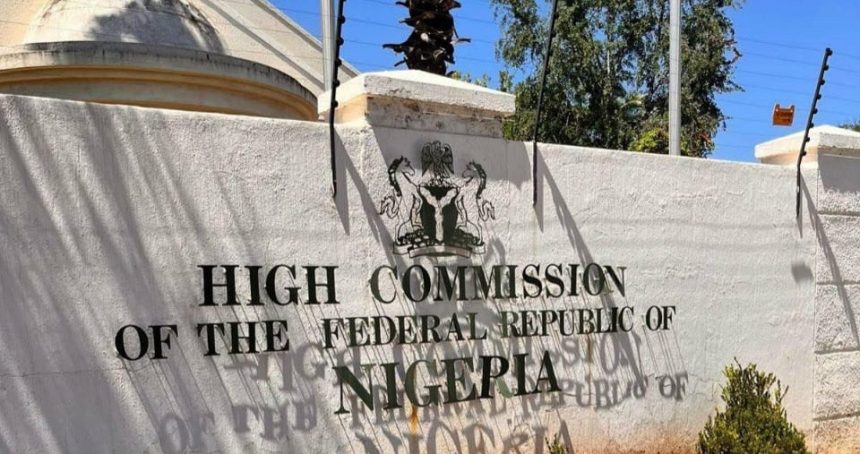
On Monday, the Nigerian High Commission in South Africa, experienced an unusual and embarrassing disruption: its host, the City of Tshwane, disconnected electricity supply to the diplomatic mission over unpaid utility bills.
The action was carried out under the municipality’s ongoing #TshwaneYaTima campaign, which targets consumers with significant outstanding debts.
EDITOR’S PICKS
Nasiphi Moya, the Mayor of Tshwane, announced the disconnection publicly.
#TshwaneYaTima: We’ve disconnected electricity at the High Commission of the Federal Republic of Nigeria. They owe the city for utility services. pic.twitter.com/irsnZxnIZB
— Dr Nasiphi Moya (@nasiphim) February 2, 2026
Hours later, she confirmed that the High Commission had settled its debt and electricity would be restored. While power returned quickly after payment, the incident raised concerns about financial management within Nigeria’s foreign missions.
We thank the High Commission of the Federal Republic of Nigeria for honouring its debt to the city. The city will reconnect electricity . @CityTshwane https://t.co/h9J54J2ue4
— Dr Nasiphi Moya (@nasiphim) February 2, 2026
This was not the first occurrence. In January 2023, City Power disconnected the Nigerian Consulate in Johannesburg over debts reported to be at least R600,000. Supply was restored only after a deposit was paid. In September 2024, the High Commission was again disconnected over accumulated electricity bills.
Three incidents in three years suggest recurring administrative challenges in settling routine utility obligations.
Similar Challenges at Home
The same pattern of unpaid electricity bills has played out within Nigeria. Distribution companies have repeatedly issued disconnection notices to federal institutions over outstanding debts.
In February 2024, the Abuja Electricity Distribution Company (AEDC) threatened to disconnect the Presidential Villa and 86 ministries, departments, and agencies over a combined debt of N47.1 billion. The Presidential Villa alone was listed as owing about N923 million. Military formations were also among the largest debtors, with liabilities running into billions.
Four months later, in June 2024, AEDC issued another warning, giving some government offices 72 hours to settle outstanding bills or face disconnection. The Minister of Power noted at the time that many agencies relied on their government status to avoid payment, undermining the financial stability of distribution companies.
In March 2025, the situation escalated sharply when military personnel invaded Ikeja Electric’s offices in Lagos following a disconnection at the Sam Ethnan Air Force Base over unpaid debts. The base reportedly accumulated billions of naira in outstanding bills over several years.
The attack drew condemnation and highlighted the risks of resolving commercial disputes through intimidation rather than legal channels.
Most recently, in January 2026, AEDC disconnected the FCT Water Board over debts of about N600 million. The shutdown affected water supply across parts of Abuja, including hospitals and schools, until power was restored after public pressure and negotiations.
Debts, Service Delivery, and Accountability
Distribution companies often argue that poor revenue collection limits their ability to invest in infrastructure. Industry data show significant shortfalls between what is billed and what is collected, leaving hundreds of billions of naira unpaid annually. Operators also point to subsidies and systemic losses as barriers to financial sustainability.
However, lawmakers have challenged these explanations. In December 2024, a House of Representatives committee investigating the power sector accused distribution companies of failing to meet investment obligations promised during privatisation. The inquiry noted that while transmission capacity may be higher, distribution infrastructure constraints prevent the delivery of available power.
The committee also highlighted consumer frustrations, including estimated billing, poor supply, and slow response to faults. In many communities, residents have contributed funds to purchase transformers and other equipment, raising questions about whether private operators have shifted responsibility onto customers.
Metering remains another major challenge. Millions of households connected to the national grid still lack meters, contributing to disputes over billing and revenue collection.
Broader Implications
Electricity bills are relatively predictable expenses compared to the wider budgets managed by government institutions. Yet repeated defaults, whether by diplomatic missions abroad or major agencies at home, raise questions about institutional discipline and financial accountability.
The consequences extend beyond embarrassment. When agencies fail to pay, distribution companies face reduced capacity to maintain infrastructure, while citizens experience poor service and frequent disconnections for far smaller debts. In cases like the FCT Water Board, unpaid electricity bills can disrupt essential public services such as water supply to hospitals and schools.
FURTHER READING
The Pretoria incident also carries symbolic weight. When a diplomatic mission is disconnected from basic utilities, it projects an image of dysfunction and weak administrative capacity, potentially affecting Nigeria’s standing abroad.
Philip Ibitoye is a Special Correspondent with EKO HOT BLOG. Click here to find daily analysis and critical insight on trending issues in Lagos and other parts of Nigeria.
Click to watch the video of the week below: