When a telecommunications giant moves to take full control of the infrastructure that keeps millions of people connected, the question that matters most is a simple one: will ordinary subscribers be better or worse off?
MTN’s $2.2 billion deal to acquire the remaining 75.3 per cent stake in IHS Holding Limited — the company that manages tens of thousands of mobile towers across Africa — is exactly the kind of structural shift that deserves scrutiny beyond the boardroom.
EDITOR’S PICKS
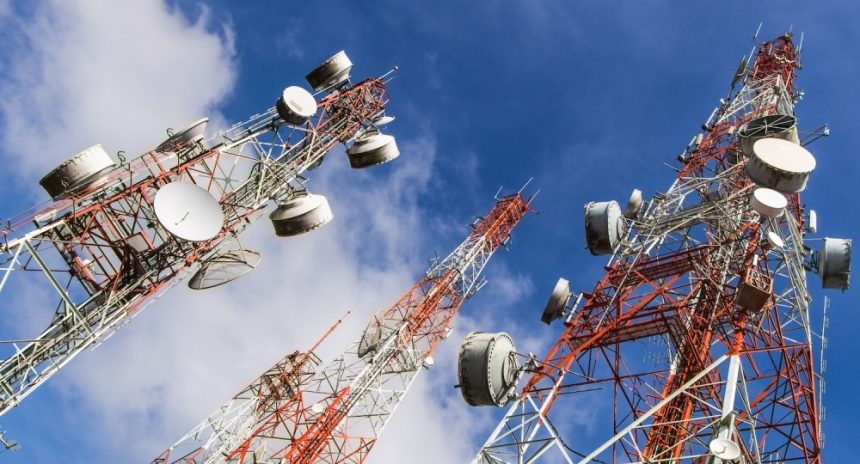
MTN currently holds a 24.7 per cent stake in IHS. Once the transaction completes, it will own 100 per cent of IHS’s African tower portfolio, covering 28,702 towers across Nigeria, South Africa, Côte d’Ivoire, Cameroon and Zambia. For context, these towers are the physical backbone of mobile connectivity for millions of people.
Understanding who owns them — and why — matters enormously. EKO HOT BLOG breaks down what MTN owning them means for subscribers.
Lower Costs Could Trickle Down, But There Are No Guarantees
MTN’s stated rationale for the acquisition is largely financial. IHS derives roughly 70 per cent of its revenue from MTN itself, meaning the telecoms group has long been paying lease fees and embedded margins back to a company it only partially owned.
By bringing IHS fully in-house, MTN expects to internalise those payments, eliminate the middle-layer costs, and gain tighter control over expenses linked to foreign exchange volatility, inflation and energy prices — all of which have battered its operating environment in recent years.
In theory, reduced operational costs should create room for more competitive pricing or improved service quality for customers. MTN has also pointed to anticipated “net income and cash flow accretion,” which suggests the group expects to be in a stronger financial position after the deal. A financially healthier MTN is, in principle, better placed to invest in network expansion and maintenance.
However, customers should temper their expectations. There is no binding obligation for the savings generated to flow directly to subscribers. Shareholders and debt obligations will take priority in the near term, particularly given that MTN is funding roughly half of the $2.2 billion deal — approximately $1.1 billion — from its own liquidity and borrowings.
Network Quality and Infrastructure Investment
Perhaps the more tangible benefit for customers lies in MTN’s plans to integrate its tower portfolio with its broader digital infrastructure platform. The company has indicated that full ownership will allow it to combine fibre, passive tower infrastructure, radio spectrum and data centres into a unified platform — a move it says will accelerate network densification and support growing demand for 5G and Fixed Wireless Access (FWA) services.
IHS brings considerable assets to this vision. Beyond the towers, it operates more than 10,000 kilometres of fibre optic cable in Nigeria and has approximately 2,700 fibre-to-the-tower sites connected. If MTN leverages these effectively, customers in underserved areas could see meaningful improvements in coverage and data speeds over the medium term. The promise of faster, more reliable internet connectivity is one that resonates deeply in markets where poor network quality remains a daily frustration.
That said, infrastructure integration at this scale is a complex undertaking. The benefits will not arrive overnight, and execution risk is real.
Regulators Are Watching and So Should Customers
The Federal Ministry of Communications, Innovation and Digital Economy has already signalled that it will not wave this deal through without scrutiny.
In a statement signed by Minister of Communications, Innovation and Digital Economy, Dr ‘Bosun Tijani, on Wednesday evening, the ministry committed to a “thorough assessment” of the acquisition in collaboration with relevant regulators, with an explicit focus on consumer protection, investment safeguards and long-term sector sustainability.

This regulatory attention is welcome. When a single operator gains ownership of the towers that competing networks also rely upon, questions about fair access and pricing for rival operators become critical. If MTN were to use its tower ownership to disadvantage competitors — even subtly — the effects would ultimately be felt by consumers across the entire market through reduced competition.
FURTHER READING
The MTN-IHS deal is a bold strategic move with genuine potential upsides. But its ultimate value to ordinary customers will depend on regulatory vigilance, genuine infrastructure investment, and a competitive market that keeps all operators honest.
Philip Ibitoye is a Special Correspondent with EKO HOT BLOG. Click here to find daily analysis and critical insight on trending issues in Lagos and other parts of Nigeria.
Click to watch the video of the week below: