On Tuesday, March 24, 2026, the Inspector-General of Police (IGP), Olatunji Disu, announced a nationwide reshuffle of Commissioners of Police.
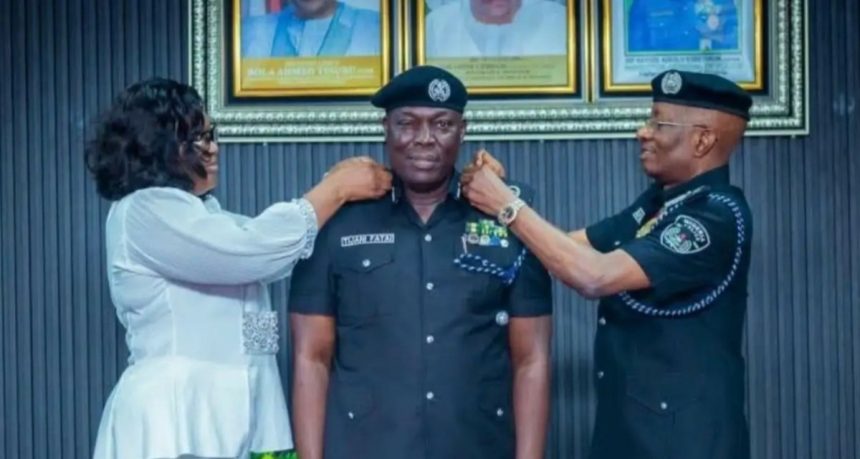
Buried within it was an appointment that will define policing in Nigeria’s most complex state for months and, potentially, years to come: CP Tijani Olaiwola Fatai was named the new Commissioner of Police for Lagos State.
EDITOR’S PICKS
He replaces Assistant Inspector-General of Police (AIG) Moshood Jimoh, who was redeployed to Zone 2, Lagos, following his own promotion. For Fatai, it is a homecoming of sorts and a significant elevation.
Ask most Lagosians about the new CP and you will get a blank stare. Unlike some police officers who accumulate public profiles through press conferences, controversies, or social media visibility, Fatai has kept a low profile. His name carries little recognition outside law enforcement circles. Even within them, his profile has been that of an operator: someone who gets things done without courting the spotlight.
What is known is that he is Lagos-born, and that before his posting to the Eastern Ports Command — the role he held immediately before this appointment — he built his career almost entirely within the Lagos State Police Command, working through some of its most demanding postings.
The Centre for Human Rights (CHSR), in a statement commending the IGP’s decision, described his appointment as a positive development, citing his track record across specific roles in Lagos. “We consider him a fitting choice and a positive step toward restoring public confidence in policing within the state,” the group said.
From Panti’s Homicide Desk to the Command Room
Fatai’s introduction to serious crime investigation came through one of the most quietly consequential desks in the Lagos command: the D4 unit at the State Criminal Investigation Department (SCID), Panti, Yaba, where he served as Officer-in-Charge.
D4 is the homicide section. It handles murder investigations, suspicious deaths, and cases referred by the Inspector-General and senior zonal commanders. It is a unit that operates under constant pressure; from families demanding justice, from political interests watching high-profile cases, and occasionally from internal dysfunction. Officers who run it cleanly tend to have strong investigative instincts and the discipline to manage sensitive information. Fatai spent significant time there.
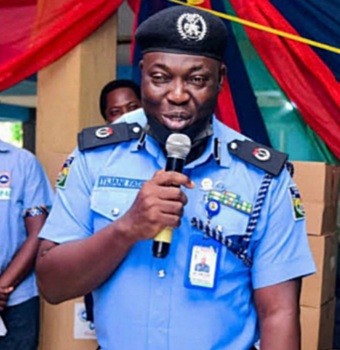
From Panti, he moved to operational command as Area Commander for Area C, which oversees police divisions across Surulere, including Orile, Iponri, and Aguda.
Area C sits at a demanding intersection of Lagos geography, bridging the commercial pressures of Lagos Island to its south and the more volatile mainland corridors of Mushin and Ajegunle to its north.
An Area Commander there manages multiple Divisional Police Officers, mediates inter-community tensions, and coordinates responses to everything from market disputes to cult-related violence. It is frontline command work, not desk work.
The Operations Man
If his time at SCID Panti showed his investigative grounding and Area C his command presence, his role as Deputy Commissioner of Police (Operations) for Lagos State crystallised both into institutional authority.
The DCP Operations is, in practical terms, the engine room of the Lagos command. The state has over 107 police divisions and 32 sections, all of which flow through the operations chain. The DCP Operations coordinates deployments, supervises tactical responses, manages patrol schedules, and translates the CP’s directives into ground-level action. It is, in effect, the chief of staff for all active policing in Lagos.
A man who has held that role knows where the gaps are, which divisions underperform, and how to move resources across a city of more than 20 million people. That institutional memory is not easily replicated.
Fatai was among 11 Deputy Commissioners of Police promoted to the full rank of Commissioner by the Police Service Commission (PSC) in October 2025. His posting to Lagos — widely said to have had the backing of Governor Babajide Sanwo-Olu — puts him immediately at the centre of one of West Africa’s most demanding policing environments.
FURTHER READING
He arrives without fanfare. But those who have watched his career say that is entirely consistent with who he is: a man who has always let the work speak.
Philip Ibitoye is a Special Correspondent with EKO HOT BLOG. Click here to find daily analysis and critical insight on trending issues in Lagos and other parts of Nigeria.
Click to watch the video of the week below: