Lagos State recorded the highest number of new HIV infections in Nigeria in 2025, with 10,430 cases, according to the Federal Ministry of Health and Social Welfare’s State of the Health of the Nation report.
Rivers State followed with 6,287 infections, while Kano recorded 6,106, completing the three states with the highest infection burden in the country.
EDITOR’S PICKS
- Can “Waste Police” Fix Lagos’s Trash Epidemic?
- LAWMA Is Clearing Lagos’s Trash. But Who Stops the Next Pile?
The report, which broke down new infections across all 36 states and the FCT, showed that Nigeria recorded a total of 102,025 new HIV infections in the year under review. This places fresh scrutiny on the country’s HIV response, years after government and international partners scaled up prevention campaigns.
Why Lagos Tops the List
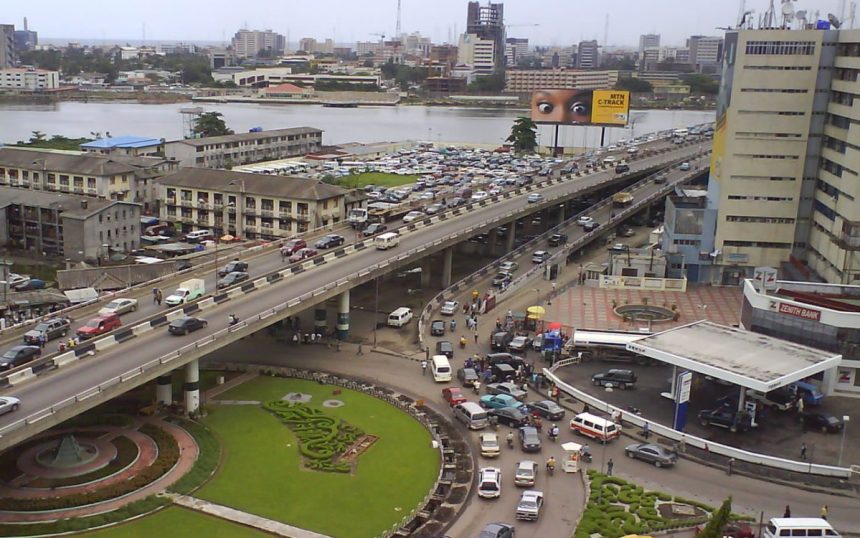
Lagos’s position at the top is not entirely surprising. As Nigeria’s most populous state and its commercial nerve centre, Lagos draws a constant influx of migrants from across the country and beyond, many of them young, mobile, and sexually active. This transient population, combined with the state’s high population density, creates more opportunities for transmission than in less urbanised states.
There is also a testing factor to consider. Lagos has more functional health facilities, more HIV testing centres, and stronger health data systems than most other states. A state that tests more people will naturally detect more infections. This does not mean Lagos is necessarily worse off than states with lower figures; it may simply mean Lagos is better at finding cases that exist quietly elsewhere. States like Ekiti, which recorded just 462 new infections, may owe their low numbers partly to weaker testing and surveillance infrastructure, not necessarily lower transmission.
Still, the scale of new infections in Lagos cannot be explained away by testing capacity alone. Rivers and Kano, both major commercial and population hubs in their respective regions, also feature prominently, suggesting that urbanisation, population movement, and commercial activity are consistent drivers of new infections across the country.
A Pattern Beyond the Top Three
Looking beyond Lagos, Rivers, and Kano, the pattern holds. States like Akwa Ibom, Benue, Anambra, and Kaduna, all with significant urban centres or cross-border activity, also recorded high numbers.
Meanwhile, states with the lowest infection counts tend to be less urbanised or have smaller populations. This suggests that Nigeria’s HIV burden is not evenly distributed, but tied closely to how people live, move, and access healthcare.
What the Government Is Doing
The federal government appears to recognise the scale of the challenge.
In March, the Federal Executive Council approved a memo to improve HIV treatment nationwide, including funding for antiretroviral drugs to sustain the presidential treatment programme. Iziaq Salako, minister of state for health and social welfare, confirmed that Nigeria maintains a policy of free ARV drugs for people living with HIV and AIDS.
Nigeria has also begun receiving doses of lenacapavir, a long-acting injectable HIV prevention drug. The country has received 11,520 doses out of an expected 52,000, under a Global Fund-supported initiative, according to NASCP’s Mohammed Patiko.
This represents a shift toward more convenient prevention tools that could reduce dependence on daily pills, a development that may particularly benefit high-burden states like Lagos.
The Bottom Line
Lagos leading the infection chart should not be read as a sign of failure alone. It is partly a reflection of population size, urban dynamics, and testing strength.
FURTHER READING
- Men’s Health Week: What Nigerian Fathers Must Do To Stay Alive
- Inside the 37 Bills That Could Rewrite How Nigeria Is Governed
But the broader 102,025 figure shows that despite years of intervention, new infections remain too high. The government’s renewed investment in treatment and prevention is a step forward, but sustained funding, expanded testing in low-detection states, and consistent drug supply will determine whether Nigeria can meaningfully reduce these numbers in the years ahead.
Philip Ibitoye is a Special Correspondent with EKO HOT BLOG. Click here to find daily analysis and critical insight on trending issues in Lagos and other parts of Nigeria.
Click to watch the video of the week below: