
The federal government has announced plans to establish a National Housing Finance Authority (NHFA), a move it says will widen access to affordable housing finance and reposition the country’s troubled mortgage system.
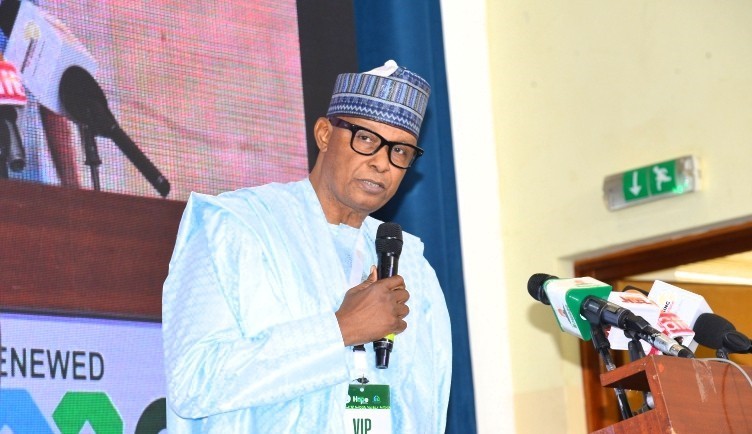
The Minister of Housing and Urban Development, Muttaqha Darma, unveiled the proposal on Tuesday at a stakeholders’ validation workshop in Abuja, describing it as part of a broader national mortgage industry policy.
EDITOR’S PICKS
The NHFA is designed to reform mortgage financing, reposition the Federal Mortgage Bank of Nigeria (FMBN), and expand participation in the National Housing Fund (NHF).
Bringing The Informal Sector In
A central plank of the reform is the inclusion of traders, artisans and other informal sector workers in the NHF, with contributions starting from N5,000 monthly. This marks a departure from a fund historically built around salaried workers in formal employment, and signals an attempt to bring millions of Nigerians outside the wage economy into a structured savings-to-mortgage pipeline.
If implemented well, the policy could mark one of the more consequential shifts in Nigeria’s housing finance architecture in years, since informal workers make up the bulk of the country’s labour force yet have largely been locked out of mortgage products tied to payroll deductions.
The Numbers Behind The Push
Darma framed the reform against the scale of the real estate sector’s contribution to the economy. Following the rebasing of national accounts, real estate services now account for about 13.4 percent of Nigeria’s GDP, valued at roughly N41 trillion, making it the country’s third-largest sector, ahead of telecommunications and crude oil. Combined with construction, the two sectors crossed N77 trillion in 2025.
Those figures form the backdrop to the minister’s argument that housing is not merely a social welfare issue but a major economic lever that current regulatory and financing structures have failed to fully unlock.
Regulation As The Missing Ingredient
Darma drew a comparison between Dubai and Kano to make his case for regulatory reform, arguing that Kano’s larger size has not translated into comparable real estate value because trust, not capital, is the binding constraint, and trust, he said, is manufactured by regulation.
To that end, the government is also proposing a National Housing Industry Regulatory Commission, which would oversee developers and mortgage operators. Analysts would note that Nigeria’s real estate sector has long struggled with weak buyer protections, inconsistent title documentation and opaque developer practices, all of which have kept institutional and diaspora investment more cautious than the sector’s GDP contribution might suggest. A functioning regulatory commission, if properly resourced and insulated from political interference, could address some of these structural trust deficits.
Part Of A Longer Reform Trail
Tuesday’s announcement builds on an earlier push. On January 19, the federal government said it was intensifying efforts to tackle Nigeria’s housing deficit through a national housing strategy anchored on land reforms, urban renewal and public-private partnerships. The NHFA proposal effectively extends that agenda into the financing side of the equation, an area many housing experts have long argued is Nigeria’s weakest link.
What Remains Unclear
The announcement stops well short of a finished blueprint. Darma’s remarks at the workshop signal direction rather than delivery: no timeline was given for the NHFA’s establishment, no legislative pathway was outlined, and how the FMBN’s repositioning would interact with the proposed new authority remains unaddressed.
For a country with a housing deficit estimated in the tens of millions of units, the gap between policy ambition and implementation has historically been where reforms like this stall.
FURTHER READING
Whether the NHFA becomes a genuine financing breakthrough or another well-intentioned framework awaiting legislative and institutional follow-through will depend on the details still to come, including how quickly the enabling policy is passed, how the new regulatory commission is structured, and whether informal-sector contributors see a credible path from monthly savings to actual home ownership.
Philip Ibitoye is a Special Correspondent with EKO HOT BLOG. Click here to find daily analysis and critical insight on trending issues in Lagos and other parts of Nigeria.
Click to watch the video of the week below: