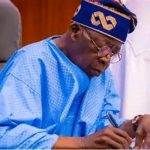
- The African Democratic Congress (ADC) has called on President Bola Tinubu to reverse his ongoing economic policies or resign, citing skyrocketing poverty indices as clear indicators of administrative failure.
- The opposition party argued that hyped macroeconomic improvements like increased public revenue and foreign exchange reserves are hollow metrics when millions of citizens are actively struggling to afford food and basic services.
- Dismissing the federal government’s temporary palliatives as ineffective, the ADC rolled out a comprehensive agricultural blueprint focused on reviving rural security, expanding irrigation dams, and stabilizing domestic commodity prices.
The African Democratic Congress (ADC) has harshly criticized the economic framework of President Bola Tinubu’s administration, demanding that the president either overhaul his current fiscal policies or step down from office.
Eko Hot Blog reports that the opposition party based its demand on the severe economic hardship, worsening hunger, and deepening poverty rates across the federation, which it argues provide sufficient grounds for leadership re-evaluation.
EDITOR’S PICK
- Why Africa Still Cannot Win the FIFA World Cup Despite Its World Class Talent
- Man Allegedly Slits Father’s Throat, Mutilates Body in Anambra
- Lagos Court Convicts Director, Company Over N822.4m Fraudulent Conversion
In an official public statement released on Friday by the party’s National Publicity Secretary, Bolaji Abdullahi, the ADC highlighted the latest socio-economic metrics published by international development agencies.
The party maintained that the harsh data completely contradicts the federal government’s claims of macroeconomic stability, exposing the steep human costs of current fiscal structural adjustments.
According to the opposition party, the current statistics showing that 139 million citizens live beneath the national poverty line and an additional 17 million individuals face extreme starvation serve as a factual assessment of the administration’s economic mismanagement.
The political group accused the ruling All Progressives Congress (APC) of stubbornly sticking to damaging economic experiments while attempting to rebrand state-driven recklessness as administrative courage and policy-induced suffering as unavoidable systemic adjustments.
The statement emphasized that the fundamental validity of any national economic reform must be measured by its capacity to improve citizens’ standard of living, rather than compounding their daily struggles.
Furthermore, the ADC strongly dismissed the federal government’s conditional cash transfers and social intervention initiatives as superficial and inadequate.
The party noted that structural poverty cannot be dismantled through temporary relief palliatives, but requires establishing a production-oriented economy that empowers Nigerians to secure decent incomes and maintain food security with dignity.
Presenting its alternative economic model, the ADC promised that its administration would prioritize reclaiming national security within farming regions to boost agricultural production.
The party’s proposed rescue package includes rehabilitating the country’s 264 long-abandoned water dams to expand massive irrigation networks, giving rural farmers direct access to high-grade inputs, and strengthening agro-industrial value chains to lower domestic marketplace food prices.
The political organization also pledged to establish specialized regional agricultural production corridors, lower raw material transport costs, invest in storage systems, and significantly expand budgetary allocations for healthcare, public education, and technical skills development.
The party noted that the ultimate choice before the country is between an economy that produces impressive administrative data and one that ensures better lives for its citizens.
The sharp criticism comes amid an intense public debate regarding the long-term impact of the Tinubu administration’s signature reforms, including the total elimination of PMS subsidies, foreign exchange market unification, and sweeping tax policy changes implemented since mid-2023.
While the Presidency continues to defend these measures as tough but vital stabilization policies aimed at correcting prolonged financial distortions, civic groups, trade unions, and opposition factions maintain that the reforms have severely undermined household purchasing power and destabilized small businesses.