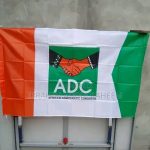
The Independent National Electoral Commission (INEC) stirred fresh controversy on Wednesday when it announced it would no longer recognise any faction of the African Democratic Congress (ADC).
The decision removed the names of Senator David Mark and Rauf Aregbesola from its portal and freezing all dealings with the party until a Federal High Court resolves its leadership dispute.
EDITOR’S PICKS
The decision has prompted sharp criticism from lawyers and an angry response from the party itself.
How did we get here?
The ADC’s troubles began in July 2025 when the Ralph Okey Nwosu-led National Working Committee resigned and a party NEC meeting on July 29 ratified a new leadership headed by David Mark as national chairman, with Aregbesola as national secretary.
But Nafiu Bala Gombe, who was vice-national chairman, refused to accept the outcome. He argued that under the party’s constitution, Nwosu’s resignation automatically made him acting chairman.
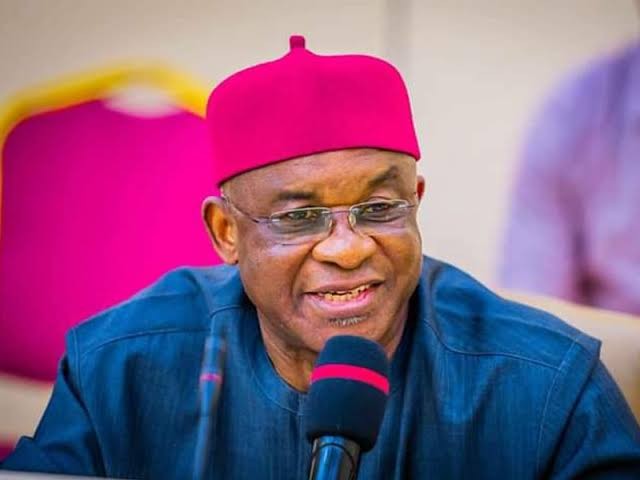
Gombe went to the Federal High Court in Abuja on September 2, 2025, seeking to restrain Mark’s group from parading themselves as party leadership and to compel INEC to recognise him instead. Crucially, INEC uploaded the Mark-led NWC’s names to its portal on September 9, seven days after the suit was filed.
Mark challenged the court proceedings, but on March 12, 2026, the Court of Appeal dismissed his interlocutory appeal. The appellate court also issued preservatory orders directing all parties to maintain the status quo ante bellum — the state of affairs before the suit was filed — and granted accelerated hearing of the substantive case, citing the approaching 2027 electoral timetable.
What INEC decided
INEC said the appellate court’s preservatory orders were central to its decision. At a commission meeting on March 31, it resolved to restore the position that existed before September 2, 2025, when the suit was instituted.
On that basis, it removed Mark and Aregbesola’s names from its portal. It also declined a request by Gombe’s lawyers to allow Gombe to take over party affairs in the interim, insisting it would not deal with any faction until the Federal High Court decides the matter.
The commission said it was also responding to competing legal letters, one from Suleiman Usman SAN & Co. warning against recognising Gombe, and two from Summit Law Chambers demanding that INEC enforce the Court of Appeal’s orders and remove Mark’s names from its records.
A March 27 letter from Summit Law Chambers additionally alleged that INEC had breached the appellate court’s orders by inviting Mark’s group to a political parties’ meeting on March 24 and monitoring one of their NEC meetings.
What lawyers are saying
The legal community’s response has been pointed.
Human rights lawyer Chidi Odinkalu argued that INEC misstepped from the outset: “It should be evident to a professor of law [INEC Chairman, Joash Amupitan] and SAN that it is not the business of INEC to interpret the decision of the Court of Appeal.
“If they had any doubt, an INEC governed by good faith should have gone back to the Court of Appeal to secure an interpretation of the decision.”
This release by @inecnigeria followed a meeting involving senior leaders of the Commission, & @NGRPresident, @CourtOfAppealNG, @FederalHigh in the last 60 hours.
I have it on the most impeccable authority that there is a pre-signed resignation letter by Chairman Amupitan. It… https://t.co/XatGw5t36p
— Chidi Anselm Odinkalu, CGoF (@ChidiOdinkalu) April 1, 2026
Lawyer, Inibehe Effiong, equally raised a more fundamental question about the logic of INEC’s position.
He said, “The Court of Appeal said the parties should maintain status quo ante bellum. Before the suit, who was the chairman of the party? Was it not David Mark? Is this INEC saying that the order of the Court of Appeal implies that there should be a leadership vacuum in the ADC until the case is determined by the Federal High Court?”
The ADC is not my cup of tea, but there is now reasonable basis to infer existence of a well orchestrated sinister conspiracy to truncate contested and credible elections in 2027.
From what is publicly available, all the Executives of the ADC resigned to allow David Mark and…
— Inibehe Effiong (@InibeheEffiong) April 1, 2026
Lagos-based lawyer Festus Ogun made a similar point: “Court ordered status quo. Yet INEC has gone ahead to remove ADC interim leadership names. These names were uploaded way earlier before the filing of the vexatious suit and even before the cause of action. So how is ‘status quo’ removing the names of ADC interim leaders?”
Court ordered status quo. Yet, INEC has gone ahead to remove ADC interim leadership names. These names were uploaded way earlier before the filing of the vexatious Suit and even before the “cause of action”. So, how is “status quo” removing the names of ADC interim
Leaders?
— FESTUS OGUN (@mrfestusogun) April 1, 2026
The ADC’s response
Meanwhile, the party, through its spokesperson Bolaji Abdullahi, rejected INEC’s decision.
“We reject INEC’s interpretation of the Court of Appeal ruling,” Abdullahi said, alleging that the commission had “caved to pressure” from a government “jittery from the ADC’s rising momentum.” The party said it was reviewing its options and would make them known soon.
We reject @inecnigeria’s interpretation of the Court of Appeal ruling.
We knew that INEC was being pressured by a government that has become jittery from the ADC’s rising momentum even in the face of its relentless assault on all opposition parties.
INEC’s press statement…
— Bolaji Abdullahi (@BolajiADC) April 1, 2026
FURTHER READING
With the Federal High Court yet to determine the substantive suit and no clear timeline in sight, the ADC heads into a critical pre-election period effectively paralysed, unable to hold congresses, conventions, or conduct any party business under INEC’s watch.
Philip Ibitoye is a Special Correspondent with EKO HOT BLOG. Click here to find daily analysis and critical insight on trending issues in Lagos and other parts of Nigeria.
Click to watch the video of the week below: