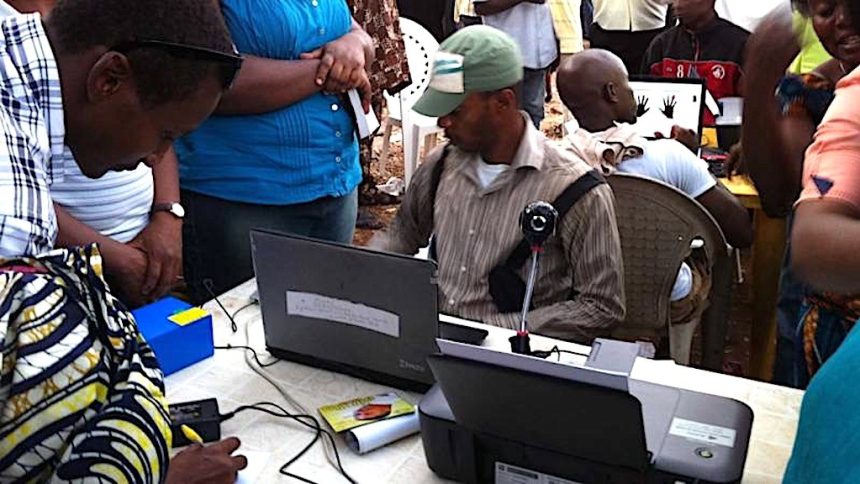
- INEC’s voter registration closes Sunday, July 26, 3 p.m.
- Anyone who misses the deadline misses the 2027 elections.
- Turnout has fallen every cycle since 2011; at 26.7% in 2023.
Lagosians and other Nigerian citizens who have not registered to vote have three days left to do so, as the Independent National Electoral Commission’s (INEC) Continuous Voter Registration (CVR) exercise closes nationwide on Sunday, July 26,!2026.
INEC says any citizen aged 18 and above who fails to register by 3:00 p.m. on Sunday will not be able to vote in the 2027 general election. Those concerned now have just three days left: Friday, July 24, Saturday, July 25, and Sunday, July 26, to get registered.
EDITOR’S PICKS
Registration centres, including INEC’s local government offices across Lagos and other designated centres, are open daily from 9:00 a.m. to 3:00 p.m., including the weekend.
In Lagos, the Resident Electoral Commissioner, Prof. Ayobami Salami, has confirmed the same closing date applies statewide, after the original July 10 deadline was pushed back.
Have you moved to a new location?
Your vote should move with you.
Don't let your old polling location decide your future. Apply for a Transfer of Registration and vote where you now live either by visiting any CVR registration centre or using online portal via:… pic.twitter.com/B5obgwwdI9
— INEC Nigeria (@inecnigeria) July 23, 2026
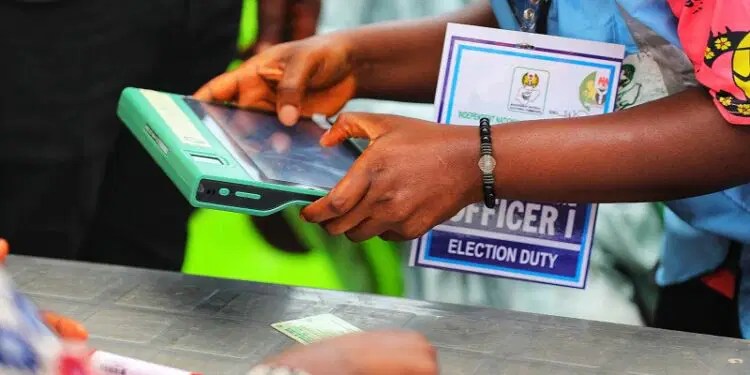
INEC extended the CVR exercise by two weeks following pressure from political parties, civil society groups, and its own state offices, who argued more time was needed to capture eligible voters. The commission also rolled out a self-service online portal on 8 July 2026, letting first-time voters register from a phone or computer, biometrics included, without stepping into an INEC office.
Why Lagos matters here
Lagos is Nigeria’s most populous state and has historically carried one of the largest voter rolls in the country, yet it has also struggled to convert that number into election-day turnout.
In 2023, Lagos recorded one of the lowest turnout figures among major states, with card-carrying voters citing long queues, late arrival of materials, and general disillusionment with the process.
A rushed, last-minute registration push in a state this size risks compounding the very problems that kept people away in 2023: overcrowded centres, incomplete data capture, and voters who register but never collect their permanent voter cards in time.
The online portal was meant to ease this pressure, but its reach depends on how many young, first-time Lagos voters actually know it exists. Without visible awareness campaigns in the state’s dense urban wards, the physical centres could still see the kind of last-minute rush that INEC has publicly warned against.
A shrinking electorate, even with a bigger register
Nationally, the numbers tell a sobering story regardless of how many people register. Turnout has fallen steadily since 2011, when 39.4 million of 73.5 million registered voters cast ballots, a 53.7 percent turnout. It dropped to 43.6 percent in 2015, then 34.75 percent in 2019, and to just 26.7 percent in 2023, the lowest since Nigeria’s return to democratic rule.
The regional pattern in 2023 is worth noting for a state like Lagos. No state anywhere in the country crossed 50 percent turnout, unlike in 2015 and 2019. The North-West and North-Central led with up to 30 percent, followed by the North-East at 28.63 percent. All three Southern zones, Lagos included, posted less than 25 percent.
FURTHER READING
That gap suggests a bigger voter roll in Lagos will not, on its own, fix the turnout problem. Unless INEC and civil society groups follow registration with sustained voter education and a smoother election-day experience, 2027 could repeat the pattern of a swelling register and a shrinking share of Nigerians who actually show up to vote.
Philip Ibitoye is a Special Correspondent with EKO HOT BLOG. Click here to find daily analysis and critical insight on trending issues in Lagos and other parts of Nigeria.
Click to watch the video of the week below: