- Iranian Supreme Leader Mojtaba Khamenei has officially appointed Major General Ali Abdollahi as the new Chief of Staff of the Armed Forces and confirmed Brigadier General Ahmad Vahidi as Commander-in-Chief of the Islamic Revolutionary Guard Corps (IRGC).
- The appointments represent Khamenei’s first major restructuring of the nation’s military command structure since succeeding his father following high-profile military escalations in the Middle East.
- Major General Abdollahi, who previously led the inter-branch Khatam al-Anbiya central military command, has repeatedly warned neighboring countries against serving as defense platforms for foreign military interventions.
Iranian Supreme Leader Mojtaba Khamenei has officially reorganized the leadership of the Islamic Republic’s military establishment, appointing Major General Ali Abdollahi as the new Chief of Staff of the Armed Forces and confirming Brigadier General Ahmad Vahidi as the Commander-in-Chief of the Islamic Revolutionary Guard Corps (IRGC).
Eko Hot Blog reports that the strategic appointments, announced on Monday through official decrees published on the Supreme Leader’s web platform, mark a pivotal moment in Iran’s security hierarchy as the state moves to consolidate its wartime leadership structure and streamline defense operations.
EDITOR’S PICK
- Tinubu Approves Army Expansion, Recruitment of 28,000 Personnel
- Aregbesola Claims Record as First Nigerian Governor to Serve Eight Years Without Owning a House
- Ikosi-Ejinrin LCDA Commissions Fully Equipped NSCDC Divisional Headquarters, Donates Patrol Vehicle and Motorcycle to Boost Security
Prior to his elevation to the top military post, Major General Ali Abdollahi served as the commander of Khatam al-Anbiya, Iran’s inter-branch central military headquarters responsible for overseeing operational coordination, defense planning, and tactical joint maneuvers across all service branches.
In his new capacity as Chief of Staff, Abdollahi replaces former top commanders and assumes overarching responsibility for directing military strategy, joint readiness, and territorial defense across Iran’s conventional armed forces, air defense command, naval units, and specialized defense networks.
Simultaneously, Brigadier General Ahmad Vahidi has been promoted to the rank of Major General and formally confirmed as the Commander-in-Chief of the Islamic Revolutionary Guard Corps.
Vahidi, a prominent national security strategist who previously held top cabinet positions including Defense Minister and Interior Minister, now officially takes charge of the elite military organization tasked with safeguarding internal state stability, managing asymmetric defense capabilities, and driving regional defense partnerships.
The formal decrees represent Mojtaba Khamenei’s first major military appointments since being elevated to Supreme Leader following the death of his father, Ayatollah Ali Khamenei, during US-Israeli military strikes early in the conflict.
By formally issuing these appointment decrees, the Supreme Leader has acted to formalize leadership positions across key military branches that had operated under interim operational oversight during months of intense regional confrontation.
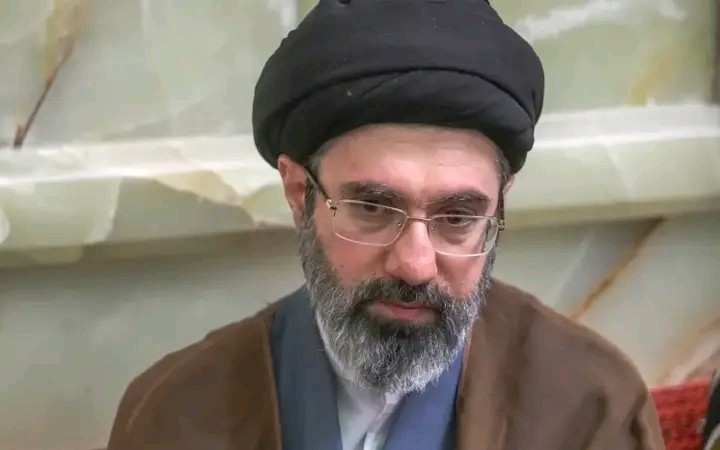
Throughout the ongoing conflict, Major General Abdollahi has maintained an aggressive public defense posture, issuing direct warnings to neighboring states concerning their security alignment with foreign powers.
Speaking earlier this month on regional defense dynamics, Abdollahi warned that any country allowing its territory or airspace to be used as a protective shield or operational launchpad for hostile foreign forces would inevitably be engulfed by the fallout of wider regional military confrontation.
In tandem with these primary defense appointments, the Supreme Leader also confirmed command adjustments across secondary operational units, including the IRGC Navy, the Basij paramilitary volunteer force, and key security advisory organs, aiming to maintain complete institutional cohesion across all branches of government.
The strategic military overhaul arrives at a delicate moment for the wider Middle East, as regional actors navigate fragile security dynamics, strategic maritime defense in the Strait of Hormuz, and broader geopolitical shifts.
By placing battle-tested, veteran commanders at the helm of both the Armed Forces and the IRGC, Supreme Leader Mojtaba Khamenei seeks to signal operational continuity, enforce chain-of-command stability, and project a unified national defense posture.
FURTHER READING