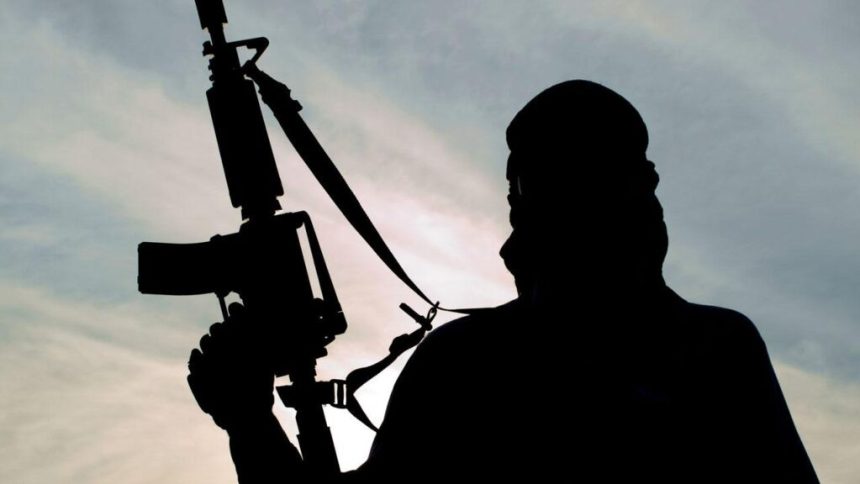
The federal government wants Nigerian journalists to stop putting terrorists and bandits on their front pages.
Mohammed Idris, the Minister of Information and National Orientation, made this call on Thursday at a two-day national security summit in Abuja, jointly organised by the Nigeria Union of Journalists and the Department of State Services.
EDITOR’S PICKS
His message: the best editor, he said, is one who “knows what not to report in the interest of nation-building.”
EKO HOT BLOG takes a deeper look at this position.
What the minister actually said
Idris was careful to frame his appeal in the language of responsibility rather than restriction. He acknowledged that journalists must report what happens, and he reaffirmed the Tinubu administration’s commitment to press freedom.
His argument, broadly, is that criminals crave media attention, that front-page coverage rewards them with free publicity, and that irresponsible or unverified reporting can undermine security operations. He also warned against misinformation and premature reporting that could expose intelligence work.
None of that, taken in isolation, is entirely wrong. Security communication experts have long noted that saturated media coverage can amplify the psychological impact of terrorist attacks, which is partly what attackers intend. The concern has legitimate roots.
Where the argument falls apart
The problem is not with the principle of editorial responsibility. The problem is with what the minister is actually asking for.
Telling editors to take terrorists “off your front pages” is not a call for responsible journalism. It is a call for managed news. There is a significant difference between a journalist verifying information before publication and a journalist suppressing information because it embarrasses the government’s security narrative.
Nigeria has a well-documented history of security failures: from the Boko Haram insurgency that displaced millions in the North-East, to banditry that has made entire states ungovernable, to kidnappings that have become almost routine. These are not stories that reflect poorly on criminals alone. They reflect on the capacity of the Nigerian state to protect its citizens. If reporting those failures constitutes “glorifying crime,” then accountability journalism itself is the target.
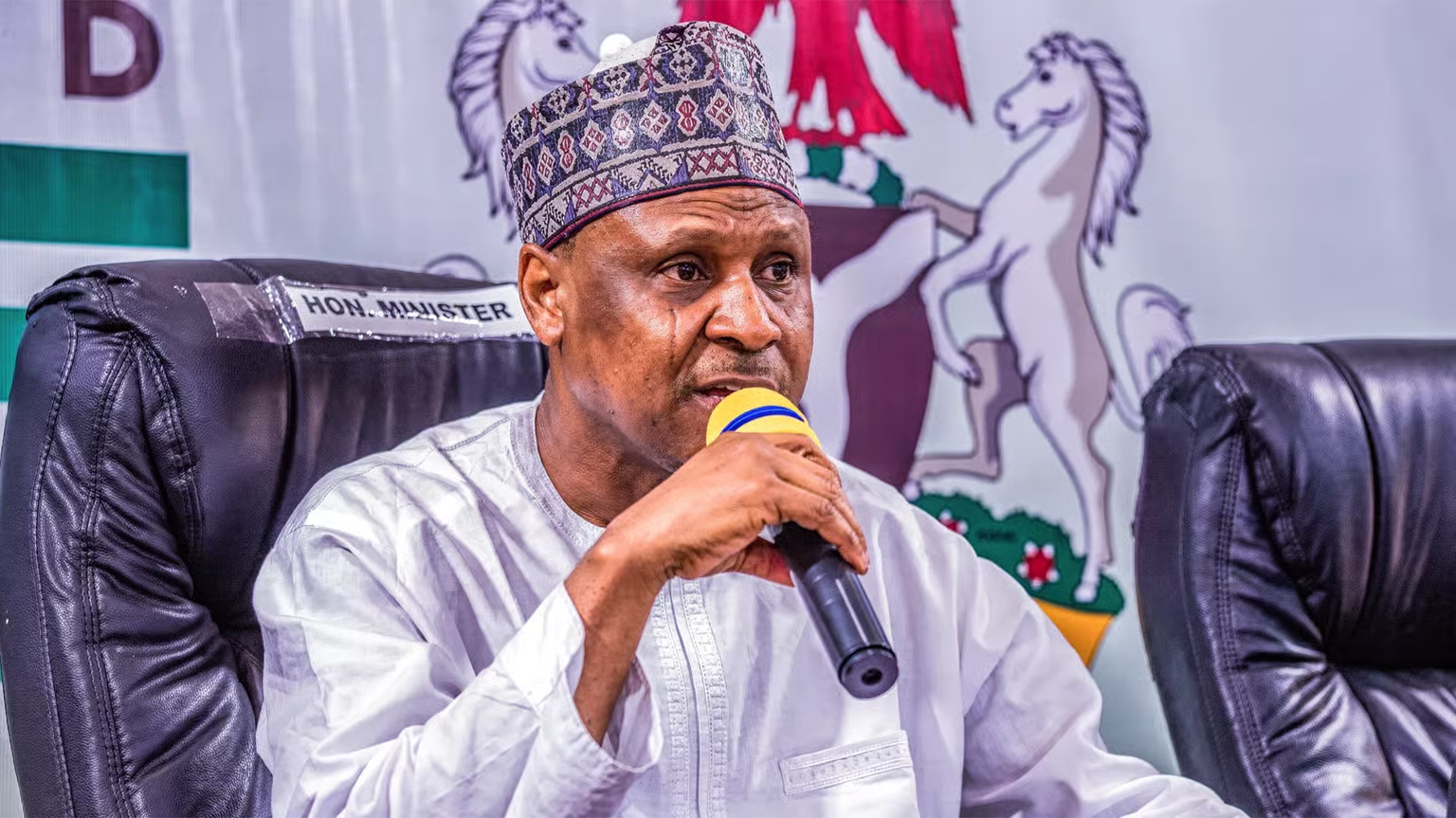
The minister’s framing also contains a quiet contradiction. He urged editors to “celebrate the sacrifices of young men and women in uniform” and to highlight security agency successes — neutralisations, rescues, dismantled camps. That is not press freedom. That is state-directed public relations.
The older, harder question
There is a legitimate conversation to be had about how Nigerian media covers insecurity. Breathless, unverified, detail-heavy reporting of attacks, including precise casualty figures before confirmation, or tactical details that could aid future attacks, is a genuine editorial problem. Responsible editors already grapple with these questions daily.
But the solution to poor editorial judgement is better journalism, not less of it. When media organisations stop reporting on what is happening in Zamfara or Borno or Kwara, those communities do not become safer. They become invisible and invisible suffering does not pressure governments to act.
The minister was speaking at a summit co-organised by the DSS, the country’s domestic intelligence agency. The setting matters. The framing of journalists and security agencies as “partners in nation-building” sounds cooperative, but it carries an assumption worth resisting: that the media’s primary obligation is to the state’s stability, rather than to the public’s right to know.
FURTHER READING
Nigerian journalists should take editorial responsibility seriously. They should also take their independence seriously. The two are not in conflict, but the minister’s remarks, however diplomatically packaged, risk making it seem that way.
Philip Ibitoye is a Special Correspondent with EKO HOT BLOG. Click here to find daily analysis and critical insight on trending issues in Lagos and other parts of Nigeria.
Click to watch the video of the week below: