A video showing alleged Lagos highway officials dumping waste into the lagoon from Third Mainland Bridge has sparked controversy, not just because of what happened, but because of how the government responded.
Shocking footage shows alleged Lagos highway officials dumping waste into the lagoon from Third Mainland Bridge toward Oworonshoki pic.twitter.com/D6QumpuDrU
— Instablog9ja (@instablog9ja) February 4, 2026
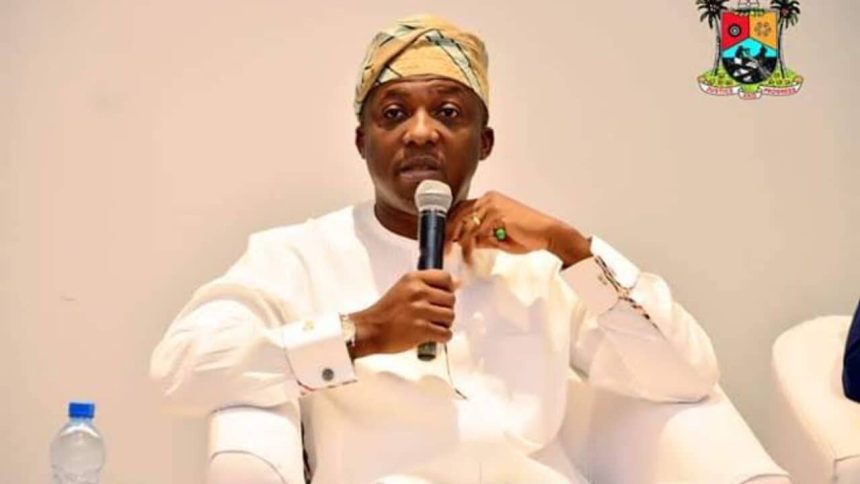
When questioned about it on Wednesday, the state’s Commissioner for Environment and Water Resources, Tokunbo Wahab, said the matter had been “handled internally.”
EDITOR’S PICKS
For many watching, this quiet resolution contrasted sharply with how ordinary Lagosians are treated when caught committing the same offence.
For a commissioner whose social media presence frequently features enforcement actions against residents who violate environmental laws, the terse reply stood out.
The Lagos State environmental agency regularly publicises arrests and sanctions of individuals caught dumping refuse improperly. Wahab himself often shares updates about such enforcement activities, positioning the state as tough on environmental offenders.
Just last December, the commissioner revealed the arrest and prosecution of one Makinde Rasaq, 48, over indiscriminate disposal of refuse. “Lagos will not tolerate environmental infractions. Indiscriminate waste disposal endangers public health, blocks our drainages, and puts lives at risk,” he further warned in a statement.
Update
Makinde Rasaq (48), who was apprehended for indiscriminate disposal of refuse and appeared before the Special Offences (Mobile) Court in Oshodi today. He pleaded guilty to multiple counts including illegal dumping, obstruction of officers, non-patronage of PSP operators,… https://t.co/hJ7U4VLzq1
— Tokunbo Wahab (@tokunbo_wahab) December 22, 2025
Yet when the alleged offenders were state officials, the approach appeared markedly different.
The transparency question
Oceanographer Gafar Raji challenged the “handled internally” response, arguing that environmental violations are not private matters.
“Environmental incidents are ecosystem-wide, not interpersonal issues,” Raji wrote. He pointed out that when matters affecting water quality and ecological health are kept from public view, affected communities and ecosystems are denied accountability and remediation.
Raji’s concern extended beyond this single incident. He noted that handling such cases privately sets a troubling precedent for environmental governance, adding that “transparency is not noise; it is part of protection.”
Wahab’s reply to the oceanographer was dismissive.
“As stated earlier, this has been handled internally in accordance with the organisational rules,” he wrote, before adding: “Maybe if this happened next time (hopefully not), we will set a ring-light just to satisfy your thirst for attention.”
As stated earlier, this has been handled internally in accordance with the organizational rules. Maybe if this happened next time (hopefully not), we will set a ring-light just to satisfy your thirst for attention.
Cheers! https://t.co/CqkmhOUh5x
— Tokunbo Wahab (@tokunbo_wahab) February 4, 2026
The sarcastic tone betrayed the seriousness of the allegation and contrasted sharply with the public accountability demanded of regular Lagosians caught committing similar offences.
A question of standards
The incident highlights an uncomfortable question: should different standards apply when government officials are accused of the same environmental crimes for which ordinary citizens face public sanctions?
Lagos has positioned itself as a model for environmental enforcement in Nigeria. The state’s environmental laws are among the strictest in the country, and officials have built a reputation for vigorous enforcement. Residents found dumping refuse in drains, streets, or waterways can face fines, public embarrassment through photos shared on social media, and even prosecution.
But when the alleged perpetrators are highway officials — employees of the very government enforcing these laws — the response appears to shift from public accountability to private resolution. No details were provided about what “handled internally” means. Were the officials identified? Were they sanctioned? What measures were taken to prevent recurrence?
These questions matter because the lagoon serves millions of Lagosians. Water pollution affects fishermen’s livelihoods, threatens aquatic life, and contributes to flooding during the rainy season. Environmental degradation does not respect the employment status of those who cause it.
The principle that those who enforce the law must also be subject to it is fundamental to good governance. When government workers receive different treatment for the same offences that see citizens publicly shamed and prosecuted, it erodes public trust in the system.
FURTHER READING
If Lagos truly wants to tackle its refuse problem — a challenge that requires cooperation from millions of residents — the government must demonstrate that environmental standards apply equally to all. Charity, as the saying goes, must begin at home. In this case, home is the government itself.
Philip Ibitoye is a Special Correspondent with EKO HOT BLOG. Click here to find daily analysis and critical insight on trending issues in Lagos and other parts of Nigeria.
Click to watch the video of the week below: