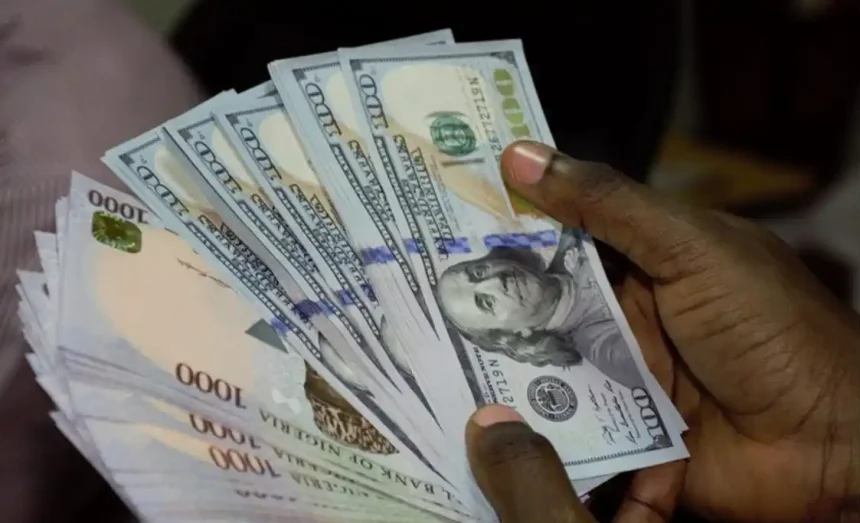
- Dollar to Naira Rate – 28 November 2025
-
The relatively narrow spread between official and black-market rates suggests some stabilization
-
Naira shows stability in official window, but forex supply pressures and import cost inflation remain risks
On 28 November 2025, the U.S. dollar (USD) continues to command a premium over the Nigerian naira (NGN), reflecting ongoing demand pressure in both formal and informal foreign-exchange markets. According to recent data, the dollar trades at around ₦1,447 in the official Nigerian Foreign Exchange Market (NFEM).
EDITOR’S PICKS
- Lagos East Senator, Tokunbo Abiru Celebrates Men on International Men’s Day
- Nathaniel Bassey Condemns Kwara, Kebbi Attacks
- 42 Countries Confirm 2026 World Cup Qualification As UEFA Sets Playoff Paths
EKO HOT BLOG reports that black-market (parallel) rates remain elevated, with dealers offering the dollar for approximately ₦1,464 per dollar.
Exchange Rates Today
| Market Type | Buying Rate (₦) | Selling Rate (₦) |
|---|---|---|
| Official Market (NFEM) | ≈ ₦1,447 | ≈ ₦1,447 |
| Black / Parallel Market | ₦1,464 | ₦1,464 |
The relatively narrow spread between official and black-market rates suggests some stabilization, but the elevated parallel rate reflects persistent demand and supply constraints outside formal channels. For many Nigerians importers, exporters, remittance receivers, small-business owners, and travellers, this means budgeting around ₦1,447 to ₦1,464 per dollar, depending on whether they access official or informal markets.
This rate pressure continues to have real effects: imported goods and services priced in dollars become more expensive, driving up inflation; businesses reliant on foreign inputs see profit margins squeezed; and households importing goods or receiving remittances feel the pinch in their cost of living.
On the macro side, the elevated black-market rate signals underlying stress in forex supply, which could deter foreign investment and delay imports of critical goods, potentially hurting sectors such as manufacturing, healthcare, and trade.
The naira’s near-term stability depends heavily on foreign-reserve inflows, oil export revenue, and central-bank policy. The recent decision by the Central Bank of Nigeria (CBN) to hold interest rates steady while maintaining liquidity signals cautious optimism.
Should foreign exchange inflows rise from oil sales, remittances, or foreign-direct investment the gap between official and informal rates may narrow, offering relief to households and businesses alike. Until then, Nigerians will likely continue to navigate a tight forex environment.