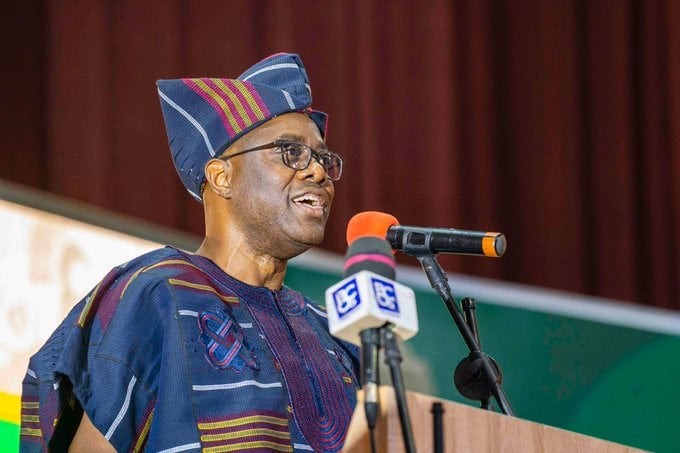
Oyo Governor Seyi Makinde fired a warning shot at the federal government on Wednesday, declaring at a tourism summit in Ibadan that “federal might will not work” in the 2027 elections.
He may be right. But as things stand, the APC may not need it.
EDITOR’S PICKS
The harder question heading into 2027 is not whether President Bola Tinubu will deploy federal resources to win, it is whether the opposition can get out of its own way long enough to mount a credible challenge.
From coalition to confusion
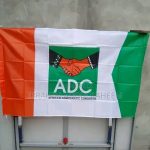
A year ago, there was genuine excitement. The African Democratic Congress had brought together the biggest names in Nigerian opposition politics — Atiku Abubakar, Peter Obi, Rabiu Kwankwaso, David Mark, Rauf Aregbesola, and Rotimi Amaechi — under one roof. A summit in Ibadan produced a public pledge to field a single candidate against Tinubu. The 2015 playbook seemed to be repeating itself.
It has since unravelled. Deep divisions quickly emerged over presidential zoning, ticket preferences — particularly between an Obi/Kwankwaso ticket and an Atiku-led option — and allegations that the party’s structure favoured certain aspirants. Obi and Kwankwaso subsequently left the ADC for a new platform, the National Democratic Congress. Kwankwaso, explaining the exit, said the ADC was struggling with “three major unresolved problems” that could affect its ability to field candidates in 2027.
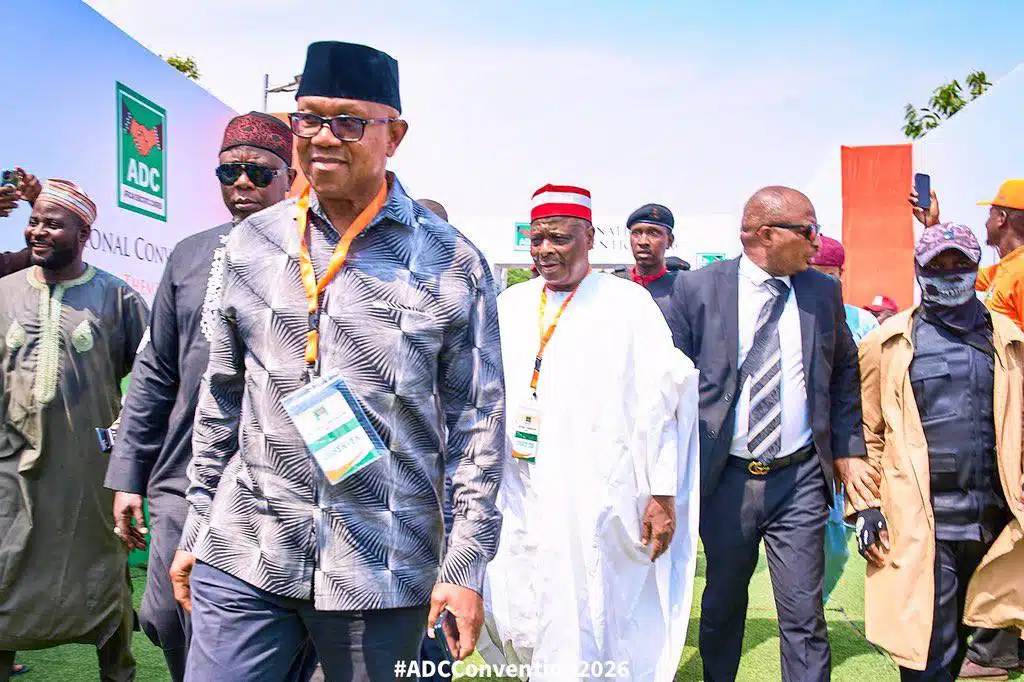
Days later, Atiku was questioning Kwankwaso’s reach, suggesting his support barely extends beyond Kano State.
These are not the growing pains of a coalition finding its feet. They are the familiar symptoms of a Nigerian opposition consuming itself before the election season has properly begun.
The PDP is a shadow of itself
If the opposition hoped the PDP would serve as a structural backbone, that hope has thinned considerably. Between the start of 2025 and now, a cascade of defections depleted the PDP’s gubernatorial ranks: from 12 governors after the 2023 election, the party lost 11 of them to the APC.
As of the time of writing, only Makinde remains in the party. With internal disputes persisting, analysts say the PDP risks going into the 2027 race without a presidential candidate, with Minister of the FCT, Nyesom Wike, who has laid claim to the party’s leadership repeatedly saying the party will not try to defeat President Tinubu.
The Labour Party, which electrified voters in 2023 behind Peter Obi, is no better. The party has been mired in leadership crises, with factional battles between Julius Abure’s camp and a caretaker committee. It has lost almost all its members in both chambers of the National Assembly.
The 2023 lesson, unlearned
This is not a new story. In 2023, the opposition collectively outpolled Tinubu but lost because it was split three ways. Combine Obi, Atiku, and Kwankwaso’s votes and Tinubu is beaten. But Nigeria does not run elections on paper arithmetic.
The result is a political environment where the APC’s strongest advantage may not be its performance, but the opposition’s chronic inability to stay united.
Makinde may be right that Nigerians are angry. Economic hardship is real, and voter frustration is not in short supply. But anger without organisation has never won a Nigerian election. The opposition has the sentiment. What it does not have — at least not yet — is the structure to convert it.
FURTHER READING
Until that changes, the APC will not need federal might. The opposition is doing the job for them.
Philip Ibitoye is a Special Correspondent with EKO HOT BLOG. Click here to find daily analysis and critical insight on trending issues in Lagos and other parts of Nigeria.
Click to watch the video of the week below: