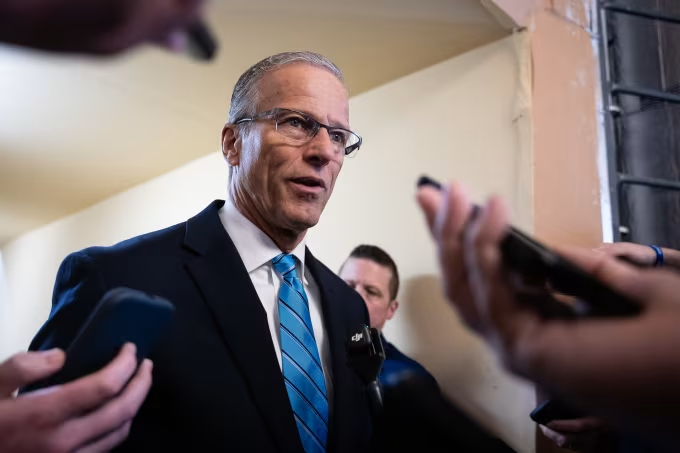
- Top Senate Republicans emerged from a high-stakes White House meeting on Monday night with a unified plan to restore funding to the Department of Homeland Security (DHS), potentially ending a nearly 45-day shutdown that has left federal workers without pay and caused massive airport delays nationwide.
- The proposed deal involves passing an immediate bill to fund almost the entire department, excluding the controversial Immigration and Customs Enforcement (ICE) enforcement budget, followed by a second, partisan Republican push to fund ICE and implement President Trump’s “SAVE America Act” voter ID policies.
- President Donald Trump, who previously insisted on including voter ID measures as a non-negotiable condition for reopening the agency, appears to have shifted toward this “off-ramp” strategy to alleviate the mounting pressure on national security and travel infrastructure.
The stalemate that has paralyzed the Department of Homeland Security for over a month may finally be nearing a resolution as Senate leaders from both parties signal a “serious” and productive dialogue.
Eko Hot Blog reports that under the emerging framework, Congress would restore pay to TSA officers, Coast Guard personnel, and other essential federal workers by decoupling the broader immigration enforcement budget from the rest of the agency’s operations.
EDITOR’S PICK
- Ogun Begins Crackdown on Illegal Parks at Sango Border Over Rising Accidents
- Police Nab 30-Year-Old ‘Super M’ During Stop-and-Search in Lagos
- LASG Launches Investigation Into Cosmetic Surgery Death
This tactical “carve-out” focuses specifically on ICE’s Enforcement and Removal Operations (ERO), leaving that contentious branch to be debated in a separate legislative battle later this spring.
Democratic senators, including Chris Murphy and Peter Welch, have expressed cautious optimism regarding the direction of the talks.
They noted that significant progress has already been made during the shutdown, citing the departure of former DHS Secretary Kristi Noem and the removal of ICE operations from Minneapolis as key concessions.
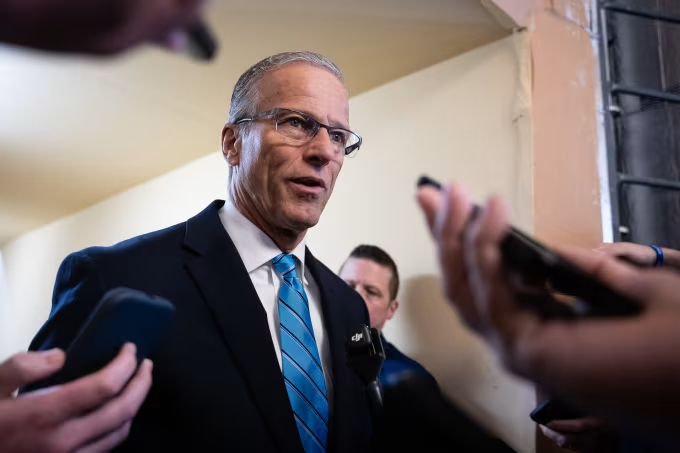
While Senate Minority Leader Chuck Schumer confirmed that both sides are talking in a serious way, top GOP spenders like Senator Susan Collins stated they are “optimistic” that the party is finally on a good track to “land the plane” and restore government services.
The stakes remain incredibly high as the 2026 midterm elections approach.
Even if the Senate reaches a bipartisan agreement this week, the bill must still navigate a razor-thin Republican majority in the House.
Furthermore, the second phase of the GOP plan, which seeks to muscle through partisan immigration reforms and voter ID requirements without Democratic votes is expected to face fierce resistance.
For now, the immediate priority for Washington is ending the 45-day lapse in funding to ensure national security remains intact and federal employees receive their long-overdue paychecks.