A fresh legal battle is brewing in Nigeria’s downstream petroleum sector, and its outcome could reshape how Nigerians access fuel for years to come.
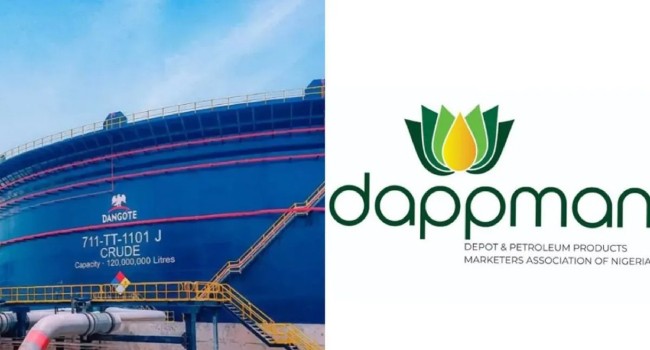
Earlier in May, Dangote Petroleum Refinery filed a suit before a Federal High Court in Lagos challenging import licences recently issued or renewed by the Nigerian Midstream and Downstream Petroleum Regulatory Authority (NMDPRA) to fuel marketers.
EDITOR’S PICKS
The refinery’s argument is straightforward: under the Petroleum Industry Act (PIA), fuel imports are only permissible when domestic supply is insufficient.
By granting fresh licences in March — after an earlier court order preserving the status quo — the NMDPRA, Dangote argues, acted in breach of both the law and the court’s directive.
The Depot and Petroleum Products Marketers Association of Nigeria (DAPPMAN) sharply disagrees. In response, the association described the licences as the legal backbone of Nigeria’s fuel supply chain, not optional instruments a court should casually invalidate.
What the Law Says and What It Doesn’t
The PIA, which has governed Nigeria’s petroleum industry since 2021, does contain provisions limiting fuel imports to situations where local supply falls short. On the surface, that appears to support Dangote’s position. The refinery has invested heavily in domestic petroleum production and has repeatedly argued that continued imports undermine its commercial viability.
But the NMDPRA — the regulator empowered under the same law and which issued the latest import licences in response to supply disruptions caused by the Middle East crisis — maintains that the licences are intended to safeguard supply security, not confer a commercial advantage on any single producer.
Regulators typically retain discretionary authority to determine supply adequacy, and the NMDPRA has framed its actions as protective of market stability rather than hostile to the refinery.
The central legal question is therefore straightforward: who determines when domestic supply is truly “sufficient” — the refinery or the regulator?
A Market Built for Many, Now Contested by One
DAPPMAN’s strongest argument may ultimately be structural rather than legal. Its members have invested billions of naira in depots, logistics infrastructure, and compliance systems — investments made on the assumption that their licences would remain valid. Revoking those licences retroactively, the association argues, would not merely hurt individual businesses; it could destabilise the entire supply chain at a time Nigeria can ill afford disruption.
That argument points to a deeper tension. Nigeria’s downstream petroleum market was deliberately designed as a multi-player system. Depots, marketers, and importers collectively distribute fuel across a country of more than 200 million people. The system is imperfect, but its diversity has historically allowed supply gaps in one segment to be absorbed by another.
A ruling that significantly restricts fuel imports would inevitably concentrate supply power in fewer hands. Whether that dominant player becomes Dangote Refinery or the NNPC — which is also named in the suit — the competitive implications would be substantial.
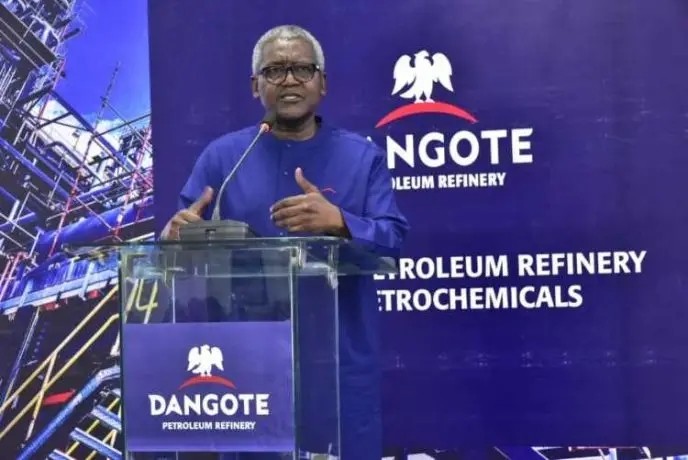
Dangote, however, also has a legitimate grievance. A refinery reportedly capable of processing 650,000 barrels of crude per day cannot remain commercially sustainable if the market simultaneously permits large-scale fuel imports at competitive prices. The economics are difficult to reconcile. And the refinery’s survival is tied to a broader national objective: reducing Nigeria’s long-standing dependence on imported fuel.
The Real Stakes
What makes this case particularly consequential is that both sides advance credible arguments rooted in the public interest. Supply security and domestic refining capacity are not mutually exclusive goals — yet the legal structure of this dispute increasingly frames them as competing priorities.
If the court sides with Dangote, marketers could lose their licences and Nigeria may become more dependent on a smaller number of suppliers. If it sides with the NMDPRA and the marketers, the refinery’s commercial position weakens further.
FURTHER READING
Either outcome carries risk. What Nigeria ultimately needs is a regulatory framework clear enough that a matter this consequential does not have to be settled in court, but that framework does not yet exist.
Philip Ibitoye is a Special Correspondent with EKO HOT BLOG. Click here to find daily analysis and critical insight on trending issues in Lagos and other parts of Nigeria.
Click to watch the video of the week below: