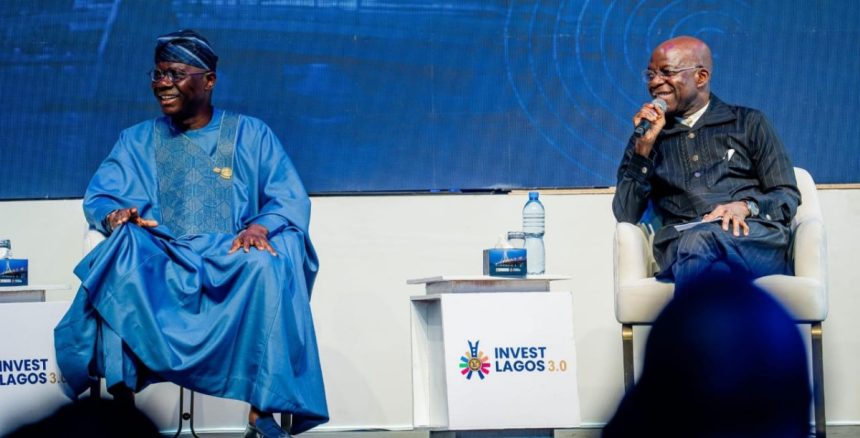
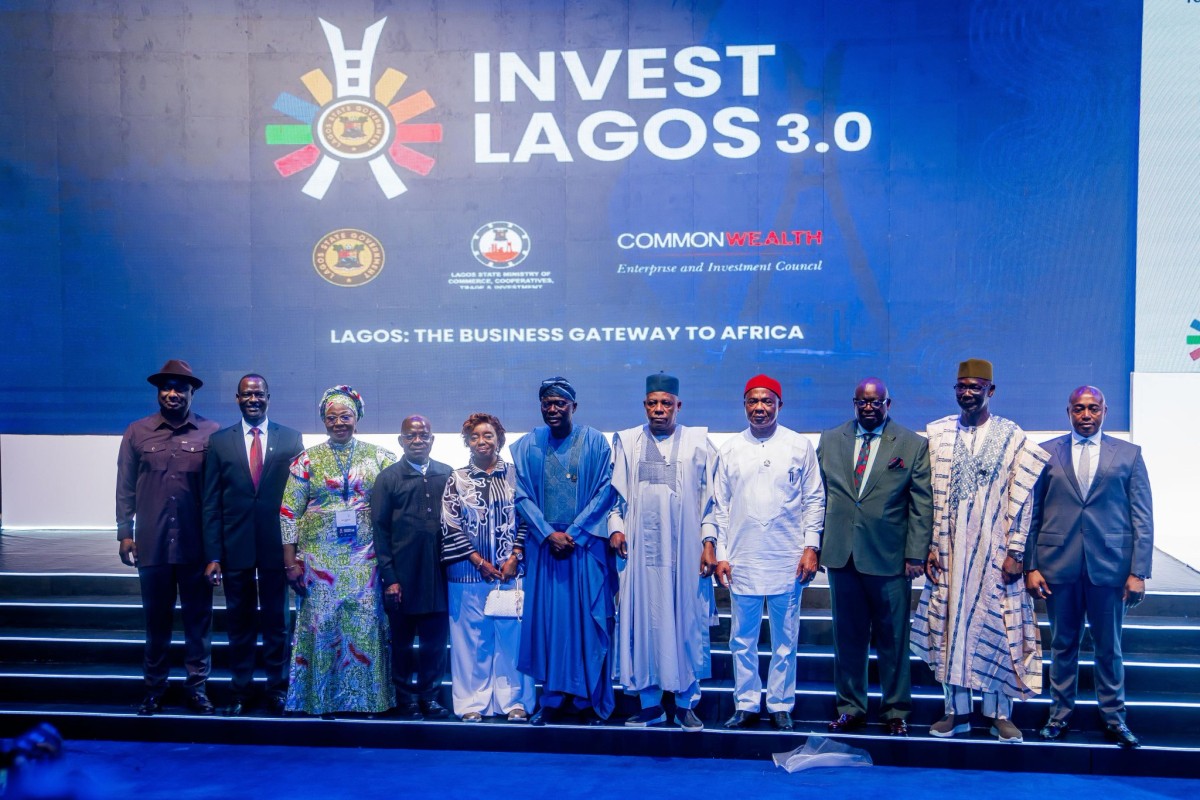
Abia State Governor, Alex Otti, used his appearance at the Invest Lagos 3.0 summit on Monday to make an unsentimental case: Lagos is overpopulated, unsustainable as Nigeria’s sole economic destination, and other states must step up.
Speaking during the Governors’ Investment Showcase at Eko Hotels, Victoria Island, he outlined what Abia is doing to become one of those alternatives.
EDITOR’S PICKS
The argument landed because the numbers support it.
The Lagos Problem
Lagos State is the smallest state in Nigeria by landmass, covering just 3,345 square kilometres, yet it holds the densest population concentration in the country. Its metro area population currently stands at approximately 17.8 million people and has been growing at nearly 4 percent annually.
The pressure this places on housing, transport, water and electricity is visible to anyone who has sat in Lagos traffic or lived in Ajegunle. Moving the capital to Abuja in 1991 was supposed to ease that pressure. It didn’t. Economic opportunity stayed in Lagos, and so did the people chasing it.
The result is a country where one undersized state bears the weight of national ambition. That is not a Lagos problem. It is a Nigeria problem.
What Otti Says He Is Doing About It
Otti’s argument was not just rhetorical. He came with receipts.
His central pitch rests on power. He told investors that Geometric Power, stalled for two decades, is now operational in Aba, and that the city and eight surrounding local governments have been ringfenced off the national grid, receiving 24-hour electricity. He further disclosed that his administration has signed an agreement with Enugu DisCo to extend this to the rest of Abia State, moving the remaining areas out of EEDC entirely.
He tied that directly to economic logic. “Our people can stay in the market for 24 hours if they have power,” he said.
His administration has begun transforming Ekeoha market and is overhauling Ariaria — the sprawling complex in Aba that has long been the informal manufacturing backbone of the South-East. He also disclosed that he has allocated five hectares of land near Geometric Power to accommodate a steel plant an investor wants to relocate from another state specifically because of power failures there.
The Bigger Point
Otti was careful not to position Abia as a rival to Lagos. “We are not going to compete with Lagos,” he said. The pitch was complementary — that Abia, with its entrepreneurial population and improving infrastructure, can absorb some of the economic activity Lagos is straining to hold.
That framing matters. Nigeria’s development has long been centred on one city, creating a dangerous single point of failure for millions of livelihoods. The case for distributing economic opportunity — to Aba, Onitsha, Kano, Port Harcourt — is not charity. It is structural sanity.
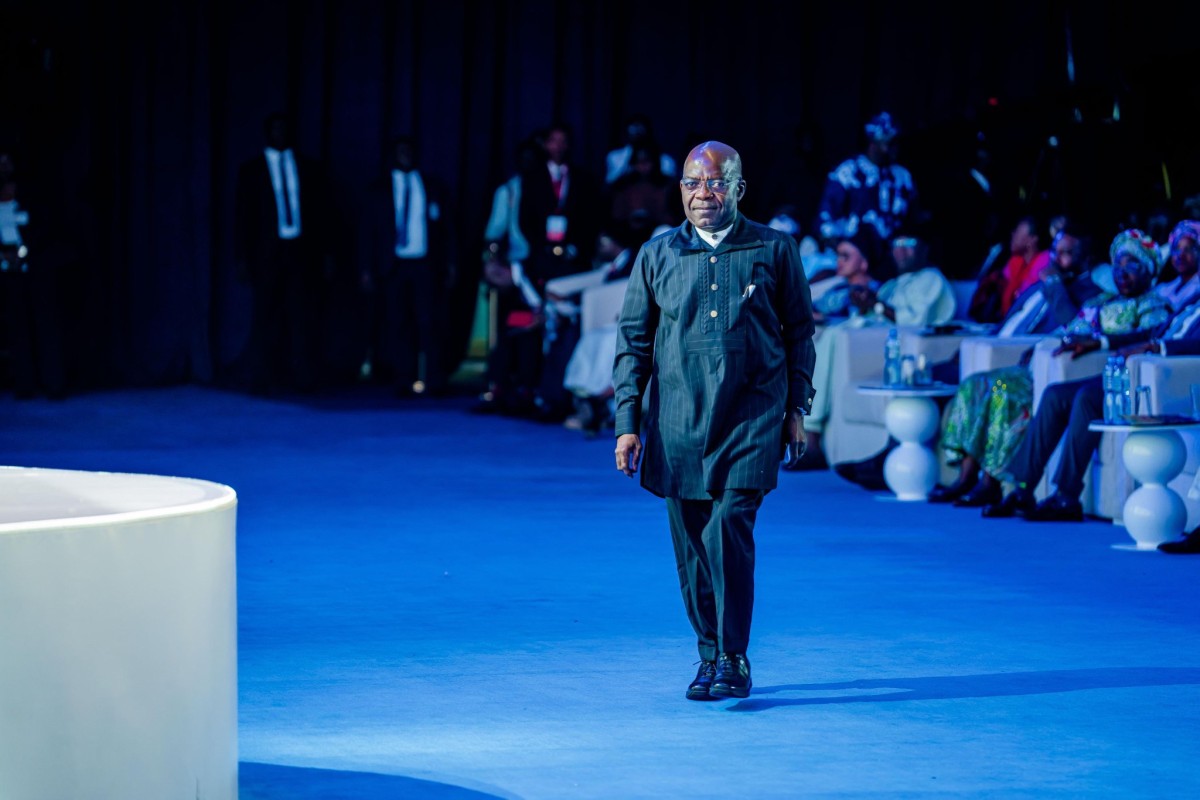
Otti is a Labour Party governor who spent Monday on an APC-hosted platform in Lagos, making the case for his state to a room full of investors. Whatever the politics, the economics were sound. He may not deliver everything he promised — Nigerian governance has a long history of compelling pitches that dissolve on contact with reality. But the framework he outlined: fix power, transform markets, build around the national grid rather than wait for it, is the right one.
FURTHER READING
Lagos cannot be the answer to every Nigerian’s question about where to build a better life. Other cities have to become the answer. Otti, at least, seems to understand the assignment.
Philip Ibitoye is a Special Correspondent with EKO HOT BLOG. Click here to find daily analysis and critical insight on trending issues in Lagos and other parts of Nigeria.
Click to watch the video of the week below: