After nearly three decades of legal battles, corruption allegations and billions of dollars in lost revenue, the Federal Government has finally drawn a line under the OPL 245 scandal, one of the most damaging disputes in the country’s oil history.
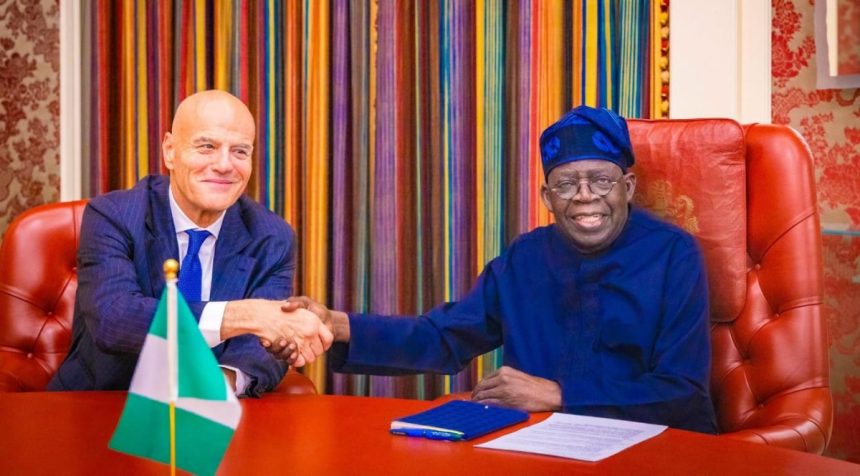
The presidency announced the successful conclusion of a settlement agreement between the federal government, Eni, and Nigerian Agip Exploration Limited (NAEL) in a statement on Thursday.
EDITOR’S PICKS
According to presidential spokesperson, Bayo Onanuga, President Bola Tinubu signed the deal at a ceremony on Thursday in Abuja.
EKO HOT BLOG explains what the settlement means and why it matters.
How Did We Get Here?
The story of OPL 245 begins in 1998, when then Minister of Petroleum, Dan Etete, controversially awarded a prized deepwater licence to Malabu Oil and Gas, a company he secretly controlled.
The block sits roughly 150 kilometres off the Niger Delta coast and is estimated to hold as many as nine billion barrels of oil, making it one of the most valuable untapped assets on the continent. The award of such a lucrative licence to one’s own firm for a nominal fee immediately raised questions of impropriety that would haunt the asset for generations.
Things came to a head in 2011, when a $1.3 billion deal transferred the licence to European oil giants Eni and Shell. Italian prosecutors later alleged that a large portion of that sum was siphoned off to politicians and middlemen rather than flowing to the Nigerian state — a charge that both companies denied. A lengthy criminal trial in Italy followed, but in 2021 the court acquitted Eni, Shell, and their executives of all charges. Malabu’s subsequent legal challenges in Nigerian courts were similarly dismissed in 2025.
Throughout this period, the block sat idle. Nigeria lost an estimated $5.86 billion in government revenue as the dispute dragged on, according to campaigners, while the country’s oil output remained well below its OPEC quota.
What Has Been Agreed?
President Tinubu signed a settlement agreement on Thursday, bringing the federal government, Eni, and Nigerian Agip Exploration Limited (NAEL) together to formally close the dispute.
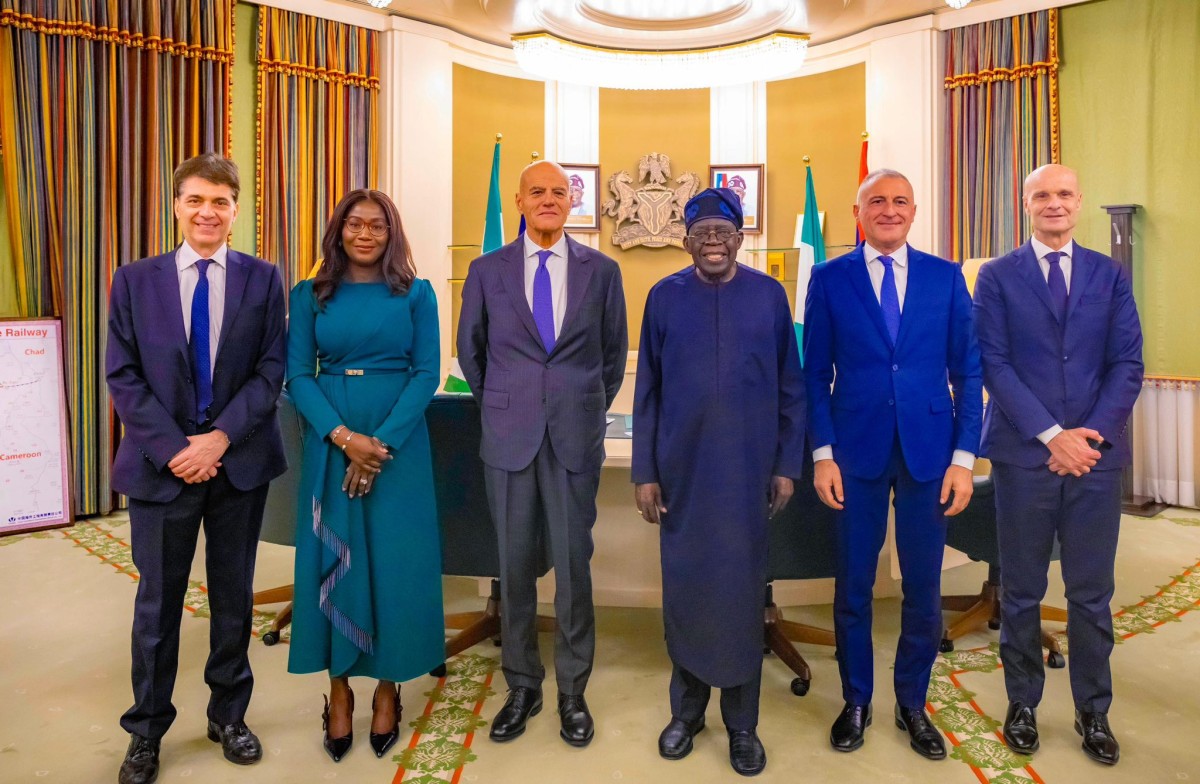
The terms represent a significant improvement on the troubled 2011 arrangement, according to Olu Arowolo-Verheijen, the president’s special adviser on energy.
She said the revised deal reflects the policy framework established under the Petroleum Industry Act (PIA) and the administration’s broader energy sector reforms, with stronger safeguards and better terms for the federation.
To accelerate development, the government has also reorganised the block, splitting it into four separate operating units to be managed by Eni and Shell. This is designed to streamline permitting, spread financial risk, and fast-track front-end engineering work.
With the legal cloud now lifted, both companies can proceed towards a Final Investment Decision on the Zabazaba–Etan deepwater project.
Why Does It Matter?
The economic stakes are considerable. The Zabazaba–Etan development is projected to add approximately 150,000 barrels per day to Nigeria’s production capacity, a meaningful boost for a country that has struggled to reach its OPEC quota of 2.2 million barrels per day in recent years. Industry analysts suggest the block could contribute between $50 billion and $100 billion to the Nigerian economy over its operational lifespan through taxes, royalties, and employment.
Beyond the numbers, the settlement carries a symbolic weight. Nigeria has for years struggled to attract the scale of foreign investment its oil sector requires, partly because of unresolved legacy disputes like this one. Tinubu described the agreement as a clear signal to global investors that Nigeria is prepared to address inherited problems transparently and uphold the rule of law.
FURTHER READING
Critics will note that the road to this settlement was long and costly, and that first oil from Zabazaba–Etan remains years away under even optimistic timelines. But for a government seeking to rebuild confidence in its energy sector, closing a 27-year dispute is no small achievement.
Philip Ibitoye is a Special Correspondent with EKO HOT BLOG. Click here to find daily analysis and critical insight on trending issues in Lagos and other parts of Nigeria.
Click to watch the video of the week below: