- Why Nigerians Still Pay Up to ₦15,000 for Cement Despite Surplus Production
- Manufacturers blame energy, logistics, inflation and exchange rate pressures for high prices.
- Experts urge reforms and stronger competition to make cement more affordable.
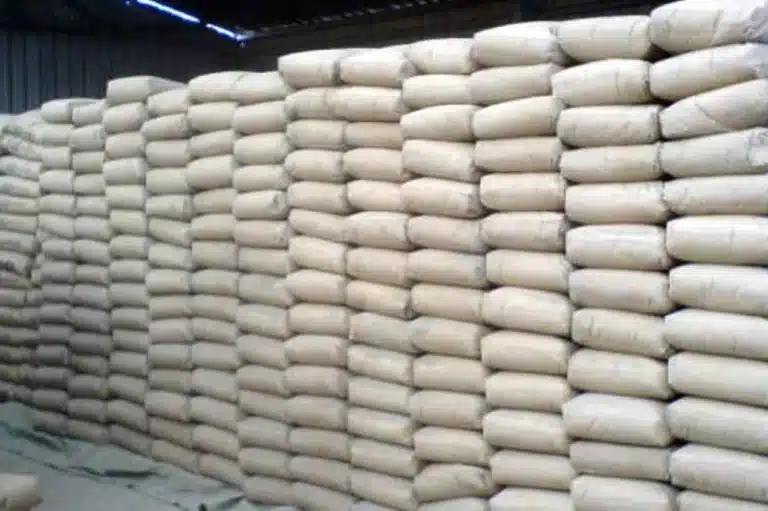
Despite Nigeria’s annual cement production capacity of more than 60 million metric tonnes, consumers continue to pay some of the highest prices for the product in Africa, with a 50-kilogramme bag selling for between ₦12,500 and ₦15,000 in many parts of the country.
EDITOR’S PICKS
- Akpabio Makes Demand From Senators Over State Police
- JUST IN: State Police Move Gains Momentum as Tinubu Sends Bill to Senate
- Malami Appears in Court Over ₦8.7bn Trial
EKO HOT BLOG reports that the country’s cement industry is dominated by Dangote Cement, BUA Cement and Lafarge Africa, recently rebranded as HBM Nigeria Plc.
Together, the three companies have an installed production capacity of between 60 million and 65 million metric tonnes annually, while domestic demand is estimated at only 25 million to 30 million tonnes, leaving Nigeria with a production surplus that is exported to neighbouring countries.
Despite the excess production, Nigerians still pay significantly more for cement than consumers in several African countries. A 50kg bag sells for between ₦6,000 and ₦7,000 in South Africa, about ₦4,000 to ₦5,000 in Egypt, ₦6,500 to ₦7,500 in Kenya and between ₦7,000 and ₦8,000 in Ghana.
The three major manufacturers generated more than ₦6.53 trillion in combined revenue in 2025, while their after tax profit stood at about ₦1.65 trillion, representing a 142 per cent increase from the previous year.
The figures have fuelled concerns among housing experts and consumers over the high cost of cement despite Nigeria’s strong production capacity.
Manufacturers, however, argue that cement production remains expensive due to rising energy costs, inflation, poor transport infrastructure, exchange rate pressures and the increasing cost of imported machinery, spare parts and raw materials.
Industry estimates indicate that logistics alone account for between 30 and 40 per cent of the final retail price.
The high cost of cement has also drawn the attention of the Federal Government.
Minister of Works David Umahi recently urged manufacturers to reduce prices, saying expensive cement continues to drive up the cost of roads and other infrastructure projects.
He also called for increased production capacity to support national development.
Experts maintain that Nigeria’s housing deficit of more than 16 million units cannot be addressed without making cement more affordable. They have called for policies that reduce production costs, improve energy supply, encourage more investment in the industry and strengthen competition to lower prices for consumers.