-
FG says terrorism financing probes require complex intelligence and cannot be rushed.
-
Idris urges patience, citing risks of jeopardising ongoing security operations nationwide.
-
Government highlights thousands arrested and neutralised since May 2023
Federal Government has explained why suspected terrorism financiers have not yet faced prosecution, saying the process involves complex intelligence work that cannot be rushed.
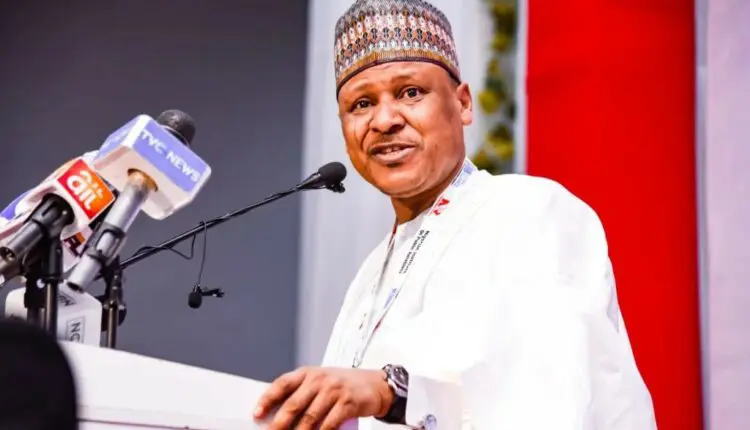
Minister of Information and National Orientation, Mohammed Idris, made the clarification on Friday during an interview on Channels Television’s Politics Today, following growing public criticism over alleged government reluctance to act.
EDITOR’S PICKS
- Lagos East Senator, Tokunbo Abiru Celebrates Men on International Men’s Day
- Nathaniel Bassey Condemns Kwara, Kebbi Attacks
- 42 Countries Confirm 2026 World Cup Qualification As UEFA Sets Playoff Paths
EKO HOT BLOG reports that Idris rejected claims that the government was in possession of a list of suspects but unwilling to prosecute them. He stressed that terrorism financing cases require thorough investigations backed by sensitive intelligence, not public assumptions or pressure.
He said, “It is not a question of having the list or not having the list; it is not as simplistic as that. Investigations have to be conducted. You don’t say, ‘because pronouncements have been made, let me take you to court directly.’
There must be sufficient investigation carried out.”
The minister acknowledged that some allegations previously circulated in public had “merit”, but insisted that taking any case to court prematurely could compromise wider security operations already underway. Successive governments have long faced pressure to prosecute individuals accused of funding Boko Haram, ISWAP, and various bandit groups.
Officials under former President Muhammadu Buhari had announced that certain suspects had been identified, raising public expectations of immediate prosecution.
However, the absence of high-profile trials over the years has triggered criticism from security analysts and civil society groups, who argue that influential individuals may be receiving protection.
Idris appealed for patience, explaining that terrorism investigations require multi-layered collaboration with domestic and foreign intelligence partners.
He said the nature of the conflict makes swift action difficult, adding, “Unfortunately, when you are fighting these kinds of battles, it is not something that you just sort out within a day or two.
That is why we are calling on our partners within and outside this country to understand the complexity and diversity of the situation we have here.”
The minister maintained that the Tinubu administration has recorded major gains in the fight against insecurity, even if many Nigerians do not fully acknowledge them. According to him, “From May 2023 to date, over 13,500 of these criminals have been neutralised and taken out of our society. Over 17,000 of them have been apprehended.
Even as we speak, some of them are having their day in court, and some have been sentenced. I think we should recognise these efforts.”