-
Shettima returns after conveying Tinubu’s message at AU–EU Summit.
-
Tinubu demands Africa’s permanent UN Security Council seats during summit.
-
Nigeria pushes for fair global systems, security reforms and AI standards.
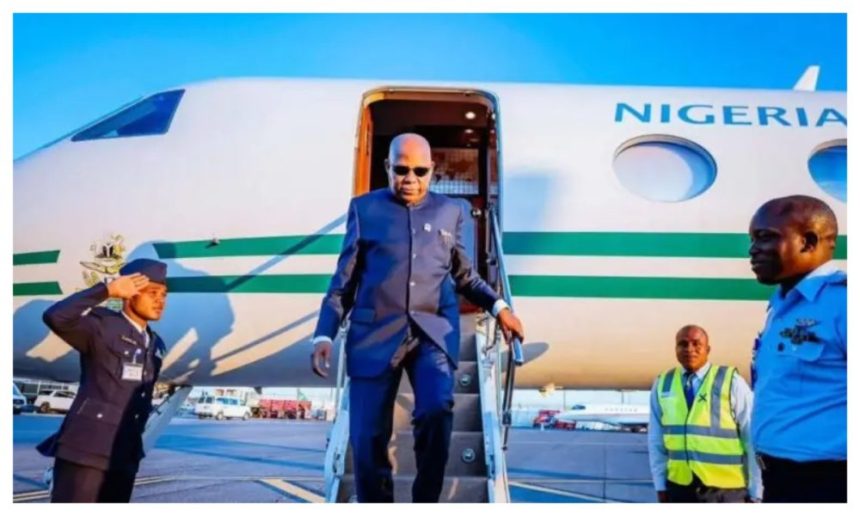
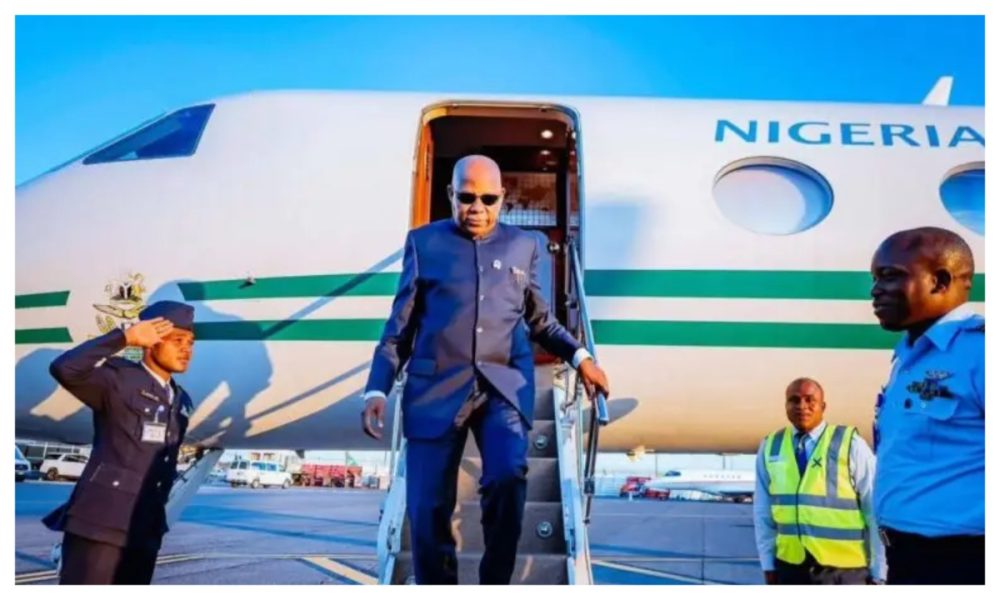
Vice-President Kashim Shettima has returned to Abuja after representing President Bola Ahmed Tinubu at the 7th African Union–European Union Summit in Luanda, Angola.
Shettima travelled to Luanda from South Africa on Sunday, shortly after attending the 2025 G20 Leaders’ Summit in Johannesburg.
EDITOR’S PICKS
- Lagos East Senator, Tokunbo Abiru Celebrates Men on International Men’s Day
- Nathaniel Bassey Condemns Kwara, Kebbi Attacks
- 42 Countries Confirm 2026 World Cup Qualification As UEFA Sets Playoff Paths
EKO HOT BLOG reports that at the AU–EU Summit, the Vice-President delivered President Tinubu’s message, in which the Nigerian leader renewed his long-standing call for Africa to be granted permanent, veto-wielding seats on the United Nations Security Council. Tinubu argued that the current global governance architecture does not reflect present-day realities and must be restructured to give Africa a meaningful role.
He urged the European Union to work with African leaders in building peace and security frameworks driven by African solutions, noting that long-term stability on the continent requires partnerships rooted in mutual respect and shared priorities. The President also reaffirmed Nigeria’s commitment to strengthening democratic governance, peace and regional security while collaborating with the EU for a more balanced global order.
Earlier at the first session of the G20 Summit in Johannesburg, Tinubu, represented by Shettima, pushed for a more equitable system for managing global financial flows and addressing persistent debt challenges facing developing nations. He maintained that existing multilateral systems no longer serve the economic realities and geopolitical shifts shaping the modern world.
During the third session of the G20 meeting, Tinubu called for new global policies ensuring African communities hosting critical minerals directly benefit from processing and value addition. He also supported moves toward establishing global ethical standards for Artificial Intelligence, saying such guidelines are essential to ensure that emerging technologies promote inclusive and sustainable development.