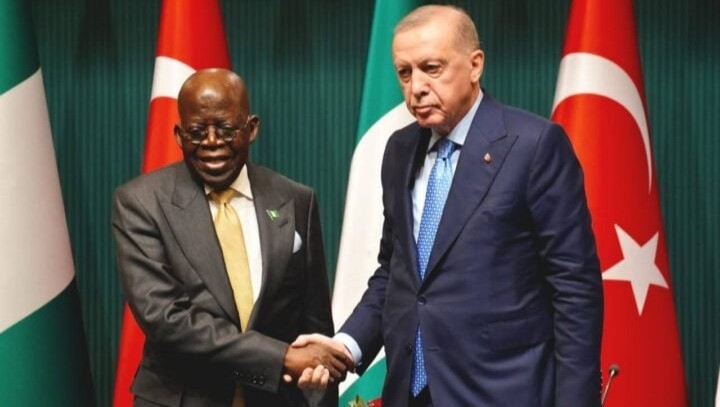
Nigeria and Turkey have cemented their bilateral relationship with the signing of nine strategic agreements during President Bola Tinubu’s state visit to Ankara.
- EDITOR’S PICKS
- Diaspora Policy Cooperation
- Media and Communication Agreement
- Higher Education Cooperation
- Halal Quality Infrastructure Agreement
- Joint Economic and Trade Committee (JETCO)
- Defence and Military Cooperation Protocol
- General Education Cooperation
- Diplomatic Academy Cooperation
- Women and Family Affairs Cooperation
- Strategic Implications
- FURTHER READING
The agreements, signed in the presence of President Tinubu and Turkish President Recep Tayyip Erdoğan following bilateral talks at the Presidential Palace on Tuesday, span defence cooperation, education, trade, and social development. The visit included several ministers and high-ranking officials from both countries, signalling the determination to deepen economic and strategic ties.
EDITOR’S PICKS
EKO HOT BLOG brings a detailed look at each of the nine agreements:
Diaspora Policy Cooperation
This memorandum of understanding brings together Turkey’s Presidency for Turks Abroad and Related Communities with Nigeria’s Nigerians in Diaspora Commission.
The agreement aims to strengthen ties with citizens living abroad and facilitate better engagement with diaspora communities.
Both nations have significant populations living outside their borders, and this partnership is expected to improve consular services, cultural preservation, and investment opportunities from diaspora communities.
Media and Communication Agreement
Valid for three years, this agreement establishes a framework for the exchange of information, expertise, and best practices between the broadcasting and communication sectors of both countries.
It provides for the organisation of joint seminars, workshops, training programmes, and reciprocal visits for officials and experts. The deal is expected to enhance professional development in journalism and media production whilst fostering cultural exchange through broadcast content.
Higher Education Cooperation
This memorandum of understanding establishes cooperation between the higher education sectors of Nigeria and Turkey. The agreement is expected to facilitate student exchanges, joint research programmes, faculty collaboration, and recognition of academic qualifications.
With Turkey’s growing reputation in higher education and Nigeria’s large youth population seeking quality tertiary education, this partnership could significantly boost academic mobility between both nations.
Halal Quality Infrastructure Agreement
This agreement between Turkey’s Halal Accreditation Agency and Nigeria’s National Accreditation System establishes standards for halal certification and quality assurance.
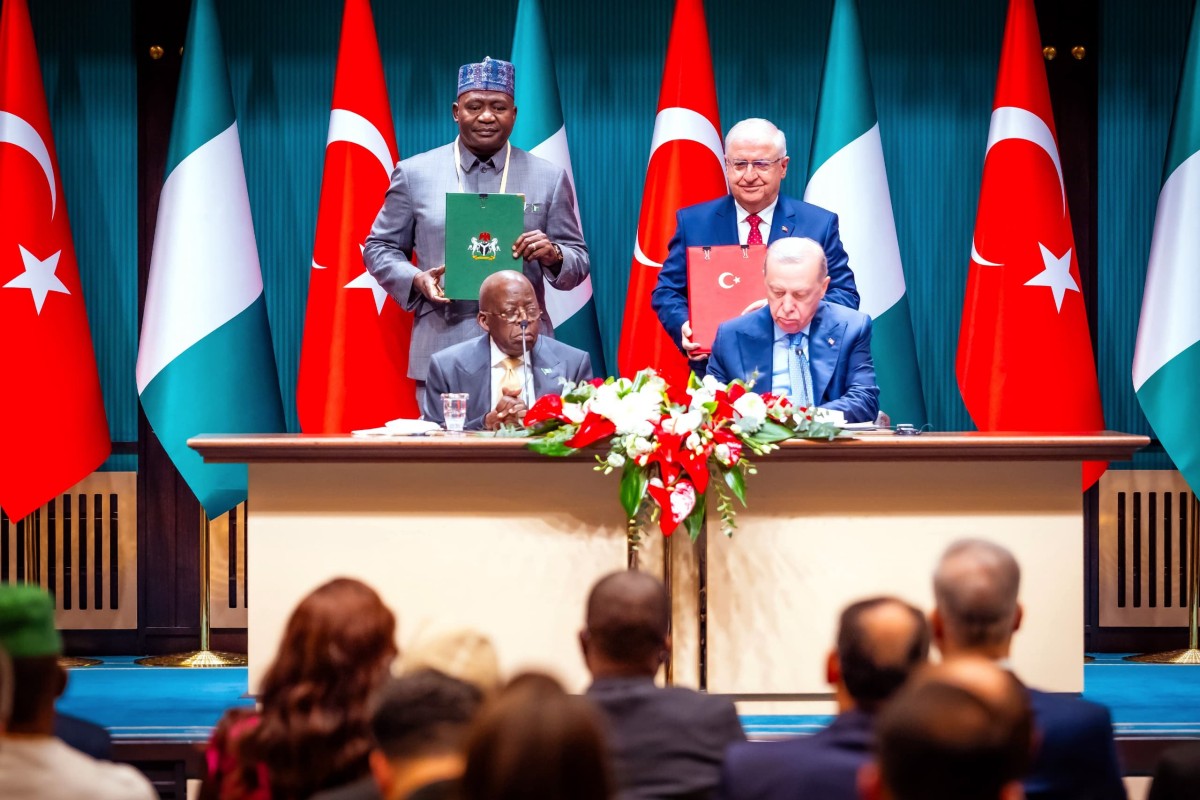
As both countries have predominantly Muslim populations and significant halal food industries, this partnership will facilitate trade in halal products, ensure compliance with Islamic dietary laws, and potentially open new export markets for Nigerian products in Turkey and beyond.
Joint Economic and Trade Committee (JETCO)
Perhaps the most economically significant agreement, the joint declaration establishing JETCO sets an ambitious target of increasing bilateral trade from the current $1 billion to $5 billion.
President Erdoğan confirmed that discussions have already commenced on strategies to achieve this target. The committee will drive institutional economic cooperation, identify investment opportunities, and remove barriers to trade.
The Turkish leader highlighted Turkey’s commitment to the partnership, noting that the presence of President Tinubu and his delegation demonstrates Nigeria’s determination to attract foreign investment.
Defence and Military Cooperation Protocol
The defence cooperation protocol builds on existing military ties between the two nations. Nigeria has previously purchased Turkish drones and attack helicopters, and this agreement formalises cooperation in counterterrorism, military training, intelligence sharing, and defence industry partnerships.
President Erdoğan committed to assisting Nigeria in tackling terrorism, leveraging Turkey’s experience in counterinsurgency operations. This comes as Nigeria continues to battle insurgency in its northeastern region and banditry across several states.
General Education Cooperation
Separate from the higher education agreement, this deal focuses on cooperation in basic and secondary education. It is expected to cover curriculum development, teacher training, educational technology, and possibly student exchange programmes at the primary and secondary levels.
The agreement could help Nigeria address some of its educational challenges whilst providing Turkish educational institutions with opportunities for expansion and collaboration in Africa’s most populous nation.
Diplomatic Academy Cooperation
This memorandum of understanding (MoU) establishes cooperation between Turkey’s Ministry of Foreign Affairs and Diplomacy Academy and Nigeria’s Ministry of Foreign Affairs and Foreign Service Academy.
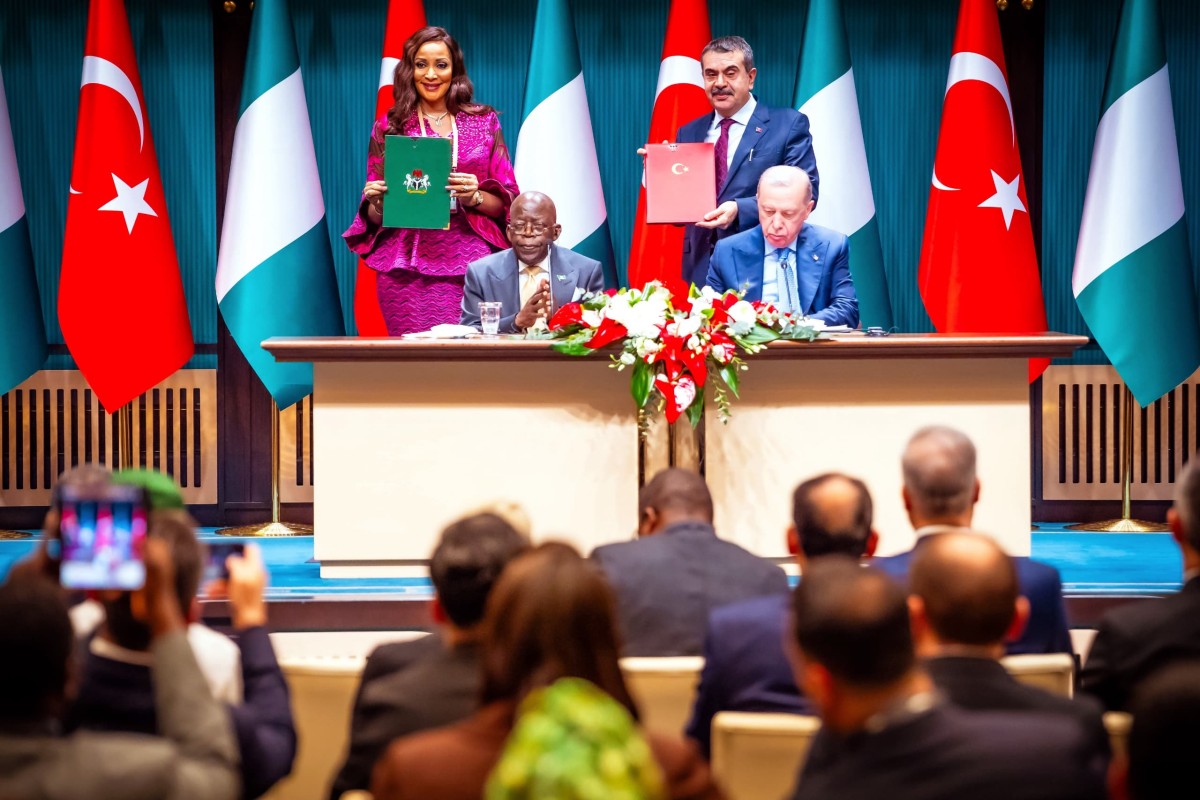
The partnership will enhance diplomatic training, facilitate knowledge sharing in foreign policy formulation, and improve the professional capacity of diplomatic personnel from both countries. It represents an investment in the quality of diplomatic relations and could lead to better understanding of each country’s foreign policy priorities.
Women and Family Affairs Cooperation
The final agreement establishes cooperation between Turkey’s Ministry of Family and Social Policies and Nigeria’s Ministry of Women Affairs and Social Development. This partnership is expected to focus on women’s empowerment, family welfare programmes, social protection schemes, and addressing gender-based challenges.
Both countries face similar issues regarding insufficient women’s participation in the economy and society, making this a valuable platform for sharing solutions and best practices.
Strategic Implications
During the joint press conference, President Erdoğan praised President Tinubu’s energy sector reforms, describing them as restructuring Nigeria’s economy. He expressed optimism about collaborations between Turkish and Nigerian energy firms, including the Turkish Petroleum Corporation.
President Tinubu emphasised the importance of building an inclusive economy that prioritises vulnerable populations.
“What is very important to the countries being discussed: trade, business, no restrictions, giving opportunity to those who are ready to learn to work and prosper,” he stated, adding that Nigeria would continue to play its role in promoting peace and stability across Africa despite regional instability.
The agreements represent a significant deepening of Nigeria-Turkey relations, moving beyond traditional diplomatic ties into concrete economic, security, and social partnerships.
FURTHER READING
With implementation expected to begin immediately, both nations will be watching closely to see if these commitments translate into the ambitious $5 billion trade target and meaningful cooperation across all nine areas of agreement.
Philip Ibitoye is a Special Correspondent with EKO HOT BLOG. Click here to find daily analysis and critical insight on trending issues in Lagos and other parts of Nigeria.
Click to watch the video of the week below: