The scenes from Makoko from December 2025 to February 2026 need little introduction. Thousands of families displaced. Children sleeping in canoes on the lagoon. More than 10,000 people rendered homeless.
The Lagos State Government cited safety concerns and the enforcement of physical planning laws. Rights groups pointed to a waterfront development deal signed with a private real estate company in 2021.
EDITOR’S PICKS
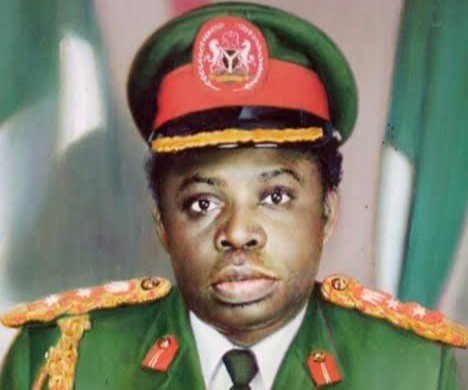
The debate over what drove the Makoko demolitions continues. But for students of Lagos history, the images carry a familiar weight. Thirty-five years ago, a military governor earned a name that still resonates in conversations about the city’s development — and its cost. His name was Raji Alagbe Rasaki. They called him The Bulldozer.
The Man
Rasaki was born on January 7, 1947, in Ibadan. He attended the Nigerian Military School in Zaria and was commissioned as an officer in March 1970 after passing through the Nigerian Defence Academy. He served as military governor of Ogun State from 1986 to 1987 before being redeployed to Lagos in August 1988, where he would spend three of the most eventful years in the state’s modern history.
He was, by his own description, a man of strict discipline and little patience for ambiguity. In a later interview, he recounted that when a journalist arrived thirty minutes early to meet him, he considered it a virtue. One minute late, he said, and the appointment would have been cancelled.
Markets, Newspapers, and Billboards
According to a March 18, 1991, issue of the defunct African Concord, between November 1990 and February 1991, government bulldozers moved into Balogun Market, Alaba Market, and Oluwole Market, demolishing hundreds of stalls and causing significant losses for traders.
As the military governor of Lagos between 1988 and 1991, demolishing buildings was a hobby for Raji Rasaki. Everyone called him The Bulldozer.
An African Concord report noted that:
▶️Between November 1990 and February 1991, government bulldozers rolled into Balogun Market,… pic.twitter.com/bPgr48tGqr
— archivi.ng (@StartArchiving) February 18, 2026
Some traders said they never received quit notices. Others said demolitions started before official deadlines, leaving goods vulnerable to looting. Many pointed out they had been paying rent to local council officials, raising questions about how their markets could be classified as illegal.
The government maintained the markets were unauthorised and would be replaced with modern shopping complexes. When Vanguard and Champion newspapers reported critically on the Alaba Market demolitions, both publications were shut down.
In December 1990, Rasaki ordered the demolition of the Floating Bukkar Restaurant under Eko Bridge, had its owner arrested, and directed the clearing of all structures between the bridge and the CMS bus terminal. Across the state, more than 2,000 billboards were also removed, with the governor citing concerns about advertising revenue being diverted by local council officials.
The Demise of Maroko
Nothing, however, defined Rasaki’s tenure more than the 1990 demolition of Maroko, then a densely populated informal settlement on the Lekki Peninsula. The government described the area as disaster-prone and at risk of flooding from the Atlantic Ocean. Residents sought a court injunction to halt proceedings. Demolitions began before a ruling could be obtained.
An estimated 300,000 people were displaced. Approximately 3,000 were officially resettled. Rasaki later recalled that then-military president Ibrahim Babangida had advised against the exercise. He proceeded anyway. In subsequent interviews, he expressed no regret, describing the clearance as necessary for the modernisation of Lagos.
The land that once housed Maroko now forms part of what is today Oniru and the Victoria Island Extension, among the most valuable real estate in Nigeria.
Legacy
Rasaki retired from the military in 1993 with the rank of brigadier general. His tenure remains contested, praised by some for imposing order on a chaotic megacity, criticised by others for the scale of displacement and the limited resettlement that followed.
FURTHER READING
Between 1973 and 2024, Lagos recorded 91 eviction operations. Rasaki’s era accounts for some of the largest. As the debate over Makoko’s future unfolds, his story offers a long view of a city that has always been in the business of reinventing itself and the human cost that reinvention has consistently carried.
Philip Ibitoye is a Special Correspondent with EKO HOT BLOG. Click here to find daily analysis and critical insight on trending issues in Lagos and other parts of Nigeria.
Click to watch the video of the week below: