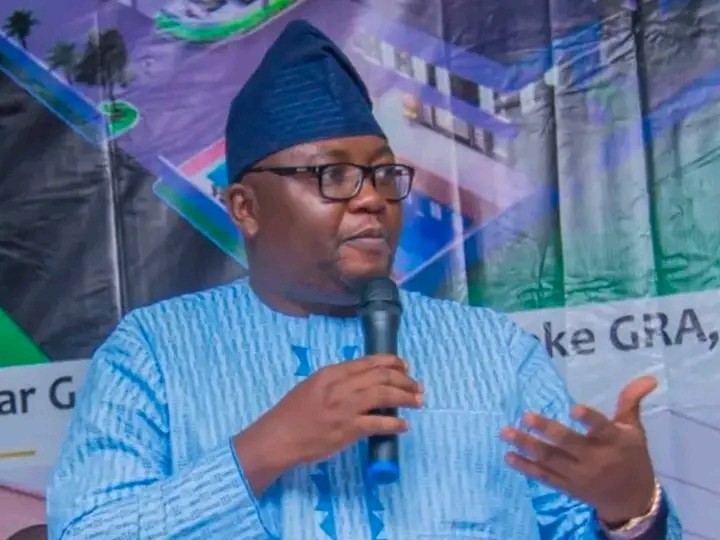
- Minister of Power, Adebayo Adelabu, has announced that the Federal Government is implementing “concrete measures” to resolve the persistent gas constraints that have severely limited electricity generation across Nigeria.
- The intervention comes as thermal power plants grapple with a massive gas shortfall, receiving less than 43% of the required fuel volume due to an estimated ₦3.3 trillion debt owed to gas suppliers by generation companies.
- In his Eid-el-Fitr message on Thursday, March 19, 2026, Adelabu expressed optimism that President Bola Tinubu’s reforms are taking root and urged citizens to remain patient as the sector transitions toward a more sustainable system.
The Federal Government has moved to de-escalate the worsening national blackout by addressing the critical financial and logistical bottlenecks in the gas-to-power value chain.
Eko Hot Blog reports that Minister of Power, Adebayo Adelabu, revealed on Thursday that the administration is actively working to resolve the gas supply crisis which has recently seen power generation plummet below 4,000 megawatts.
EDITOR’S PICK
- Ogun Begins Crackdown on Illegal Parks at Sango Border Over Rising Accidents
- Police Nab 30-Year-Old ‘Super M’ During Stop-and-Search in Lagos
- LASG Launches Investigation Into Cosmetic Surgery Death
The current energy crisis was exacerbated when gas suppliers halted deliveries to thermal plants over a staggering ₦3.3 trillion debt.
Data provided by the Nigerian Independent System Operator (NISO) highlights the severity of the shortage: while thermal plants require approximately 1,629 million standard cubic feet (mmscf) of gas per day to function optimally, actual supply as of late February stood at just 692 mmscf per day.
This deficit has left homes and businesses nationwide struggling with prolonged outages amid rising fuel prices and extreme heat.
Adelabu maintained that the current challenges are the “building blocks” of a more prosperous energy future.
He noted that the government’s broader reform agenda is specifically designed to unlock efficiency and attract foreign investment, citing President Tinubu’s recent diplomatic engagements in the United Kingdom as a key driver for future infrastructure funding.
The Minister urged Nigerians to maintain the spirit of discipline and sacrifice beyond the Ramadan period as the government works to stabilize the grid.
Despite the Minister’s optimistic outlook, the Association of Power Generation Companies (APGC) has warned that the mounting debt across the value chain remains a significant threat to the sector’s survival.
While the government pursues a “transition” toward reliability, many electricity consumers across various supply bands continue to lament the lack of immediate relief, emphasizing that the financial impasse between GenCos and gas producers must be resolved to prevent a total collapse of the system.