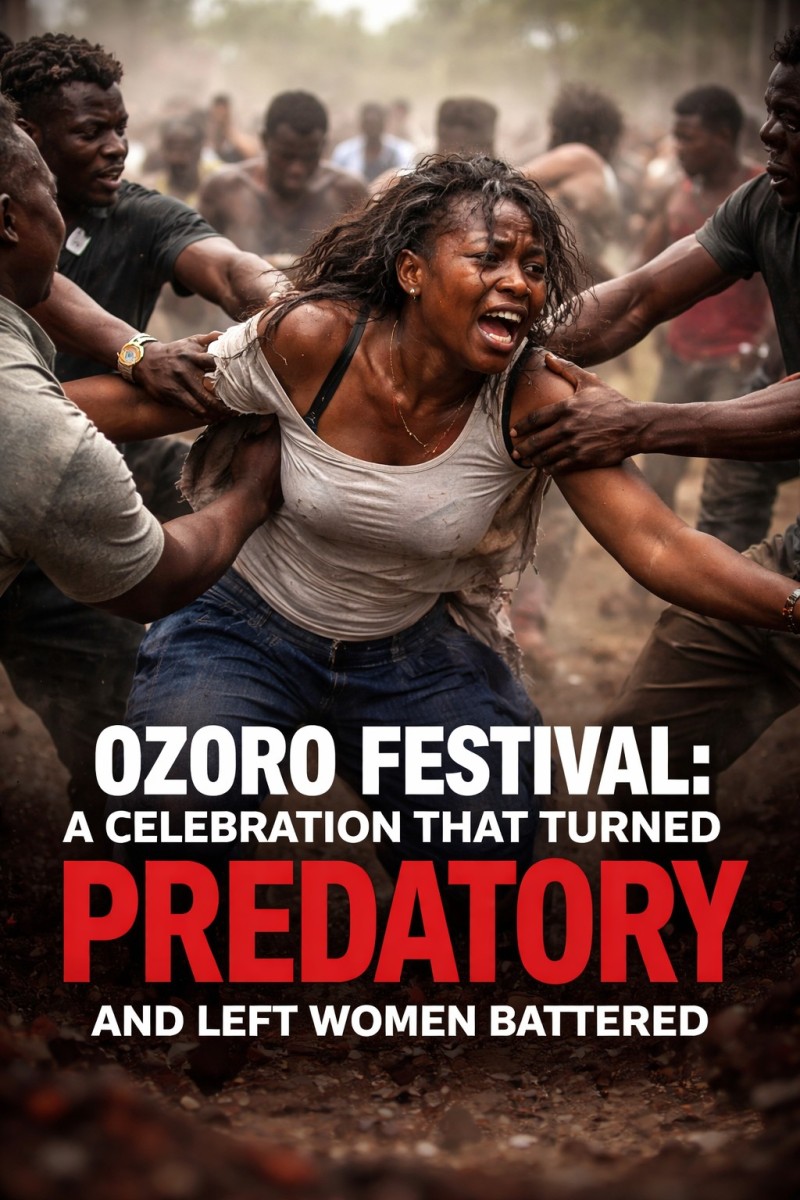
Videos from the Alue-Do festival show scenes that are difficult to ignore, women running through open spaces, some being chased, others grabbed in full view of onlookers.
EDITOR’S PICK
- Ogun Begins Crackdown on Illegal Parks at Sango Border Over Rising Accidents
- Police Nab 30-Year-Old ‘Super M’ During Stop-and-Search in Lagos
- LASG Launches Investigation Into Cosmetic Surgery Death
In several clips, clothes are pulled, bodies are exposed, and the atmosphere feels less like a festival and more like something that spiraled out of control.
The Alue-Do festival has long been described as a traditional rite linked to fertility, with symbolic practices meant to reflect cultural beliefs.
But what played out this year went far beyond symbolism.
From multiple accounts and video evidence, the actions appeared deliberate, with groups of young men moving together and targeting women in ways that suggest more than confusion about tradition.
Explanations have since followed. Some community voices have pointed to “misinterpretation” of the festival’s rituals.
Equally concerning is the role of the crowd.
In many of the videos, people can be seen watching, filming, and in some cases laughing.
When something like this happens in the open and no one steps in, it raises uncomfortable questions about collective responsibility.
For women, the incident has struck a deeper nerve. Public spaces already come with unspoken calculations about where to go, what to wear, how to stay alert.
What happened in Ozoro adds to that reality, reinforcing fears about how quickly a familiar environment can become unsafe.
There is also growing concern about the behavior on display. The individuals involved were not hiding.
Their faces were visible, their actions carried out without hesitation. It points to a level of boldness that many believe is becoming more common, where consequences feel distant and boundaries less defined.
Authorities have confirmed that arrests have been made, and the incident has been condemned by officials.
Still, questions remain about the absence of immediate control as events unfolded.
For many observers, this is where the real issue lies, not just in the actions themselves, but in how long they were allowed to continue.

Social media ensured that the story did not stay local.
Within hours, the videos had spread widely, drawing outrage and national attention.
Some descriptions of the event have been exaggerated, but the core issue remains clear: women were harassed and assaulted in a public, communal setting.
At the heart of it all are those who experienced it firsthand.
The Ozoro incident has now become more than just a local disturbance.
It has opened up broader conversations about safety, accountability, and the thin line between culture and misuse.
And as those conversations continue, one thing is certain, what happened should not be dismissed as just another festival gone wrong.
All perpetrators should be arrested and punished.