On February 28, 2026, the United States (US) and Israel launched a large-scale attack on the Islamic Republic of Iran, killing the country’s Supreme Leader, Ayatollah Ali Khamenei, at 86.
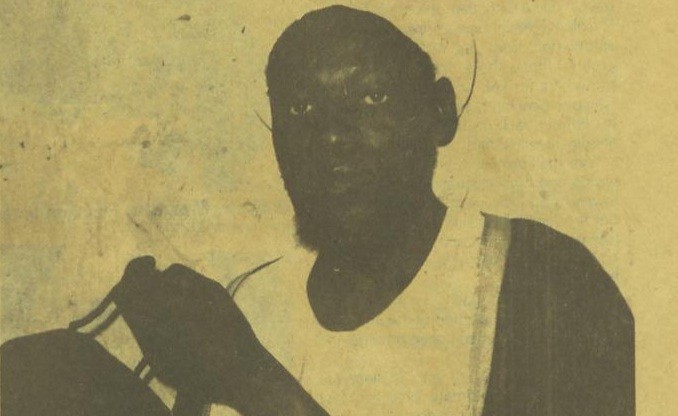
But 35 years before Khamenei’s death, in 1991, a cleric in Nigeria bore the same title as the slain Islamic leader. The Nigerian cleric was Mallam Yakubu Yahaya, a fiery cleric dubbed the “Ayatollah of Katsina,” who declared that nobody and nothing would stand in the way of his mission to install an Islamic revolution in the country.
EDITOR’S PICKS
According to the April 2, 1991, issue of the now-defunct African Concord, obtained from Archivi.ng, Yahaya commanded tens of thousands of faithful who did as he wished. He was a disciple of Ibrahim Zakzaky, the controversial Zaria-based preacher and leader of the Shiites group.
In 1991, African Concord detailed a chilling face-off in Northern Nigeria. It was the year Mallam Yakubu Yahaya, a fiery cleric dubbed the "Ayatollah of Katsina," declared that nobody and nothing would stand in the way of his mission to install an Islamic revolution in the… pic.twitter.com/Kec4v0xlw6
— archivi.ng (@StartArchiving) March 27, 2026
On the surface, Yahaya was easy to underestimate. The magazine described him as having “the sleekness of a pussy cat: friendly, shy and calm,” with a voice that was “almost a mew.” He lived in a mud house in a Katsina city slum. His sitting room was bare except for a standing fan. He squatted on a mat on the floor among his followers and shared almost everything with them.
But that calm exterior concealed something harder. At 36, he was a father of seven with a defined mission and followers willing to die for it.
The moment that shot him into national consciousness came on March 28, 1991, when Yahaya led a procession of around 20,000 followers from the Central Mosque area to the Katsina office of the Daily Times newspaper. Their target was the Fun Times, a cartoon strip magazine that they alleged had mocked Prophet Muhammad and Jesus Christ in a December 1990 edition. Chanting Laila illah la and Down with Daily Times, they stormed the premises, found the offending copies, carried them downstairs, and set them on fire. Nobody was beaten. Nothing was stolen. When it was done, they marched back.
The Nigerian Police Force reportedly watched from a safe distance and did nothing.
Katsina’s military governor at the time, Colonel Yahaya John Madaki, was furious. He threatened to personally drag Yahaya out of his house and execute him at the Polo Ground if he ever disturbed the peace again. Yahaya did not flinch. He returned fire, promising to send his followers back into the streets whenever he deemed it necessary.
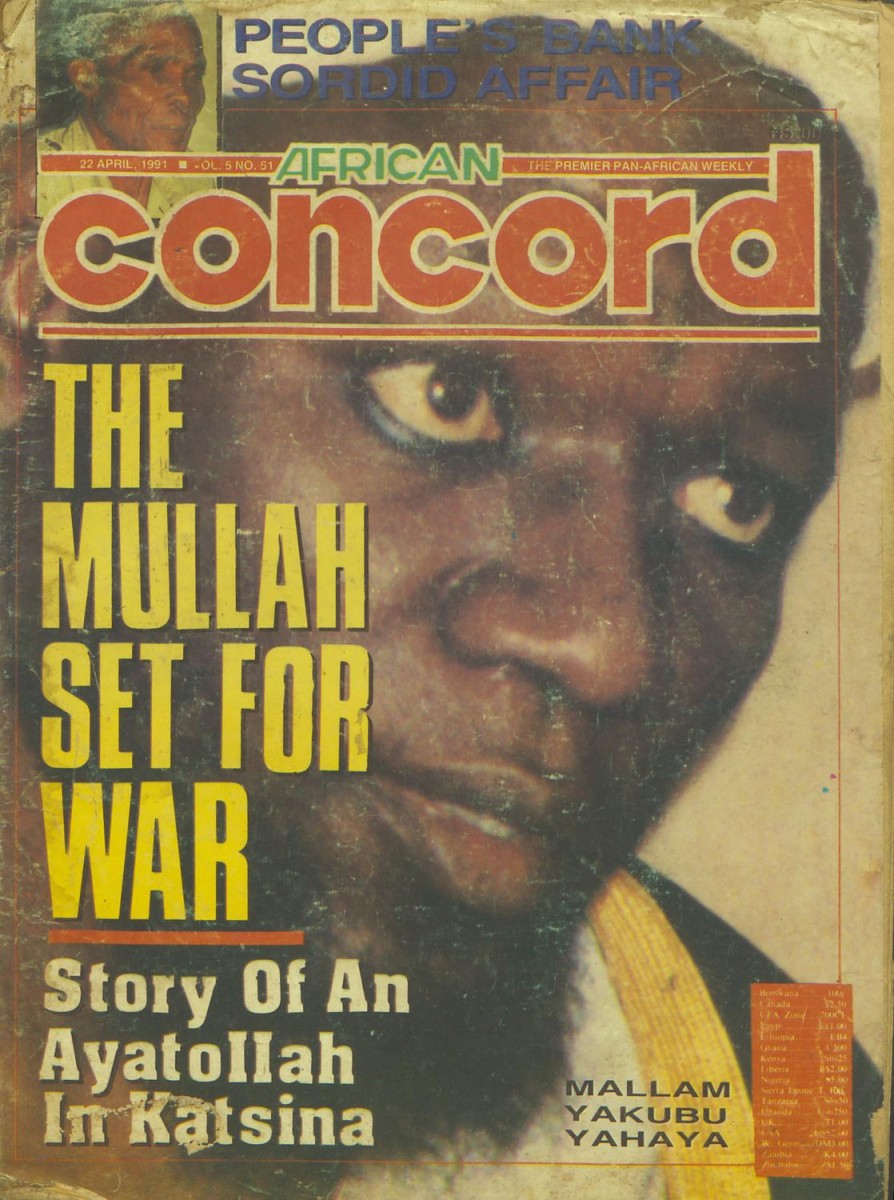
“We shall protest anything we consider wrong and I will continue to lead my followers until I die,” he told the African Concord. “A true Muslim should not fear death.”
His followers carried the same energy. When one of them was arrested in 1989 and brought before a magistrate court on Nagogo Road, roughly 2,000 youths showed up, forced their way in, chased out the magistrate, and freed the accused. The same thing happened again in Kankia the following year.
Yahaya’s walls were decorated with posters of the late Iranian Supreme Leader, Ayatollah Khomeini, whom his followers regarded as a model — a man raised by God to rid the world of injustice. Yet Yahaya rejected the Shi’ite label, insisting he was simply a Muslim.
His following cut across class lines. Among his ranks were university graduates, academics from Ahmadu Bello University (ABU) and Bayero University Kano (BUK), student leaders and activists from institutions across the north. Some used Quranic verses to conduct what amounted to class analysis, framing their anger at the Nigerian state in the language of religion and anti-imperialism.
To them, Yahaya was the chosen one of Allah, assigned to cleanse Nigeria of corruption and idolatry.
Madaki eventually backed down from his execution threat, settling instead for the language of due process. Civil rights groups and newspaper editorials condemned his original outburst. The mullah, for his part, remained defiant to the end of the coverage.
“I have said it before that there would be an Islamic revolution in this country,” Yahaya told the magazine, “and I am certain that Governor Madaki has started laying its foundation.”
FURTHER READING
He was 36. He believed he still had time. While Mallam (now referred to as Sheikh) Yahaya appears to remain active in Katsina, he seems to have tamped down his revolutionary ambitions.
Philip Ibitoye is a Special Correspondent with EKO HOT BLOG. Click here to find daily analysis and critical insight on trending issues in Lagos and other parts of Nigeria.
Click to watch the video of the week below: