- Government reaction was swift. Presidential aides insisted that Atiku’s candidacy would not alter the political equation ahead of 2027
- Atiku’s emergence has further exposed existing divisions, with disagreements over leadership
- He further dismissed comparisons between Buhari’s political success and Atiku’s renewed ambition
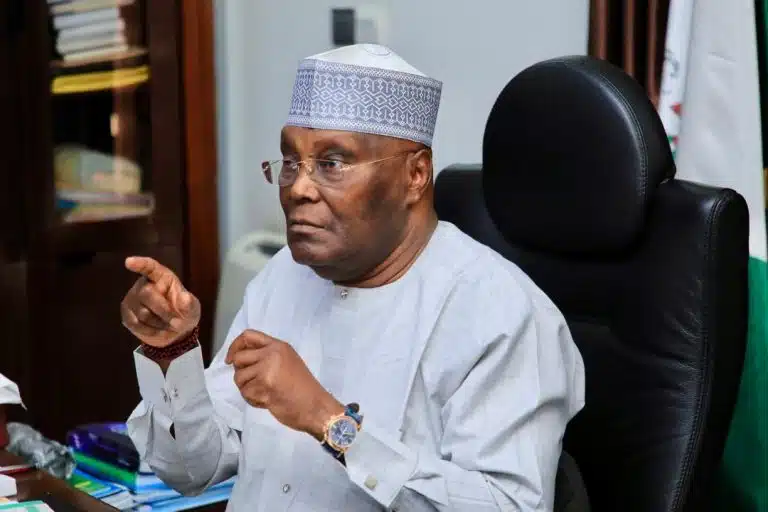
Tensions emerged on Thursday following the announcement of former Vice President Atiku Abubakar as the presidential candidate of the African Democratic Congress, as both the Presidency and the ruling All Progressives Congress downplayed his chances and described the emerging opposition coalition as fragmented and grievance-driven.
Eko Hot Blog reports that Atiku secured 1,846,370 votes in the party primary, ahead of former Minister of Transportation, Rotimi Amaechi, who polled 504,117 votes, while economist Mohammed Hayatu-Deen followed with 177,120 votes.
EDITOR’S PICK
- Gov. Alex Otti Says Slashed State Debt by 60%, Completes 414 Roads In Few Years
- Nwoko Rejects APC Delta North Primary Result, Claims Victory Over Okowa
- Lagos Expands Infrastructure at Agbowa Timberville Project in Epe
However, the process was not without controversy. Both Amaechi and Hayatu-Deen rejected the conduct of the election, alleging irregularities across states and the Federal Capital Territory. They also boycotted the final collation and announcement of results.
Government reaction was swift. Presidential aides insisted that Atiku’s candidacy would not alter the political equation ahead of 2027, arguing that voters would ultimately prioritise governance performance over coalition politics.
The development has reignited discussions around Nigeria’s informal but influential zoning arrangement, which has long guided power rotation between the North and South since 1999, even though it is not contained in the Constitution.
Within opposition circles, Atiku’s emergence has further exposed existing divisions, with disagreements over leadership, strategy, and regional balance continuing to shape internal politics ahead of the next general election.
Speaking for the Presidency, Temitope Ajayi, Senior Special Assistant on Media and Publicity, described Atiku as a long-standing contender in Nigeria’s presidential race, noting that his repeated attempts over the years made his latest bid unsurprising.
He argued that the coalition backing the ADC flag bearer was not driven by ideology or policy direction but by political dissatisfaction among excluded actors.
According to him, the alliance had already begun to fracture, especially with the withdrawal or distancing of key figures such as Peter Obi and Rabiu Kwankwaso.
Ajayi maintained that unlike the opposition coalition that produced Muhammadu Buhari’s victory in 2015, the current arrangement lacked unity of purpose and national appeal.
He further dismissed comparisons between Buhari’s political success and Atiku’s renewed ambition, insisting the present coalition did not possess similar nationwide structure or cohesion.
On Peter Obi, Ajayi suggested that the former Anambra governor had not demonstrated strong intra-party electoral strength, arguing that his past candidacies were not products of competitive primaries.
Atiku’s political journey spans more than three decades, during which he has contested presidential elections under different platforms, including the Action Congress and the Peoples Democratic Party, losing in both 2019 and 2023 presidential contests.
His latest entry on the ADC platform has therefore revived debates on zoning, equity, and political inclusion within Nigeria’s opposition landscape.
The Social Democratic Party and Labour Party also criticised the development, warning that Atiku’s ambition could disrupt regional balance and political stability.
The SDP reiterated that its presidential ticket had been zoned to the South in line with its internal principles of fairness and representation.
The Labour Party, through its National Publicity Secretary Ken Asogwa, argued that while Atiku has the constitutional right to contest, political sensitivity should guide decisions in a country with fragile regional balancing.
It also raised concerns about internal credibility within the ADC, pointing to disputes surrounding its primary election process.
Both parties positioned themselves as stronger opposition alternatives, with Labour highlighting its grassroots strength through labour union structures.
Meanwhile, analysts and opposition commentators remain divided, with some defending Atiku’s repeated participation in elections as democratic, while others question the viability of the coalition supporting him.
The APC also weighed in, dismissing the ADC candidacy as politically insignificant and reaffirming confidence in President Bola Tinubu’s performance-driven campaign strategy.
APC spokesperson Bala Ibrahim said voters would ultimately judge the administration based on delivery of the Renewed Hope Agenda rather than opposition realignments.
He further argued that Atiku’s emergence reflected inconsistency and lacked the political discipline required to unseat a sitting government.
In response, Atiku’s camp accused the Presidency of fear-driven rhetoric, insisting that the real political signal lies in the growing frustration among citizens over economic hardship and insecurity.
According to Atiku’s media aide, Phrank Shaibu, the coalition represents the voice of Nigerians struggling with rising costs of living, unemployment, and insecurity.
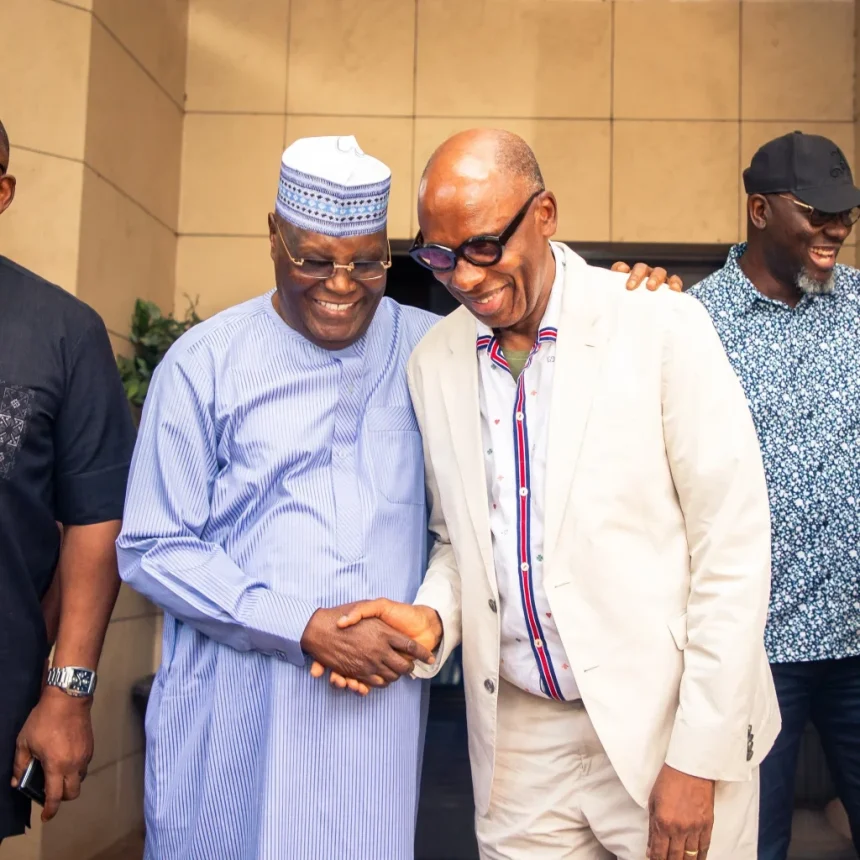
He also clarified that Atiku’s recent visit to Rotimi Amaechi was part of efforts to strengthen unity within the party following its primary election.
Political observers say the meeting may signal early attempts to consolidate internal support and manage post-primary tensions as attention gradually shifts toward the 2027 election cycle.