A Federal High Court in Abuja, on Monday, ordered the Independent National Electoral Commission (INEC) to deregister five opposition parties, but a sitting lawmaker’s double mandate, a superior court’s stay order, INEC’s own position, and the plain text of the constitution suggest the ruling may not survive appeal.
Justice Peter Lifu ordered the INEC to deregister the African Democratic Congress (ADC), Accord Party, Action Peoples Party (APP), Action Alliance (AA), and Zenith Labour Party (ZLP). The suit was filed by a group identifying itself as the National Forum of Former Legislators, arguing that the five parties had consistently failed to meet the electoral performance thresholds required by the constitution.
EDITOR’S PICKS
The order landed with immediate political consequences. Atiku Abubakar is running his 2027 presidential campaign on the ADC platform. Osun State Governor, Ademola Adeleke, is seeking re-election on the Accord platform ahead of an August 15 governorship poll, with his campaign flag-off scheduled for Tuesday.
What the Constitution Says
Section 225A of the 1999 Constitution, inserted by the Fourth Alteration Act of 2017, grants INEC power to deregister a party on three grounds: breach of registration requirements; failing to win at least 25 percent of votes cast in one state during a presidential election or one local government during a governorship election; or failing to win at least one ward in a chairmanship election, one seat in the National or State House of Assembly, or one councillorship seat.
The operative word in both subsections (b) and (c) is “or” — meaning satisfying any single requirement within each subsection is sufficient. A party that wins even one LGA in a governorship election satisfies subsection (b). A party that wins one National Assembly seat satisfies subsection (c). The constitution does not require a party to meet all conditions.
The Abejide Problem
The court’s reasoning runs into an immediate and formidable factual obstacle.
Leke Abejide of Yagba Federal Constituency in Kogi State, who is now a member of the All Progressives Congress (APC), won his House of Representatives seat on the ADC platform in 2019 and retained it in 2023. He is a sitting federal lawmaker elected twice on the same platform the court has ordered deregistered. That alone satisfies Section 225A(c).
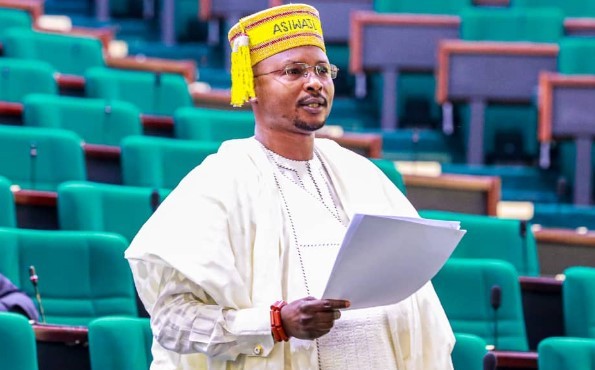
But Abejide’s record goes further. He also won his Yagba Local Government Area in the 2023 Kogi governorship election on the ADC platform, satisfying Section 225A(b), which requires winning at least one local government in a governorship election.
Read together, Abejide’s victories mean ADC demonstrably satisfied at least one requirement in both subsection (b) and subsection (c). Under the plain text of the constitution, there is simply no ground for deregistration.
This is likely the strongest card in ADC’s hand, and it explains why Bolaji Abdullahi, the party’s national publicity secretary, stated that INEC itself had told the court the ADC had not violated any registration requirements or failed any electoral performance threshold recognised by law, a notable position for the very body being ordered to act.

Can the Presidential Vote Threshold Override Everything?
On the presidential threshold under subsection (b), ADC’s 2023 candidate Dumebi Kachikwu did not win 25 percent of votes in any state.
But subsection (b) uses “or” between the presidential and governorship conditions. Abejide’s LGA win in the Kogi governorship election satisfies the governorship arm of subsection (b), rendering the presidential shortfall legally irrelevant to the deregistration question.
The combined effect is clear: ADC met the constitutional test. The court’s order, on the face of the law, rests on a flawed foundation.
The Stay Order Problem
There is a separate and potentially decisive procedural issue. The Court of Appeal issued a stay of proceedings order on May 22, 2026. A three-member panel comprising judges Mohammed Danjuma, Adebukola Banjoko and Oyejoju Oyewumi directed the trial court to stay proceedings pending the determination of an interlocutory appeal filed by the Accord Party.
“YOU ARE PLAYING WITH FIRE”, ADC WARNS GOVERNMENT AGENTS SEEKING PARTY DE-REGISTRATION
-JUSTICE PETER LIFU IS A THREAT TO DEMOCRACY, SAYS PARTY
The African Democratic Congress (ADC) wishes to warn, in the strongest possible terms, against any attempt to use the judiciary as an…
— Bolaji Abdullahi (@BolajiADC) June 15, 2026
ADC and Adeleke both allege that Justice Lifu was aware of this order — it was tendered before him as Exhibit MAC 2 — and proceeded regardless.
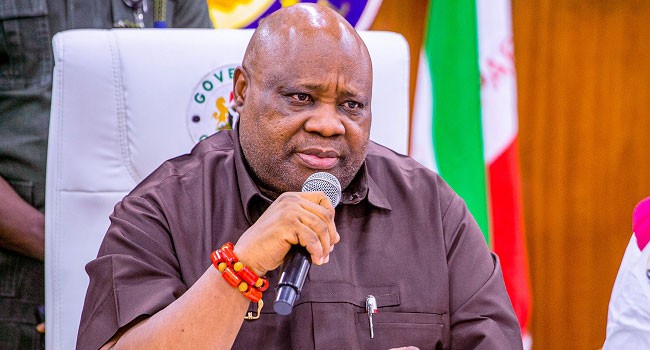
Proceeding in defiance of a superior court order is a serious judicial irregularity that could render the entire ruling void. The Court of Appeal was scheduled to hear the appeal on October 27, 2026.
The so-called deregistration of the African Democratic Congress (ADC) @ADCNig along with other parties by Justice Peter Lifu may yet be the biggest manifestation of Tinubu’s hell-bent bid to undermine the opposition and entrench a defacto one-party state. The judgment is the… pic.twitter.com/XBh6vAlAuI
— Paul Ibe (@omonlakiki) June 15, 2026
But the parties are now likely to approach the appellate court early in light of the trial court’s latest verdict ordering their deregistration.
Where this goes now
ADC has vowed to appeal and to petition the National Judicial Council (NJC) over the conduct of the presiding judge.
Given Abejide’s verified double mandate satisfying both subsections (b) and (c), INEC’s own opposition to the deregistration, and the alleged contempt of the appellate court’s stay order, the Court of Appeal has multiple strong bases on which to overturn the ruling.
Should the matter reach the Supreme Court, the 2021 precedent in the National Unity Party case — which affirmed INEC’s deregistration power but only where constitutional grounds are properly established — may work firmly against a court-compelled deregistration that the facts do not support.
FURTHER READING
For now, the five parties remain registered. The real verdict will come from the appellate courts.
Philip Ibitoye is a Special Correspondent with EKO HOT BLOG. Click here to find daily analysis and critical insight on trending issues in Lagos and other parts of Nigeria.
Click to watch the video of the week below: