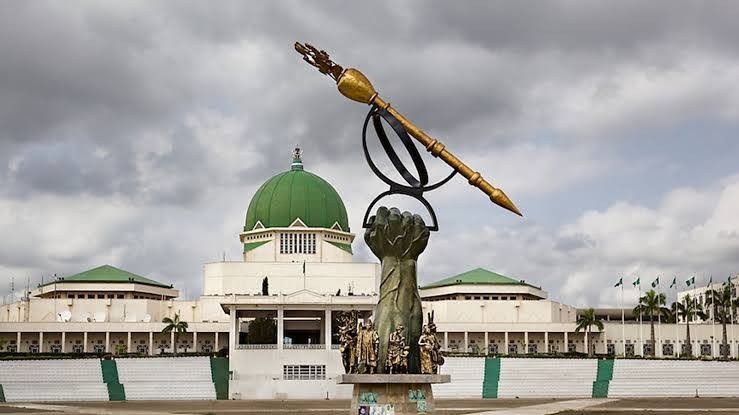
The National Assembly has taken the most structured step yet in its current constitutional review exercise, narrowing down 260 proposals that passed second reading to 37 priority bills that could reshape how the country is governed.
From who controls the police to how women access elected office, the bills touch nearly every nerve point in Nigeria’s governance debate.
EDITOR’S PICKS
The joint committees of the Senate and House of Representatives on constitution review have flagged these bills for further consideration.
But passing them is another matter entirely, each bill must clear two-thirds of the National Assembly and get approval from at least 24 of the 36 state houses of assembly before becoming law.
Security: The State Police Apparatus
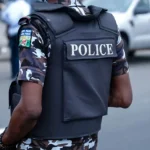
Three bills deal directly with policing: one to establish state police, one to create State Police Service Commissions to oversee them, and one to strengthen cooperation between federal and state security forces.
A fourth bill proposes placing funding of the armed forces on the first-line charge, meaning it would be automatically deducted before revenue sharing.
State police has been debated in Nigeria for decades. The House of Representatives has already passed a state police bill and the Senate is expected to followed suit in July. The amendment process under Section 9 of the 1999 Constitution, which requires approval by two-thirds of state assemblies, will the follow.
The inclusion of three related bills here suggests the legislature wants to build a more comprehensive legal framework around the idea, not just rubber-stamp a single law.
Women’s Representation: Seats, Not Just Promises
Perhaps the most socially charged set of proposals are the three bills that would create reserved legislative seats for women in the Senate, the House of Representatives, and state assemblies.
Nigeria consistently ranks among the lowest in Africa for female representation in government. Special seats would bypass the electoral barriers women routinely face, though critics argue it sidesteps the deeper problem of internal party discrimination.
Electoral and Judicial Reforms
Three electoral bills propose reforming State Independent Electoral Commissions (SIECs), long regarded as instruments of governors, establishing an Electoral Offences Commission, and introducing independent candidacy, which would allow Nigerians to contest elections without a party platform.
On the judicial side, three bills target the Supreme Court’s workload by restricting frivolous appeals, tighten timelines for election petition proceedings, and push for broader administrative efficiency.
These are aimed at a judiciary that has been frequently criticised for slow dispensation of electoral cases.
Local Government Autonomy
Three bills seek to entrench local government independence, financially and constitutionally. They would guarantee direct allocation of funds to councils and formally recognise the third tier of government as protected by the constitution.
This is a long-running battle: governors have historically treated local government funds as extensions of state finances.
Fiscal Accountability
Four bills target public finance — compelling government agencies to submit financial statements on time, mandating the publication of audit reports, and strengthening the Office of the Auditor-General. These are largely technical reforms, but their absence from the current constitution has allowed fiscal opacity to persist across all tiers.
Other Provisions
Additional bills cover devolution of powers to states, citizenship by investment, constitutional recognition of traditional rulers and state councils of traditional institutions, and corrections to the names of four local government areas: Ibeno, Aiyekire, Jaba, and Ibadan Central.
What Happens Next
Prioritisation is not passage. The 37 bills still face committee hearings, public engagements, chamber votes, and, crucially, concurrence from at least 24 state assemblies. Previous constitutional amendment efforts in Nigeria have stalled at this stage, often for political reasons unrelated to the merits of the proposals.
FURTHER READING
Still, the breadth of what is on the table — police, women, courts, local councils, money — makes this one of the more ambitious review cycles in recent memory. Whether the political will exists to see it through is the real question.
Philip Ibitoye is a Special Correspondent with EKO HOT BLOG. Click here to find daily analysis and critical insight on trending issues in Lagos and other parts of Nigeria.
Click to watch the video of the week below: