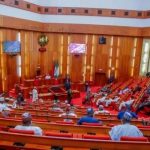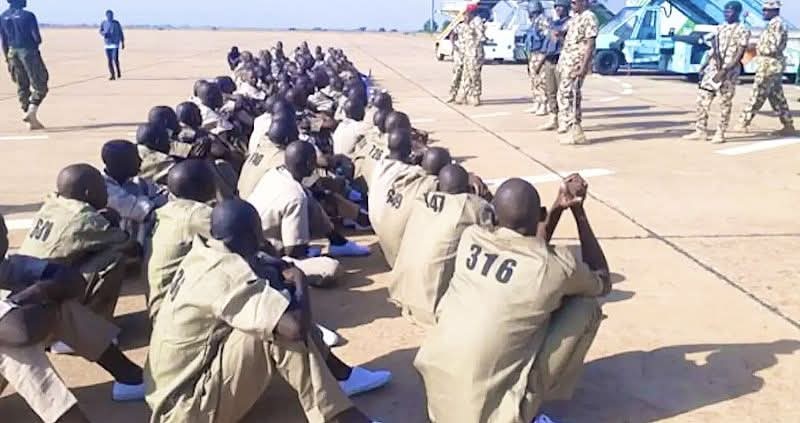
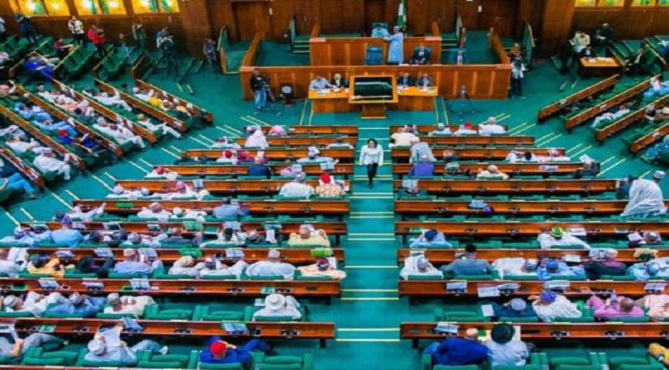
The House of Representatives, on Wednesday, called on the federal government to end the rehabilitation of repentant terrorists, marking a sharp turn against a policy that has run for a decade.
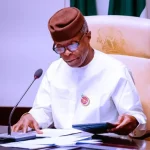
The resolution followed a motion by Ademorin Kuye, representing Shomolu federal constituency in Lagos, during Wednesday’s plenary.
EDITOR’S PICKS
Kuye’s original motion focused on Nigeria’s ransom-cash economy, but the debate that followed pushed lawmakers toward a tougher, more far-reaching stance.
The Money Behind The Violence
Kuye told the House that Nigerians paid N2.23 trillion in ransom between January 2021 and June 2025, citing figures from the National Bureau of Statistics and independent security researchers. He said investigations by the National Counter Terrorism Centre, under the Office of the National Security Adviser, found that POS operators and other financial channels are being used to move ransom money and hide the trail.
He also pointed to bureau de change operators, cryptocurrency platforms, livestock trading and trade-based schemes as routes criminals use to launder proceeds.
Left unchecked, he warned, this weakens Nigeria’s financial intelligence system, damages public trust, and raises the risk of international sanctions — including keeping Nigeria on the Financial Action Task Force grey list.
From Ransom To Rehabilitation
What began as a motion about money laundering became something bigger once debate opened. Bamidele Salam, chairman of the House Committee on Public Accounts, pushed back, arguing government has no moral ground to criminalise ransom payments when it has failed to protect citizens in the first place.
Yusuf Gagdi, chairman of the Committee on Navy, disagreed. He argued that paying ransom only rewards kidnappers and bandits, comparing it to giving a student a prize for passing an exam — an incentive to repeat the behaviour. Gagdi then went further, moving an amendment to end the rehabilitation and reintegration of arrested terrorists, kidnappers and bandits altogether.
His words were blunt: anyone who kills deserves to be killed, he said, except in situations like accidents where the law already provides clarity. For those who invade homes, kidnap and torture victims — including traditional rulers — he argued there should be no mercy.
Gagdi also raised a security concern: that some rehabilitated former insurgents may be leaking information back to criminal networks, contributing to attacks on troops during operations. Speaker Tajudeen Abbas put the amendment to a voice vote, and it passed unanimously.
A Counterpoint From The Frontline
Not every lawmaker embraced the hard line. Ahmadu Jaha, representing Damboa/Gwoza/Chibok — a constituency that has lived through Boko Haram’s worst years — offered a different perspective. He said only people whose relatives have been held captive truly understand the pain of abduction, and asked whether colleagues opposing ransom payments would hold the same position if it were their own family in captivity.
His intervention was a reminder that the debate isn’t just about policy on paper. For communities in the North-East, rehabilitation and ransom are not abstract ideas — they are choices made under the weight of real loss.
A Decade-Old Programme Under Threat
The rehabilitation policy being targeted traces back to 2016, when the federal government launched Operation Safe Corridor, a military-led programme meant to deradicalise and reintegrate former Boko Haram fighters. It has operated for nearly ten years as part of Nigeria’s broader counter-insurgency strategy.
Wednesday’s vote does not automatically end the programme — implementation rests with the executive arm. But it signals a shift in mood within the National Assembly, one shaped less by ideology and more by frustration: over unresolved insecurity, unexplained trillions moving through informal channels, and lingering doubts about whether rehabilitated fighters can truly be trusted.
FURTHER READING
- 2% of GDP ‘Missing’ or Just Unreported? Inside the IMF Controversy
- Nigeria’s Biggest Fiscal Challenge: Low Revenue or Excessive Debt?
Whether government heeds the call will now be the question to watch.
Philip Ibitoye is a Special Correspondent with EKO HOT BLOG. Click here to find daily analysis and critical insight on trending issues in Lagos and other parts of Nigeria.
Click to watch the video of the week below: