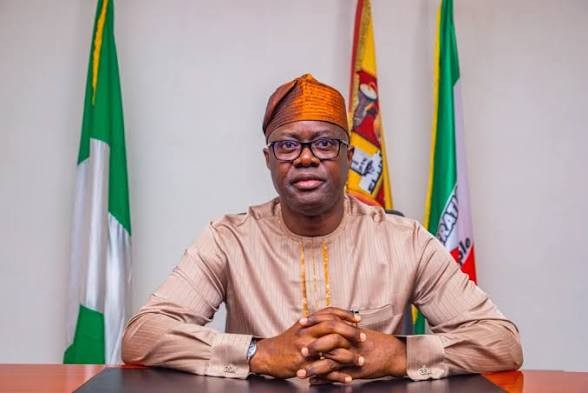
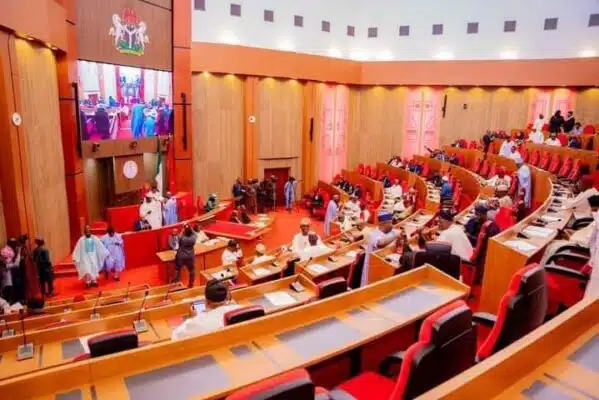
The Nigerian Senate on Tuesday asked Oyo State Governor Seyi Makinde to withdraw his call for a United Nations (UN) investigation into the abduction and rescue of schoolchildren and teachers in Oriire Local Government Area.
The request came as an addition to a motion praising President Bola Tinubu and security agencies for the rescue, moved by Senate Leader Opeyemi Bamidele and backed by 108 senators.
EDITOR’S PICKS
- What Tinubu Wants ICPC To Uncover About PFIPC, Adeyemi
- 2% of GDP ‘Missing’ or Just Unreported? Inside the IMF Controversy
Edo North Senator Adams Oshiomhole, who pushed for the addition, called Makinde’s demand “not statesmanly” and accused him of “trivialising” the rescue by dragging in an international probe. After an inconclusive first vote, the Senate passed the prayer on a second try.
Makinde had made his appeal on Monday, urging the UN and other international rights bodies to examine the abduction and the circumstances of the eventual rescue. He said the case was “sufficiently grave and unusual” to warrant scrutiny beyond Nigeria’s own institutions, and insisted this was “not about politics.”
A Convenient Coincidence?
That claim is harder to accept once you look at what Makinde said just four days earlier.
Speaking on Friday, July 10, before the rescue was even announced, the governor pointed out that Oyo State had gone seven years without a major school abduction, until, in his words, “less than 24 hours” after he declared his intention to run for president. He offered no evidence linking his campaign launch to the attack. He did not need to. The suggestion did the work for him, planting the idea of a plot without having to prove one.
Four days later, that same governor called for the UN to step in. The sequence matters. A leader who has already implied, without proof, that his political rise triggered a national security incident is not approaching an “independent probe” from a neutral starting point. He is asking outsiders to validate a theory he floated first.
What Would The UN Actually Investigate?
Set the politics aside for a moment and ask a practical question: what could a UN probe realistically establish that Nigerian investigators cannot?
Makinde wants answers on who was responsible, whether there was negligence or collusion, and how the rescue was carried out. These are legitimate questions. But they are also standard subjects for domestic security and judicial inquiry, not matters requiring a foreign human rights mechanism.
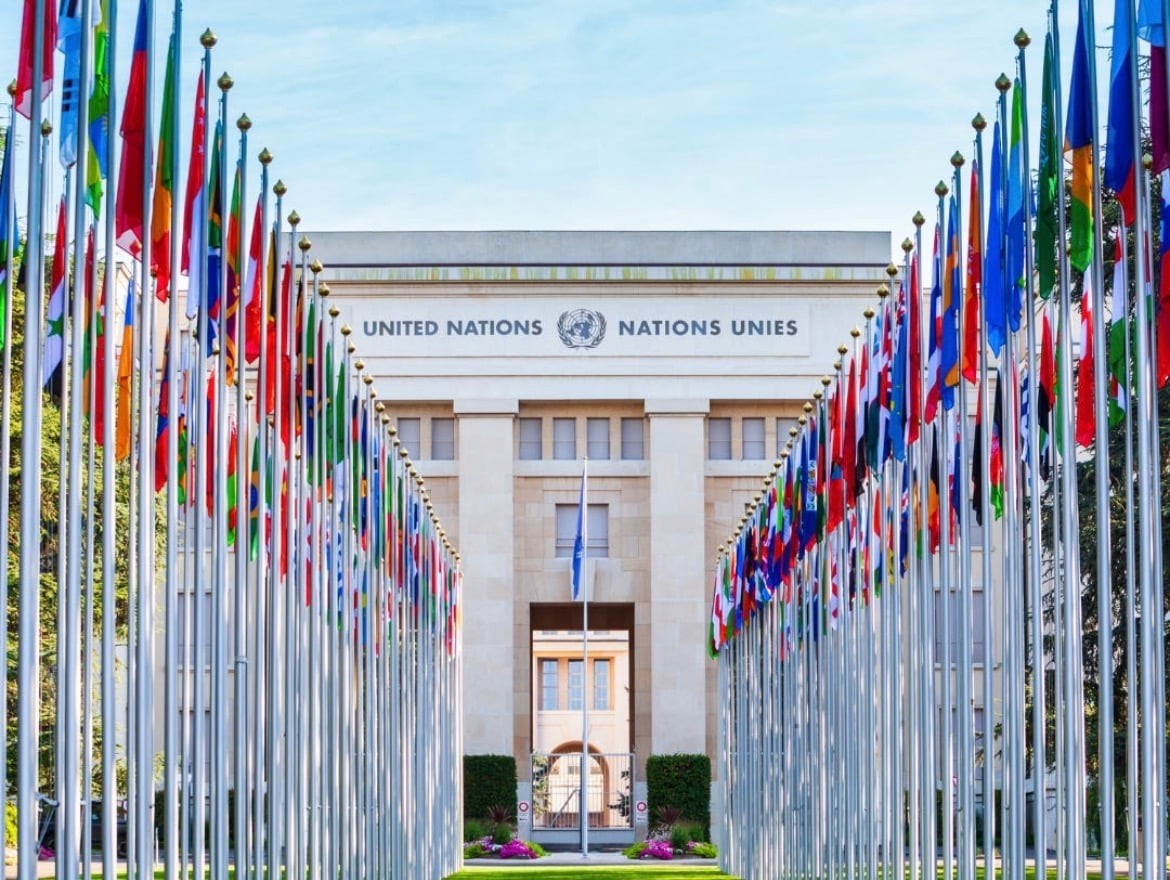
The UN has no police powers in Nigeria. It cannot compel the military, the Department of State Services, or the police to hand over operational files. Any “investigation” would depend entirely on Nigerian institutions choosing to cooperate, the same institutions Makinde’s call implicitly questions.
Without legal authority or physical access to classified rescue operations, a UN inquiry would likely produce a report built on the same public statements already available to journalists, rather than any independent fact-finding.
There is also a constitutional wrinkle Makinde himself acknowledged: national security is a federal responsibility. Inviting an external body to examine a state-level tragedy, without any indication that the federal government has requested or welcomed such involvement, risks looking less like a search for truth and more like a workaround; a way to keep the story alive and keep pressure on the federal government, on Makinde’s own terms.
Politics, Not Just Semantics
None of this means Nigerians should stop asking hard questions about how 44 children and their teachers came to spend 56 days in captivity, or why some of them did not survive. Those questions deserve real answers.
FURTHER READING
But Makinde’s route to asking them — first hinting at a political conspiracy, then reaching for an international body with no enforcement power in Nigeria — looks less like a demand for accountability and more like a governor keeping his name, and his presidential ambitions, in the headlines. The Senate’s rebuke, however self-interested, was not wrong to call that out.
Philip Ibitoye is a Special Correspondent with EKO HOT BLOG. Click here to find daily analysis and critical insight on trending issues in Lagos and other parts of Nigeria.
Click to watch the video of the week below: