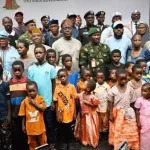
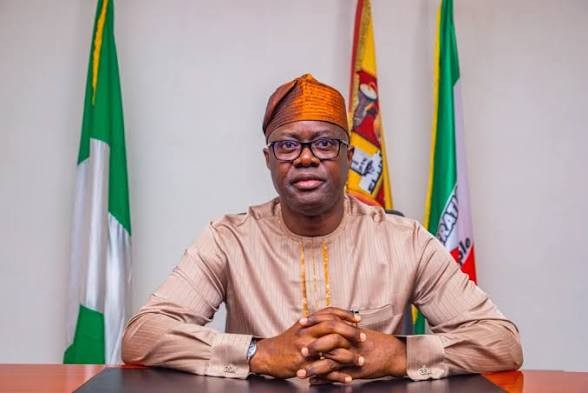
Oyo State Governor, Seyi Makinde, kicked off a political storm on Monday when he called on the United Nations (UN) and other international human rights organisations to investigate the abduction and eventual rescue of schoolchildren and teachers in Oriire Local Government Area of the state.
The pupils and teachers, kidnapped on May 15, spent 56 days in captivity before their release. During their ordeal, a teacher was killed by the abductors, and a mathematics teacher and others also lost their lives, including security personnel who died during the rescue operation.
EDITOR’S PICKS
Makinde was swiftly criticised by Bayo Onanuga, Special Adviser to the President on Information and Strategy, who described the governor’s demand as unnecessary and politically motivated.
Onanuga said the Federal Government had no objection to an international body examining the incident if Makinde believed there were unresolved issues, but questioned the rationale behind the call, noting that Nigeria’s military and other security agencies had already given a detailed account of the rescue operation. He also linked the governor’s position to his recently declared ambition to contest the 2027 presidential election.
The Senate weighed in on Tuesday, adopting a resolution urging Makinde to withdraw his demand. The prayer was added to a motion commending President Bola Tinubu, the armed forces and other security agencies for the rescue operation. Senator Adams Oshiomhole, a former national chairman of the All Progressives Congress (APC) who now represents Edo North, moved the additional prayer, describing Makinde’s call as “not statesmanly” and accusing him of “trivialising” the rescue by seeking an international investigation.
However, Makinde is hardly the first political actor in Nigeria to invite international scrutiny into a domestic security matter. Checks by EKO HOT BLOG revealed that, in 2013, the defunct Action Congress of Nigeria (ACN) — one of the parties that would later merge to form the APC, the party currently chastising Makinde — called for the International Criminal Court (ICC) to investigate killings in Borno State linked to a clash between security agents and Boko Haram insurgents.
The 2013 ACN Statement
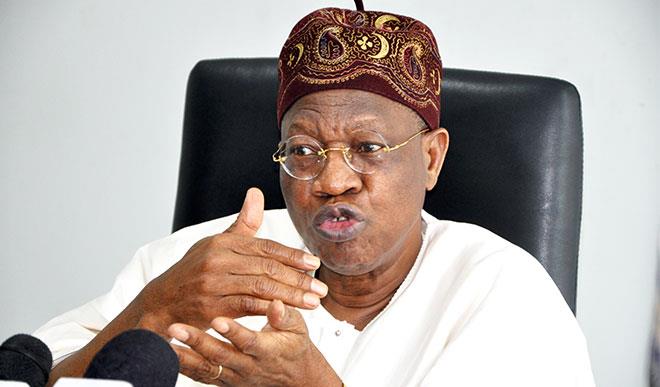
On Thursday, April 25, 2013, ACN issued a statement demanding an ICC investigation into the killing of about 185 people in Baga, Borno State. The statement was released by Lai Mohammed, then ACN’s National Publicity Secretary, who would go on to serve as the APC’s Minister of Information and Culture for eight years.
The party argued that the killings “may constitute crimes against humanity which should attract the attention of the International Criminal Court,” and said the federal government under then-President Goodluck Jonathan was “either unwilling or unable to prosecute those involved, going by precedence.”
ACN described the Baga killings, along with earlier incidents in areas where Boko Haram and the military’s Joint Task Force had clashed, as “a widespread or systematic attack against a civilian population,” which it said met the definition of crimes against humanity under the ICC’s jurisdiction.
The party also referenced two earlier mass killings — in Odi, Bayelsa State, and Zaki-Biam, Benue State — noting that both occurred before the Rome Statute establishing the ICC came into force on July 1, 2002, and therefore fell outside the court’s reach. It argued that the Baga killings, occurring after that date, fell “within the temporal jurisdiction of the global court.”
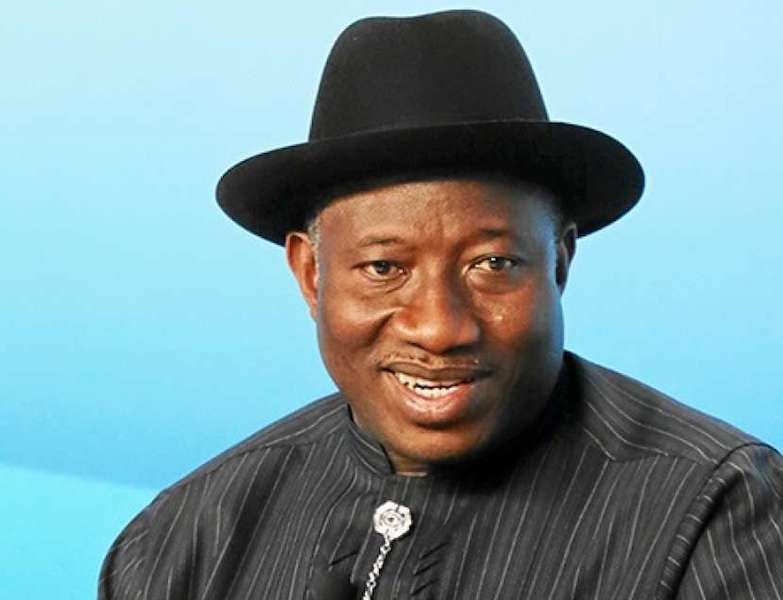
ACN blamed Jonathan directly for the killings, accusing him of “failing to distinguish between support for security agencies battling the insurgents in the north and the incitement of the same forces against civilians.” It also called on the National Assembly to investigate the presence of foreign troops within the Joint Task Force, questioning who had authorised their deployment and what their mandate was.
A Nuance Worth Noting
Makinde did not name the UN alone. His call was for “the appropriate international human rights organisations and accountability mechanisms, including those within the United Nations system,” leaving the door open to bodies such as the ICC.
ACN, in 2013, went straight for the ICC by name. Different phrasing, same instinct: let someone outside Nigeria look into it.
A Recurring Pattern
Calls for international involvement in Nigeria’s security crises have tended to follow a familiar script: parties in opposition invoke them, and parties in government reject them, only for the positions to reverse once power changes hands.
It is a pattern that has repeated itself from Baga in 2013 to Oriire in 2026, regardless of which party occupies Aso Rock.
FURTHER READING
What tends to get lost in the back-and-forth is that these are not abstract political disputes, they are conversations about real people who were killed, maimed, or held captive. Whatever the merits of any individual call for outside scrutiny, the families of those affected are unlikely to be reassured by a debate that so quickly becomes about who scores the political point.
Philip Ibitoye is a Special Correspondent with EKO HOT BLOG. Click here to find daily analysis and critical insight on trending issues in Lagos and other parts of Nigeria.
Click to watch the video of the week below: