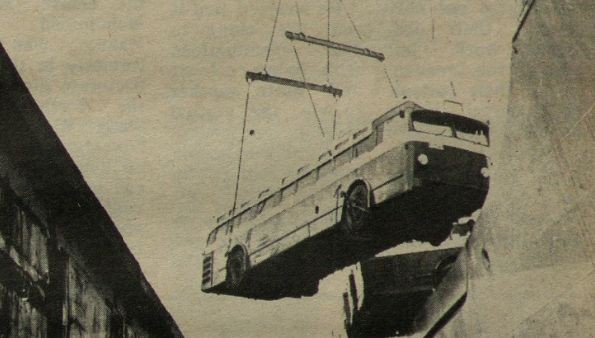
In April 1970, four top officials of the Lagos City Transport Service (LCTS), including an accountant and the agency’s expatriate general manager, travelled to Stockholm, Sweden, to negotiate the purchase of buses for the city of Lagos.
What they brought back would become one of Nigeria’s earliest and most absurd procurement scandals, according to a report by the defunct New Nigerian Newspaper, made available by Archivi.ng.
EDITOR’S PICKS
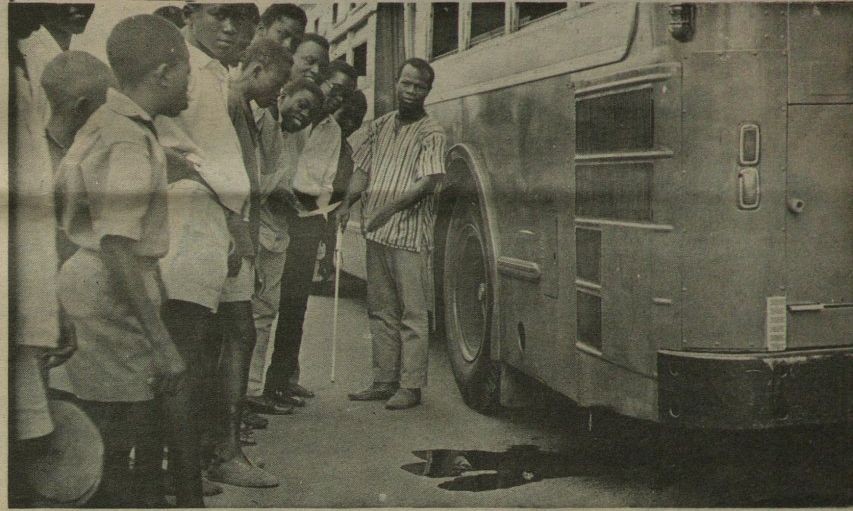
The buses the delegation settled on were 17 years old, already sold off for scrap, and had not been legally driven in Sweden since 1967, the year the country switched from left-hand to right-hand traffic. They had passed through a chain of middlemen before ending up with a Stockholm firm, Gamma AB, which brokered the sale to the Nigerians. Lagos reportedly paid roughly £274,000 for the fleet. The original seller had bought the same buses for about £12,069, a markup of more than 500 percent on vehicles nobody in Sweden wanted back on the road.
Weeks into the investigation of the deal, it emerged that Lagos had actually paid £274,000 for the fleet of buses that the Swedish seller had originally bought for just £12,069.
When the buses arrived in Lagos in October 1970, they were accompanied on the same ship by three… https://t.co/UtZ3JxyveV pic.twitter.com/rCVVoOUlvh
— archivi.ng (@StartArchiving) July 16, 2026
Sweden’s own safety authorities objected to the deal once it became public. Gösta Werne, head of the State Commission for Traffic Safety — the body that had originally sold the buses off for dismantling — told reporters there were no spare parts available for them and that “it was never the idea that they should come into traffic again.”
Before Gamma AB got involved, the manufacturer, Bengt Sundberg of Silverdalens Mechanical Shops, had reportedly considered converting the buses into mobile camping centres rather than returning them to any road. Asked how vehicles judged unfit for Stockholm’s streets could possibly serve in Lagos, Gamma AB’s response was that a Nigerian delegation had inspected and approved them, and that was the end of their concern.
The Nigerian Embassy in Stockholm said it knew nothing about the purchase until Swedish newspapers broke the story.
New Nigerian Newspaper reported that Ambassador Chike Chukwura said the embassy’s first and only information on the deal came from the press. When the buses arrived in Lagos in October 1970, the same shipment reportedly carried an Austin Cambridge and two Opel Rekords, said to be personal deliveries for two LCTS officials who had negotiated the transaction.
Once the buses went into service, they broke down so frequently that Lagosians nicknamed them “Robirobi buses,” meaning deal buses, and “Oku Eko,” meaning Lagos corpse. The military state government defended the purchase regardless, arguing that Lagos urgently needed more buses to ease its transport shortage.
The bus scandal’s long shadow
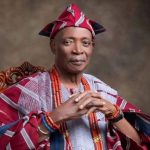
According to New Nigerian Newspaper, the man who introduced LCTS to the Swedish seller was Chief A.M.A. Akinloye, a Nigerian lawyer and politician, who was paid about £14,000 for his role in the deal, a claim he denied.
In true Nigerian fashion, the controversy did not slow his political career. Akinloye went on to become national chairman of the National Party of Nigeria (NPN), the party of President Shehu Shagari, serving between 1979 and 1983. After the military coup that ended Shagari’s government in 1983, Akinloye fled the country and was accused of benefiting from the corruption of the ousted administration.
When security agents searched his home, they reportedly seized a bottle of champagne bearing the inscription: “Produce of France, specially reserved for Chief A.M.A. Akinloye.”
The Muhammadu Buhari regime cited the bottle as evidence of the “vulgar display of wealth” under the previous government, and the press began calling the former NPN chairman Akinloye “Champagne” Akinloye. The bottle was later put on public display at the National Museum in Lagos.
Akinloye never accepted the characterisation. In a 1987 interview with New Nigerian Newspaper, he dismissed the affair as a Christmas gift from a friend that had “cost next to nothing,” describing the controversy as “a ludicrous storm in a tea pot” that reflected poorly on those who tried to make something of it.
Years after the Swedish bus scandal, Chief A.M.A. Akinloye became national chairman of the National Party of Nigeria (NPN), the party of President Shehu Shagari between 1979 and 1983.
After the military coup of 1983, Akinloye fled the country and was accused of benefiting from… https://t.co/SFFpsSqx53 pic.twitter.com/OiJw59Rszi
— archivi.ng (@StartArchiving) July 17, 2026
FURTHER READING
Years later, the champagne bottle disappeared from the National Museum. No explanation for its disappearance has ever been made public.
Philip Ibitoye is a Special Correspondent with EKO HOT BLOG. Click here to find daily analysis and critical insight on trending issues in Lagos and other parts of Nigeria.
Click to watch the video of the week below: