- The United States government has announced new trade tariffs targeting imports from 60 global economies, including Nigeria, over alleged failures to enforce import bans on goods produced through forced labour.
- Nigeria and 41 other countries will face a 12.5 percent duty rate, whereas nations that have enacted or pledged reciprocal anti-forced labour import bans will attract a lower 10 percent rate.
- Executed under Section 301 of the US Trade Act of 1974, the policy follows months of extensive public hearings, consultations with over 45 governments, and review of more than 1,600 submissions by the United States Trade Representative.
The Office of the United States Trade Representative (USTR) has officially announced a new wave of trade tariffs targeting exports from 60 foreign economies, placing a 12.5 percent import duty on goods originating from Nigeria.
Eko Hot Blog reports the regulatory action follows comprehensive investigations initiated under Section 301 of the Trade Act of 1974.
EDITOR’S PICKS
- FG Partners With Chinese Investors To Secure Land For 10,000-Home Mass Housing Project
- Intelligence Materials Were Shared With US, Not Seized – DHQ
- Man Arraigned in Adamawa Over Alleged Abuse Involving Daughter
According to Washington officials, the trade measures are designed to address the widespread failure of trading partners to enact and strictly enforce statutory prohibitions against importing goods produced wholly or in part with forced labour.
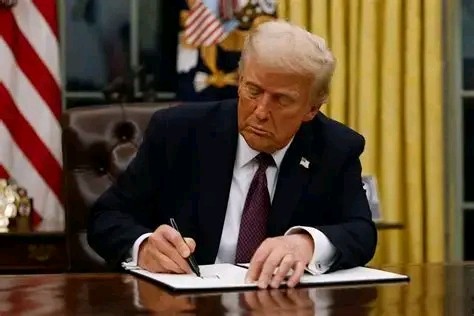
Under the framework directed by US President Donald Trump, the USTR established a two-tiered duty system. Economies deemed to have established, or formally committed to implementing, rigorous legal bans against forced labour imports will be subject to a 10 percent tariff.
In contrast, countries that have not instituted such comprehensive frameworks will face the higher 12.5 percent ad valorem duty.
The decision comes after an extensive review process launched in mid-2026. The USTR conducted consultations with more than 45 foreign governments, held multi-day public hearings featuring over 100 expert witnesses, and evaluated more than 1,600 public submissions prior to finalizing the tariff structure.
Addressing the policy decision, United States Trade Representative Jamieson Greer emphasized that Washington is taking decisive action to eliminate human rights violations and trade distortions caused by forced labour within international supply chains.
He noted that President Trump recognizes that decades of moral suasion have failed to eradicate forced labor from global supply networks, stressing that because the United States has enforced a strict ban for nearly a century, it is time for foreign trading partners to align with similar standards.
The list of affected jurisdictions is split between those receiving the reduced 10 percent duty and those hit with the full 12.5 percent rate.
The countries and territories subject to the lower 10 percent tariff rate after committing to or implementing forced labour import bans include Argentina, Bangladesh, Cambodia, Canada, Ecuador, El Salvador, Guatemala, Honduras, India, Indonesia, Jordan, Malaysia, Mexico, Pakistan, Sri Lanka, Trinidad and Tobago, and the United Kingdom, alongside partial regimes such as the European Union, Taiwan, Japan, and South Korea, where duties are calculated net of Most-Favoured-Nation rates.
Conversely, Nigeria falls into the category of nations subject to the higher 12.5 percent tariff rate, sharing this designation alongside Algeria, Angola, Australia, Bahrain, Brazil, Chile, China, Colombia, Costa Rica, the Dominican Republic, Egypt, Guyana, Hong Kong, Iraq, Israel, Kazakhstan, Kuwait, Libya, Morocco, New Zealand, Nicaragua, Norway, Oman, Peru, the Philippines, Qatar, Russia, Saudi Arabia, Singapore, South Africa, Switzerland, Thailand, The Bahamas, Turkey, the United Arab Emirates, Uruguay, Venezuela, and Vietnam. For select trade partners like Japan, South Korea, Switzerland, and the European Union, the tariff applies net of Most-Favoured-Nation rates, ensuring the combined rate does not exceed statutory caps.
The USTR specified that certain goods will be granted explicit exemptions from the newly imposed tariffs.
Exempted categories include essential raw materials that could trigger domestic supply shortages if taxed, critical goods capable of causing broad economic disruption, items unavailable in sufficient quantities within the US domestic market, and designated non-commercial items like informational materials, personal donations, and accompanied baggage.
The sweeping tariffs represent a major foreign policy move under the current US administration aimed at compelling international trading partners to enact strict legislative bans on forced labour, thereby reshaping global supply chain standards and international commercial relations.