- Tinubu Has Delivered on Nearly 100% of Campaign Promises – Dr Tunji Alausa
- Highlights Tinubu’s Education Reforms
- Says Nigeria Has Changed for Good
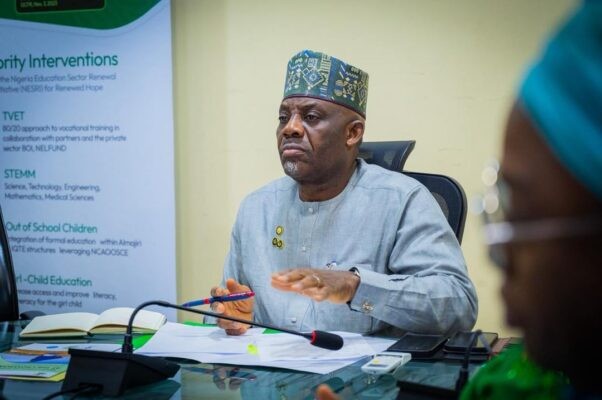
Minister of Education, Maruf Tunji Alausa, has claimed that President Bola Ahmed Tinubu has fulfilled almost 100 per cent of the promises he made during the 2023 presidential campaign, insisting that Nigerians are already seeing tangible results from the administration’s reforms.
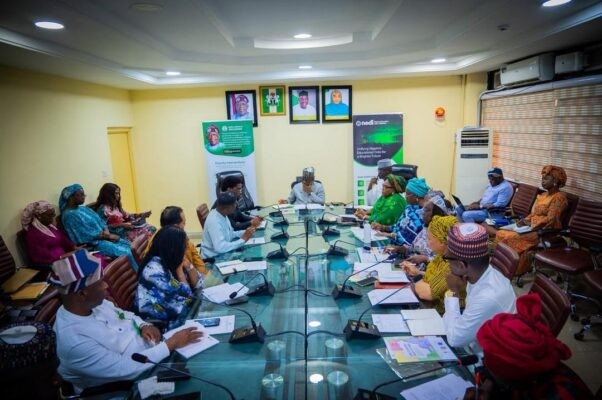
Eko Hot Blog reports that Alausa made the claim in Abuja while receiving the findings of the 2025 Nigeria 2050: Child Foresight Analysis for Futures Literacy and Intergenerational Equity, an initiative of the Office of the Vice President’s Anticipatory Governance and Foresight Capacity Programme, implemented with technical support from UNICEF.
EDITOR’S PICK
- Beyond the Glamour: The Hidden Price Celebrities Pay for Looking Perfect
- Hamzat Gives Condition for Reconstruction of Alaba Market Roads
- Lagos Must Prepare for Next Pandemic, Health Commissioner Warns
The minister said the reforms being implemented under Tinubu’s administration were no longer matters of political promises, but were producing measurable changes, particularly in the education sector.
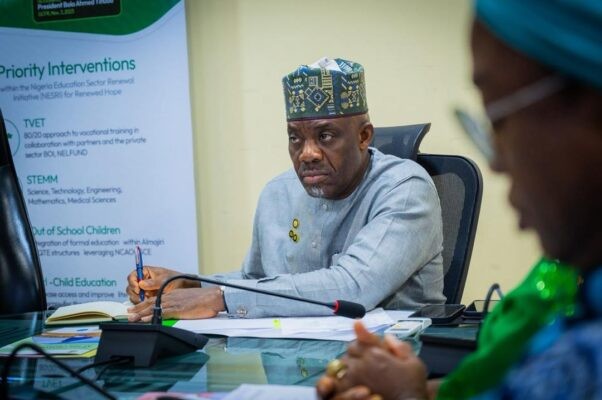
“I can assure you of that one fact because today we have a President who is leading the country, managing this country from the front, with the highest level of integrity, commitment, patriotism and determination to change the face of this country,” Alausa said.
He added that the administration’s achievements were “not just rhetorics,” stressing that Nigerians were beginning to experience tangible benefits and changes.
Alausa said Nigeria had moved beyond the uncertainty that previously characterised its development trajectory, although he acknowledged that the country still had significant ground to cover.
“The country is not at a crossroads again. We have a lot of catching up to do,” he said.
The minister said education remained central to the administration’s ambition of moving Nigeria towards a $1 trillion economy, noting that the Federal Ministry of Education was implementing reforms under the Renewed Hope Agenda through the Nigerian Education Sector Renewal Initiative.
He listed Technical and Vocational Education and Training, STEM education, teacher quality, quality assurance, reduction of out-of-school children, education data and digitalisation among the key areas of focus.
“Skills are the present and the future,” Alausa said, stressing that Nigeria could no longer afford an education system that failed to equip young people with the skills required in a changing economy.
He also disclosed that the Federal Government was expanding access to nursing education and increasing training capacity in teaching hospitals, federal medical centres and specialist hospitals as part of efforts to address skills shortages and reduce some of the pressures contributing to the migration of Nigerian professionals.
On out-of-school children, Alausa questioned the reliability of longstanding estimates putting the figure at between 15 million and 17 million, saying comprehensive household-level assessments were needed to establish more accurate figures.
He cited assessments conducted in Kaduna and Jigawa states, which he said produced figures that differed significantly from some existing estimates.
According to the minister, reliable data would help the government determine where children were out of school, understand the reasons for their exclusion and develop targeted interventions.
“Even if there’s significant reduction, any child out of school is still too many,” he said.
Alausa disclosed that more than one million children had been moved from the streets into schools across the country over the past two and a half years, while Jigawa State alone had reportedly enrolled more than 180,000 children in schools over the last two years.
He said the next challenge was to sustain enrolment, ensure that children remained in school and prevent new cases of exclusion.
The minister also disclosed that more than 56 per cent of public schools and 41 per cent of private schools had entered their 2026 Annual School Census information into the digitised Nigerian Education Management Information System.
“Without data, you’re flying blind. Data will tell you everything,” he said.
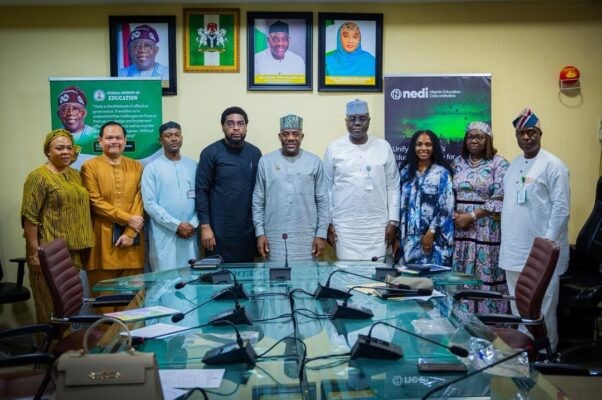
Alausa added that the ministry had conducted a national assessment to establish a baseline for literacy, numeracy and cognitive development among learners at primary, junior secondary and senior secondary levels.
He said the exercise would enable the government to better assess learning outcomes and measure the impact of education interventions over time.
The minister said the reforms were consistent with the findings of the Child Foresight Analysis, which he described as an opportunity to incorporate long-term planning, systems thinking, innovation and youth participation into national development.
He commended the Office of the Vice President, the Office for Strategic Preparedness and Resilience and UNICEF for supporting the initiative, saying it would help move Nigeria from reactive governance towards anticipatory action.
Alausa said the Ministry of Education would align the findings of the foresight analysis with the Nigerian Education Sector Renewal Initiative, particularly in the areas of future literacy, long-term education planning, skills development, data systems and intergenerational equity.
“Nigeria has changed, and it has changed for good,” the minister said.
FURTHER READING
- How Lagos Achieved 57.4% Exclusive Breastfeeding Rate
- Nigeria Has Joined WEC to Lead, Not Just Participate – Tinubu
- Alausa Reviews NESRI Progress, Sets Fresh Push for Outstanding Deliverables
Click here to watch video of the week