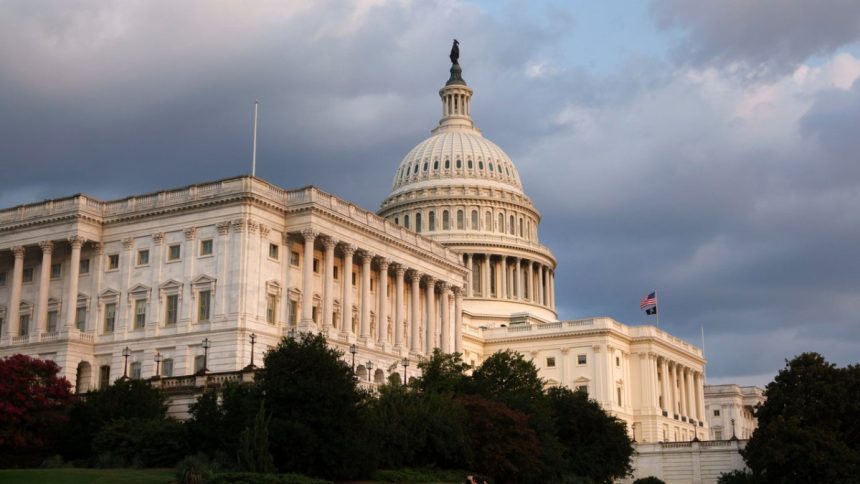
- US national debt hits $40.05 trillion, more than doubling since 2017.
- Rising interest payments are putting greater pressure on the federal budget.
- Experts warn the debt could reach $50 trillion within six years without major reforms.
The United States national debt has surpassed $40 trillion for the first time, highlighting growing concerns over government borrowing, rising interest costs and the long-term strength of the country’s finances.
Eko Hot Blog reports that according to data from the US Treasury Department, the federal debt reached approximately $40.05 trillion on August 18, 2026. The figure is more than double the level recorded in 2017.
EDITOR’S PICK
- How Lagos Achieved 57.4% Exclusive Breastfeeding Rate
- Shaibu Lists Nigeria’s Biggest Security Challenges
- Vote, Protect Your Mandate, Governor Adeleke Urges Residents Ahead of August 15 Polls.
The increase reflects years of federal spending exceeding government revenue, forcing Washington to borrow more money to finance its operations and meet budget shortfalls.
Michael Peterson, CEO of the nonpartisan Peter G. Peterson Foundation, said the country had been running budget deficits for decades without adequately addressing structural problems within its finances.
He warned that the longer the debt problem remains unresolved, the more difficult and expensive it could become to tackle.
One of the biggest concerns is the rising cost of servicing the debt. Net interest costs approached $1 trillion in 2025, accounting for nearly 14 per cent of total federal spending.
The United States now spends more on interest payments than it does on national defence or Medicare, according to the report.
Economists have identified several factors behind the growing debt, including increased spending on Social Security and Medicare as the population ages, higher government expenditure and reductions in tax revenue resulting from tax cuts introduced over the past two decades.
The Congressional Budget Office has estimated that President Donald Trump’s One Big Beautiful Bill, passed in 2025, could add about $4.2 trillion to the national debt through fiscal year 2034.
However, Peterson stressed that the debt problem could not be blamed on a single administration, noting that successive governments and Congresses had contributed to the worsening fiscal position.
Economic crises have also played a major role. The Great Recession of 2008 and the COVID-19 pandemic resulted in significant increases in federal borrowing as the government introduced emergency measures to support the economy.
The Peterson Foundation estimates that the national debt could reach $50 trillion within six years if the government fails to introduce meaningful spending or tax reforms.
The growing debt could also affect Americans through higher borrowing costs. As the government sells more Treasury securities to finance spending, higher yields may be required to attract investors, potentially putting upward pressure on mortgage, car loan and credit card interest rates.
Peterson warned that rising debt-servicing costs could also crowd out spending on other government programmes and increase pressure for higher taxes.
Not all economists share the same level of concern. Dean Baker, co-founder of the Center for Economic and Policy Research, argued that the strength of the US economy could allow the government to continue managing its debt.
Baker said tariffs and the impact of the Iran war on prices could pose more immediate economic risks. He also pointed to the possibility of investors withdrawing funds from US markets if concerns over an artificial intelligence-driven market bubble intensify.
Margaret Spellings, president and CEO of the Bipartisan Policy Center, however, warned that another major shock, including an economic recession, global conflict or disruption caused by artificial intelligence, could quickly turn the country’s debt challenge into a wider financial crisis.
The $40 trillion milestone therefore represents more than a headline figure. It reflects a growing fiscal challenge that could shape US economic policy, borrowing costs and government spending for years to come.
FURTHER READING