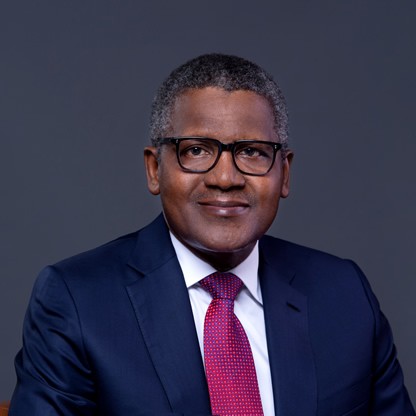
When Aliko Dangote, Africa’s richest man, took the stage at the Investing in Africa forum on the sidelines of the IMF-World Bank spring meetings in Washington on Thursday, he delivered a diagnosis that was both sobering and, in parts, contradictory.
Foreign interests, he argued, are actively working against Africa’s development.
EDITOR’S PICKS
But buried within his own prescription lay a more uncomfortable truth: Africa’s deepest wounds may be largely self-inflicted.
Dangote is not wrong that external actors have historically complicated Africa’s economic trajectory. The argument that global financial architecture, commodity pricing mechanisms, and Western capital flows have not always served African interests is well-documented and legitimate.
However, the billionaire’s framing risks handing African governments and elites a convenient alibi at precisely the moment accountability is most needed.
The Mirror Dangote Held Up
To his credit, Dangote did not stop at finger-pointing. His most consequential remarks were directed inward.
“If I’m not investing in Africa, there is no way I will go and convince anybody outside the continent to come and invest,” he said, urging wealthy Africans to repatriate capital parked in offshore accounts and invest it on the continent.
This is the real story. Africa’s high-net-worth individuals — estimated to hold hundreds of billions in foreign assets — have spent decades doing precisely what they accuse foreign investors of: treating Africa as a risk not worth taking. No foreign government forced Africa’s business elite to preference London property, Swiss bank accounts, and European equity markets over domestic industry. That was a choice, made repeatedly, by the very class of people now calling for continental transformation.
Dangote himself acknowledged the psychology driving it: risk perception. But risk perception among African investors is not manufactured by foreign conspiracy. It is shaped by policy inconsistency, weak contract enforcement, currency instability, and governance failures, all of which are domestic in origin.
The Integration Problem No One Abroad Created
Dangote correctly identified regional integration as a prerequisite for the African Continental Free Trade Area (ACFTA) to function. “The regional markets must work first,” he said. He is right. But who dismantled them or more precisely, who never built them?
The African Union (AU), for all its ambitions, remains a largely ceremonial body compared to the European Union (EU), which has created genuine legal, monetary, and institutional frameworks binding its members.
Intra-African trade, at roughly 15 percent of the continent’s total trade volume, lags far behind intra-European or intra-Asian figures, not because foreign interests erected the barriers, but because African states did. Visa restrictions between neighbouring African countries remain among the most prohibitive in the world. A Nigerian entrepreneur faces more friction entering South Africa than a British one does entering France.
These are not the fingerprints of shadowy international saboteurs. They are the policy choices of African governments, reflecting the priorities of African political elites.
Accountability Before Grievance
None of this is to suggest that external interference in African economies is mythological. It is real, documented, and ongoing in various forms, from debt architecture to trade conditionalities. But grievance and agency are not mutually exclusive.
Dangote’s forum appearance illustrated both simultaneously. His call for African capital to lead was exactly right. His invocation of foreign conspiracies against African refineries, however, risks muddying a clearer message: that structural change on the continent depends primarily on what Africans — governments, institutions, and investors — choose to do with the power they already hold.
FURTHER READING
The continent does not need more critics of foreign interference. It needs more honest accounting of the interference it imposes on itself.
Philip Ibitoye is a Special Correspondent with EKO HOT BLOG. Click here to find daily analysis and critical insight on trending issues in Lagos and other parts of Nigeria.
Click to watch the video of the week below: