When 42 Nigerian traders were rounded up at a spare parts market in Maputo on February 28, no charges were read to them. No explanation was offered. Mozambican authorities simply descended on the market and, by all accounts, singled out Nigerians.
A court later ordered their unconditional release, citing rights violations. The authorities responded by transferring the men to a deportation camp and expelling 40 of them across three batches — March 24, 26 and 27 — aboard South African Airways and Ethiopian Airlines flights.
EDITOR’S PICKS
Their money and mobile app funds were allegedly seized. The Nigerian Embassy’s emissaries were repeatedly turned away. Two remain in Mozambique only because one is married to a Mozambican and the other was born there.
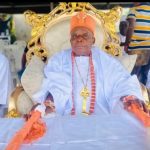
Barely a week later, 5,000 kilometres away in KuGompo City, Eastern Cape, South Africa, an alleged cultural installation ceremony for an Igbo community leader — an “Igwe Ndigbo,” a diaspora coordination title common wherever Igbo people settle — went viral and triggered a violent mob.
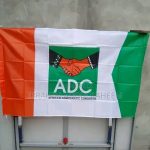
Cars were set ablaze. Shops owned by foreign nationals were looted. At least 13 people were injured. Police deployed teargas and rubber bullets. Political parties joined the street, demanding the deportation of Nigerians. The Nigerian High Commission issued a 10-point security advisory urging its citizens to “maintain a low profile.”
Two countries. Two crises. One pattern.
The AU’s Silence Is the Story
The African Union (AU) was built on the language of pan-African solidarity: a continent moving as one, its people belonging to the whole of Africa rather than its colonial boundaries.
Its Constitutive Act speaks of “promote and defend African common positions.” Its Agenda 2063 envisions “an integrated continent with free movement of people.” These are not obscure provisions. They are the foundational promises of the continental body.
Yet when Nigerians are arbitrarily arrested in Mozambique, stripped of valuables, expelled in defiance of a court order, and denied consular access, the AU is absent. When anti-migrant mobs torch cars in the Eastern Cape and political parties join protests calling for mass deportations, the AU offers nothing. No statement. No sanctions mechanism. No accountability. The organisation responsible for continental integration has no functional architecture for protecting Africans from one another’s governments — or one another’s mobs.
This is not a new failure. It is a structural one.
Compare One Continent to Another
The European Union offers an instructive contrast.
An Irish citizen can move to Lisbon, open a business, enrol their children in school, and stand for local election, as a matter of legal right under EU freedom of movement. A French entrepreneur in Berlin faces no special registration requirements beyond what a German national would. The EU has built, over decades, a genuine architecture of belonging: shared rights, mutual recognition, legal recourse, and political accountability when states deviate.
Africa, by contrast, has the AU and a patchwork of regional blocs with limited teeth. Only a handful of African countries offer visa-free access to all African nationals. The African Continental Free Trade Area (AFCTA) has been signed but is largely unimplemented.
The AU’s Free Movement Protocol, adopted in 2018, has been ratified by fewer than 10 member states. Meanwhile, ECOWAS — arguably Africa’s most functional integration bloc — offers free movement in theory but watches helplessly as its member states periodically expel one another’s citizens.
What Mozambique did to 40 Nigerian traders is not just a bilateral diplomatic incident. It is evidence of what the continent becomes without enforceable integration: a collection of nation-states whose nationalism is strongest when directed inward against other Africans.
What happened in KuGompo is not simply xenophobia; it is the predictable harvest of a continent that has never built the institutions to make its people feel they belong to each other.
The Cost of a Toothless Bloc
Forty men lost their livelihoods in Maputo. Their businesses are in disarray. Their families remain. Some had their savings taken in detention. None has been given an explanation the law would recognise as adequate. In KuGompo, Nigerian shop owners are counting losses while a diplomatic meeting between Abuja and Pretoria is scheduled for April 8 — the usual machinery of crisis management that changes nothing structurally.
FURTHER READING
The AU will likely say nothing about either event. It almost never does. And that silence — measured against the cost borne by ordinary Africans simply trying to build lives across colonial-era lines — is the most honest verdict on what the organisation has become.
Philip Ibitoye is a Special Correspondent with EKO HOT BLOG. Click here to find daily analysis and critical insight on trending issues in Lagos and other parts of Nigeria.
Click to watch the video of the week below: