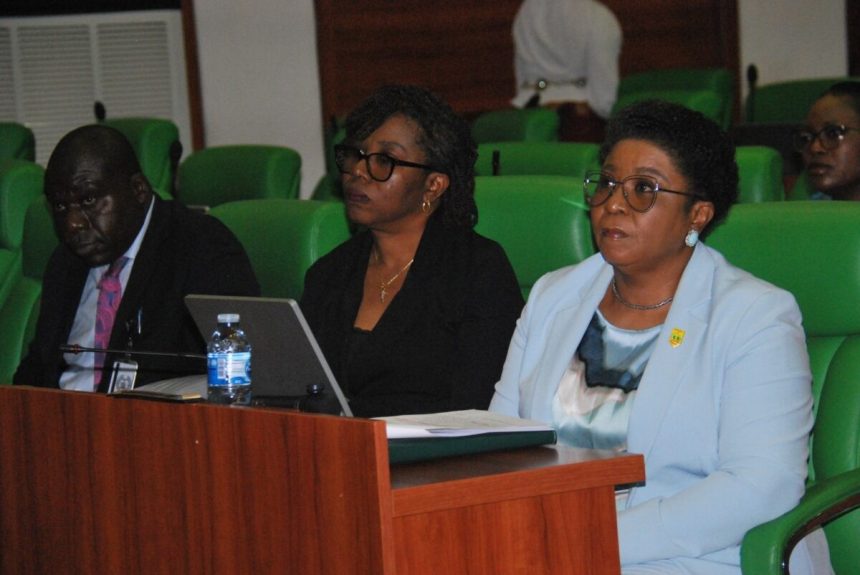
Head of the Civil Service of the Federation, Esther Walson-Jack, told the House of Representatives ad hoc committee on Wednesday that her office failed to carry out due diligence before approving the staffing structure and recruitment waiver that helped the Presidential Foreign Intervention Promotion Council (PFIPC) take shape as a functioning government entity.
“We take our responsibility,” she told lawmakers, conceding that the establishment Act and appointment letter her office relied on “turned out to be fake.”
EDITOR’S PICKS
It is a striking admission from one of the most senior civil servants in the country. But it also raises a question the National Assembly, and the public, must now sit with: is acknowledging a failure the same thing as accounting for it?
What Exactly Was Admitted
Walson-Jack’s concession was specific. Her office issued an authorised establishment and a recruitment waiver to PEAC/PFIPC based on documents presented by Adeniyi Adeyemi: an establishment Act and a letter of appointment, both of which have since been exposed as forged.
She noted that the genuine Presidential Economic Advisory Council (PEAC) had existed as an ad hoc body, a detail that appears to have lent false plausibility to the hybrid “PEAC/PFIPC” paperwork Adeyemi presented. Her office, by her own account, took the documents largely at face value.
That is a serious lapse for an office whose core function is precisely this kind of institutional gatekeeping. And it echoes what she told the same committee last Monday: that the personnel who first reviewed PFIPC’s papers were not lawyers, and so could not detect that the enabling instrument was counterfeit.
Responsibility Without Consequence
Taking responsibility, in the way it has been offered so far, has amounted to a verbal concession and a promise to “review processes.”
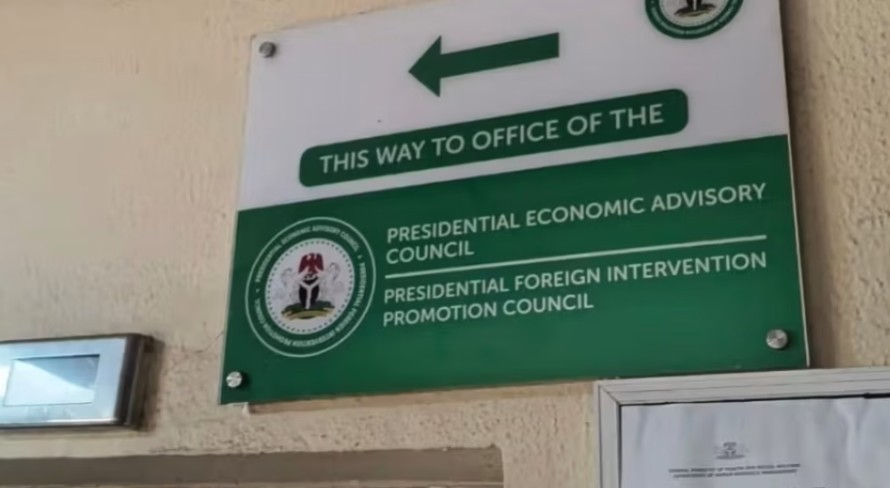
No official has been named as facing sanction. No resignation has been tendered. The damage, meanwhile, was not abstract: a fictitious council secured office space at the Federal Secretariat, opened foreign currency accounts at the Central Bank, sought a ₦27.4 billion grant, and was written into the 2026 Appropriation Act with a ₦1.3 billion allocation, all before anyone in government moved to authenticate its founding documents.
Accountability, properly understood, usually carries three components: acknowledgement of fault, a credible account of how it happened, and consequences proportionate to the harm.
Walson-Jack has offered the first two. The third remains conspicuously absent, not just from her testimony but from the broader government response so far.
The Systemic Question Behind The Personal One
There is also a harder question sitting behind Walson-Jack’s individual admission: how many other approvals move through Nigeria’s civil service on the same basis: documents accepted without independent legal verification, simply because they arrive dressed in the right letterhead?
If a forged State House letter and a fake establishment Act could clear multiple layers of bureaucracy, from the HoS office to the Treasury to the Central Bank, without triggering scrutiny, the PFIPC affair may be less an isolated scandal than a stress test that Nigeria’s institutions failed.
Reviewing “processes to make them more fraud-proof,” as Walson-Jack has promised, is a necessary step. But promises of future reform do not, on their own, answer for the specific institutional failures already documented under oath before lawmakers.
Where This Leaves Accountability
Taking responsibility is the beginning of accountability, not its conclusion.
For the public, and for the National Assembly still probing this matter, the test going forward should be whether “we take responsibility” translates into named consequences, structural fixes that are actually implemented, and clarity on why a forged letter from the seat of power was able to move so far through the system unquestioned.
FURTHER READING
Until then, responsibility remains a statement of intent rather than a settled account.
Philip Ibitoye is a Special Correspondent with EKO HOT BLOG. Click here to find daily analysis and critical insight on trending issues in Lagos and other parts of Nigeria.
Click to watch the video of the week below: