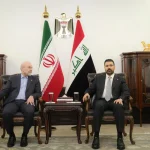
- Iranian Foreign Minister Abbas Araghchi has cautioned the UN Security Council that any “provocative action” regarding the Strait of Hormuz will only complicate the ongoing global energy crisis.
- A scheduled Security Council vote on a draft resolution, backed by the U.S. and Bahrain to authorize “defensive force” to protect shipping was abruptly postponed on Friday, with no new date set.
- The Strait of Hormuz has remained virtually closed since U.S. and Israeli strikes on Iran began on February 28, 2026, creating a blockade that has severely impacted global energy flows.
The geopolitical standoff in the Middle East reached a fever pitch Friday morning as Iran issued a direct warning to the United Nations Security Council.
Eko Hot Blog reports that foreign Minister Abbas Araghchi made it clear that any attempt by “aggressors and their supporters” to mandate a military force for the Strait of Hormuz would be viewed as a provocation that could escalate the conflict further.
EDITOR’S PICKS
- Judge Frees 37 Inmates Over Prolonged Detention in Akwa Ibom
- Trump Threatens Iran Over Energy Attacks
- Tinubu Excludes Kemi Badenoch from UK State Visit Itinerary
The tensions center on a draft resolution brought forward by Bahrain.
The proposal sought to authorize an international force to use defensive measures to reopen the shipping lane, which is critical for the transit of a significant portion of the world’s oil supply.
While the 15-member body was set to vote on the resolution Friday, disagreements between global powers led to its postponement.
The draft was heavily backed by the United States and the Gulf nations, who are bearing the brunt of the economic fallout from the Hormuz blockade.
However, the resolution faced significant pushback from Russia, China, and France.
These member states had previously raised objections to earlier drafts, expressing concern that authorizing the use of force could lead to a broader, uncontrollable regional war. The failure to reach a consensus has left the crucial waterway in a state of suspended animation.
The Strait of Hormuz has been all but shut down for over a month, following the escalation of strikes between the U.S., Israel, and Iran.
The virtual blockade has sent shockwaves through global energy markets, with oil prices remaining volatile and shipping companies scrambling for alternative routes.
For countries like Nigeria, which rely heavily on global energy trade, the outcome of these UN deliberations is critical.
The continued closure of the Strait of Hormuz not only impacts fuel prices but also shifts the entire landscape of international maritime security.
As the world waits for a new voting date, the standoff in the Gulf continues to threaten the stability of the global economy.