- Lagarde said the challenge facing monetary institutions today is no longer simply about guaranteeing independence
- Lagarde cited evidence showing that countries with weaker central bank independence often experience higher inflation levels
- She also warned that repeated economic shocks and declining public trust in institutions could weaken the credibility
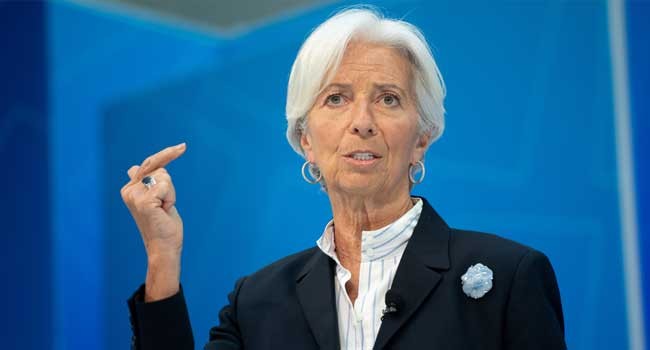
President of the European Central Bank and former Managing Director of the International Monetary Fund, Christine Lagarde, has stressed the need for monetary institutions around the world to preserve their independence amid growing political and economic pressures.
Eko Hot Blog reports that Lagarde made the remarks on Thursday while addressing a conference in Phnom Penh, Cambodia, attended by French-speaking central bankers from regions including West Africa and the Middle East.
EDITOR’S PICK
- Gov. Alex Otti Says Slashed State Debt by 60%, Completes 414 Roads In Few Years
- Nwoko Rejects APC Delta North Primary Result, Claims Victory Over Okowa
- Lagos Expands Infrastructure at Agbowa Timberville Project in Epe
Her comments come amid increasing global concerns over interference in central bank operations, particularly following pressure mounted by United States President Donald Trump on the Federal Reserve over interest rate policies.
Trump had repeatedly criticised former Federal Reserve Chairman Jerome Powell and previously pushed for lower interest rates before a criminal investigation against Powell was eventually dropped.
In Europe, concerns have also emerged over what officials describe as a gradual weakening of central bank autonomy.
Earlier this month, European Central Bank board member Isabel Schnabel warned that rising government debt levels could place pressure on central banks to maintain low interest rates despite economic realities.
Speaking at the conference, Lagarde said the challenge facing monetary institutions today is no longer simply about guaranteeing independence, but about protecting it when tested by political and economic pressures.
She noted that many central banks in emerging and developing economies have long operated under difficult conditions and possess valuable experience that developed nations can learn from.
According to her, the economic crises of the 1970s, including oil shocks and stagflation, demonstrated the importance of independent monetary institutions in controlling inflation and maintaining economic stability.
Lagarde cited evidence showing that countries with weaker central bank independence often experience higher inflation levels.
She said monetary policy decisions should remain insulated from political cycles in order to serve the broader public interest effectively.
The ECB president added that central banks must maintain enough closeness to governments to function effectively while retaining sufficient independence to resist short-term political pressures.
She also warned that repeated economic shocks and declining public trust in institutions could weaken the credibility and authority of central banks globally.
According to Lagarde, credibility becomes most important during periods when monetary policy decisions are politically sensitive and economically difficult.