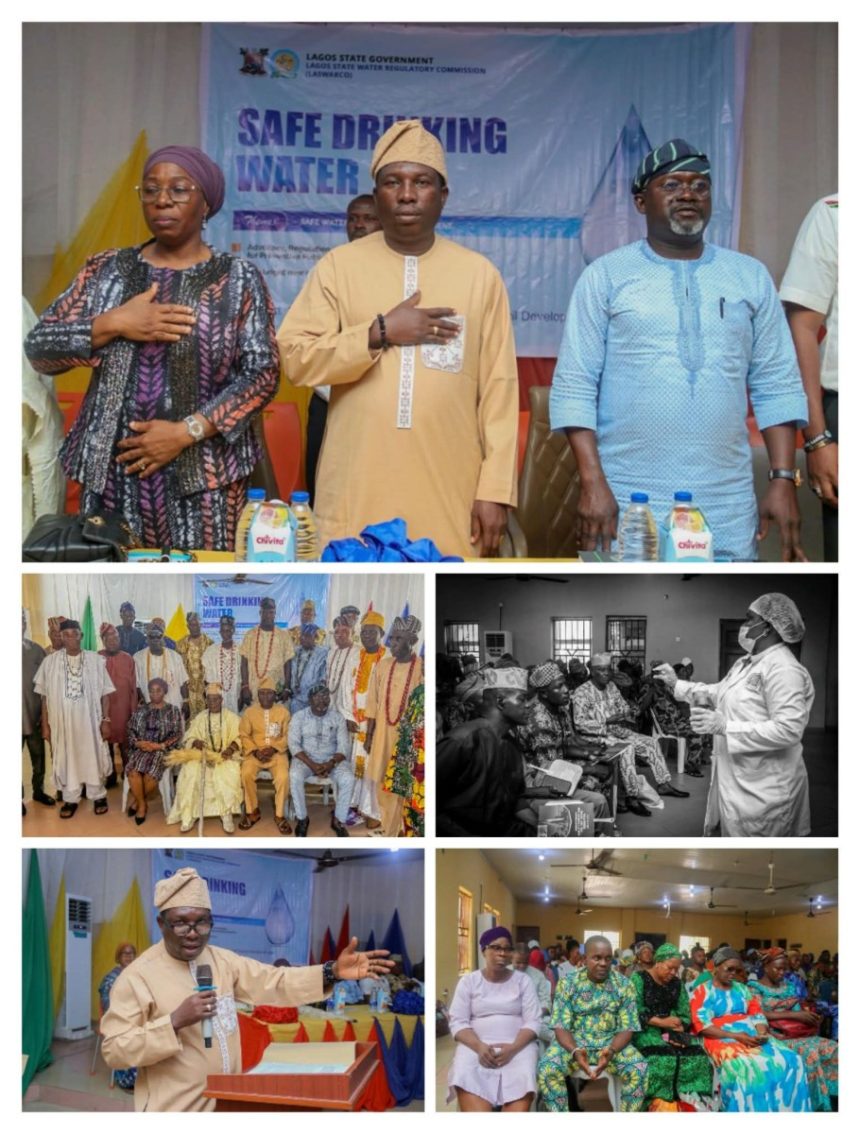
- LASWARCO and Lekki LCDA intensify awareness on safe drinking water
- Stakeholders educated on water, sanitation, and hygiene for public health
- Collaboration strengthened to improve access to potable water
The Lagos State Water Regulatory Commission (LASWARCO), in collaboration with Lekki Local Council Development Area (LCDA), has organised an extensive public awareness programme aimed at educating residents on the importance of safe drinking water within the council area.
EDITOR’S PICK
- Global Rankings: UI Retains Nigeria’s No. 1 University Position
- FG Restates Youth-Focused Education Agenda at 2026 International Day of Education
- Lagos Lawmaker Osafile Dumps Labour Party, Joins ADC
Eko Hot Blog reports that the programme focused on promoting proper water, sanitation, and hygiene practices as critical measures for protecting public health and sustaining a clean and healthy environment.
Participants were educated on the dangers associated with unsafe water consumption, including waterborne diseases, and the need for responsible water handling and sanitation at both household and community levels.
The event attracted a wide range of stakeholders, including government officials, traditional rulers, community leaders, water service providers, school administrators, health officers, and residents of Lekki LCDA.
Their participation underscored the collective responsibility required to ensure access to safe and potable water for all.
During the programme, LASWARCO officials emphasised the role of regulation and compliance in maintaining water quality standards, while also encouraging community members to support regulatory efforts by reporting unsafe practices and embracing approved water safety measures.
The initiative also served as a platform to strengthen collaboration between regulatory authorities and local communities, with discussions centred on sustainable strategies for improving access to clean drinking water across Lekki LCDA.
Participants were encouraged to work closely with government agencies to address water challenges and promote long-term solutions.
The organisers noted that sustained public education and stakeholder engagement remain vital to achieving universal access to safe water, adding that similar programmes will continue to be deployed across the state to enhance public awareness and community participation.