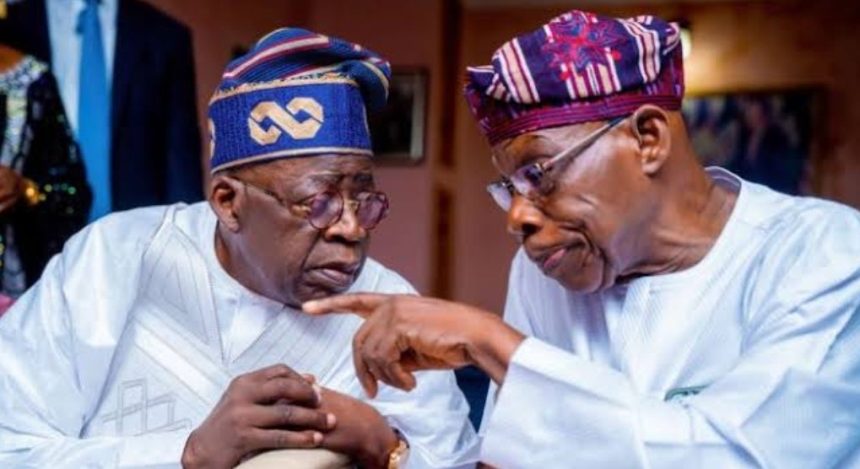
Twenty-three years after President Olusegun Obasanjo deployed state governors as his political army to secure a landslide re-election victory in 2003, history appears to be repeating itself.
President Bola Tinubu has now assembled an even more formidable coalition of governors ahead of the 2027 presidential election, drawing comparisons with the past.
EDITOR’S PICKS
EKO HOT BLOG looks at the history of Obasanjo’s playbook, comparing and contrasting it to Tinubu’s present strategy.
Obasanjo’s 2002 Masterclass in Political Engineering
In 2002, Obasanjo faced a challenging re-election landscape. While his Peoples Democratic Party (PDP) controlled 21 of Nigeria’s 36 states after the 1999 elections, the opposition Alliance for Democracy (AD) held six states in the South-West, and the All People’s Party (APP) controlled nine Northern states. Obasanjo needed a strategy to expand his support beyond PDP strongholds.
His solution was both brilliant and controversial. First, he changed the electoral order through the 2001 Electoral Bill, moving the presidential election ahead of governorship polls. This created a bandwagon effect where a presidential victory would boost the party’s chances in subsequent state elections. Previously, elections had proceeded from local to state to national levels.
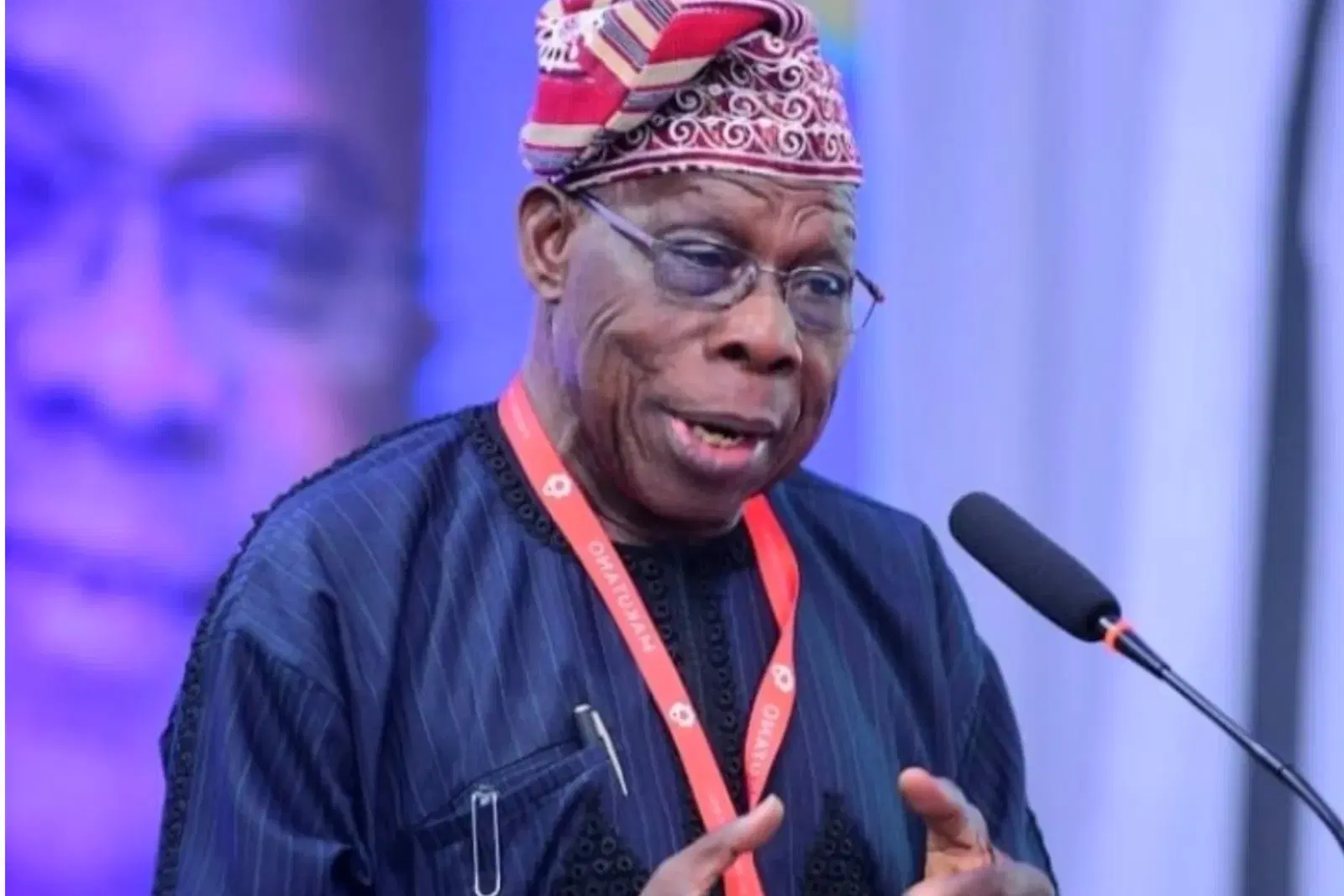
More significantly, Obasanjo held a strategic meeting with AD governors in the South-West in 2002. He appealed to ethnic solidarity, claiming that Northerners mocked him for not winning his own ward in 1999. He promised the governors that if they supported his presidential bid, he would back their governorship re-elections and provide financial support. Crucially, he assured them he had no interest in the PDP winning Southwest governorships.
Five of the six AD governors accepted this deal. Only Lagos State Governor Bola Tinubu refused. The result? Obasanjo secured support from 21 PDP governors plus five AD governors, giving him 26 out of 36 governors backing his re-election.
Those five South-West governors who trusted Obasanjo all lost their re-election bids as the president deployed federal police power and allegedly rigged them out in favour of PDP candidates. Meanwhile, Tinubu, who rejected the deal, retained Lagos State.
Obasanjo coasted to a landslide victory in April 2003, winning 26 states plus the Federal Capital Territory (FCT). The PDP captured 28 governorships, including five South-West states that had been under AD control. The party also secured 70 percent of National Assembly seats, cementing its dominance across all levels of government.
Tinubu’s 2025/26 Political Consolidation: History on Steroids
Fast forward to 2025 through 2026, and President Tinubu has assembled an even more impressive coalition than his predecessor. The All Progressives Congress (APC) now controls 28 governorships outright following a wave of defections from opposition parties. But Tinubu’s reach extends far beyond formal party membership.
Anambra State Governor, Charles Soludo, of the All Progressives Grand Alliance (APGA) has publicly endorsed Tinubu for 2027, declaring the president his friend of 22 years and praising his economic reforms. Osun State Governor, Ademola Adeleke, who defected to Accord Party after a proposed move to APC collapsed, has also openly endorsed the president for re-election. Kano State Governor, Abba Yusuf, of the New Nigeria People’s Party (NNPP) is reportedly in advanced negotiations to defect to the APC, with only disagreements over automatic ticket guarantees delaying the announcement.
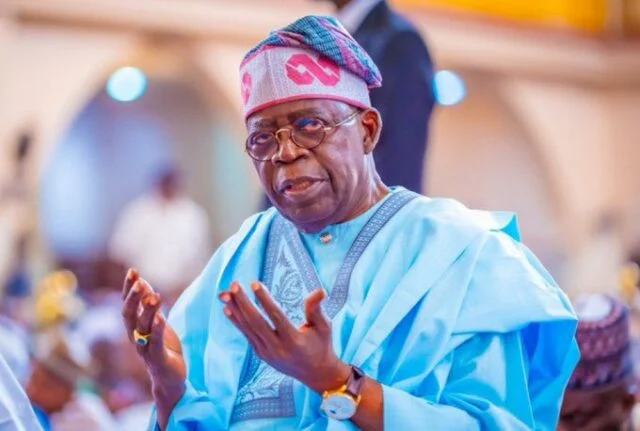
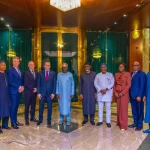
This leaves only five governors, for now, not publicly in support of Tinubu’s re-election: the four remaining PDP governors — Ahmadu Fintiri (Adamawa), Bala Mohammed (Bauchi), Seyi Makinde (Oyo), and Dauda Lawal (Zamfara) — plus Abia State Governor, Alex Otti, of the Labour Party. Even here, cracks are appearing. Makinde’s visit to Aso Rock on Thursday has sparked speculation about his intentions, though he insists he will remain in the PDP.
The mathematics are striking: Tinubu currently enjoys support from 31 out of 36 governors, compared to Obasanjo’s 26 in 2002. This represents 86 percent of all state governors, an unprecedented level of political consolidation in Nigeria’s Fourth Republic.
What This Means for 2027
The parallels between 2002 and 2025/26 show that the playbook for securing presidential re-election in Nigeria has remained remarkably consistent. Both presidents used federal power and strategic political deals to build broad coalitions at the state level.
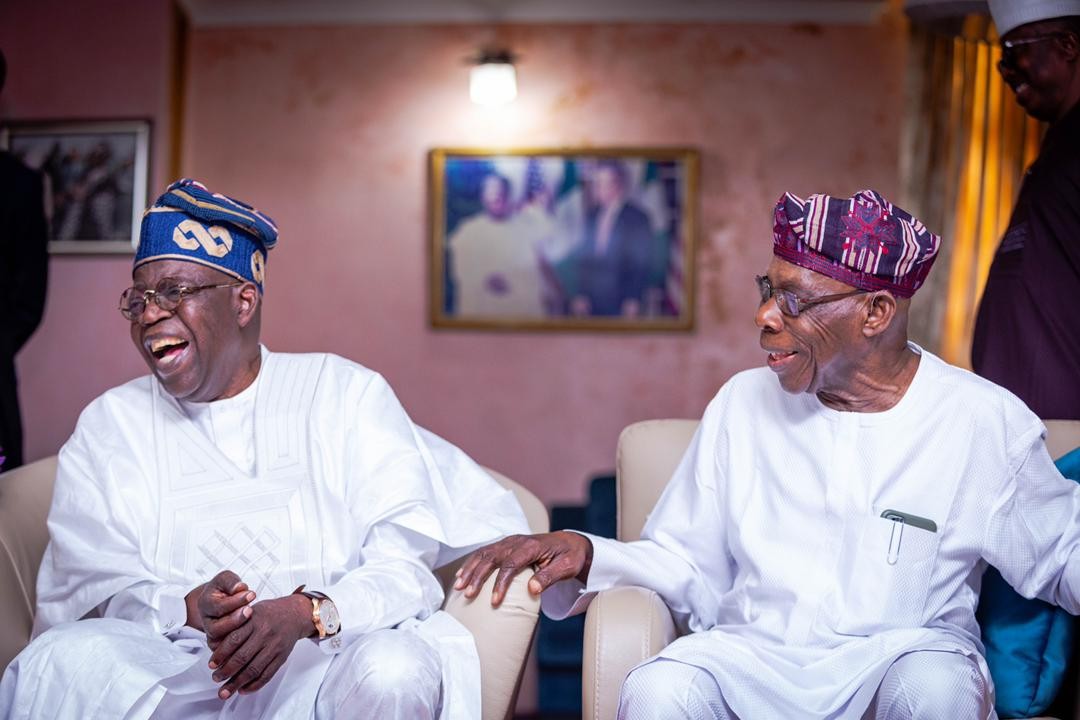
Tinubu’s coalition is notably more comprehensive than Obasanjo’s. Where Obasanjo had to convince opposition governors through promises and negotiations, Tinubu has either brought them directly into the APC or secured their endorsement while they remain in opposition parties.
FURTHER READING
If the 2003 precedent holds, Tinubu appears positioned for a significant electoral victory in 2027 bar any significant changes in the next year. Obasanjo’s 26 governors delivered him 26 states; Tinubu’s 31 governors could potentially deliver an even more decisive result. This represents 86 percent of all state governors backing a sitting president seeking re-election.
Philip Ibitoye is a Special Correspondent with EKO HOT BLOG. Click here to find daily analysis and critical insight on trending issues in Lagos and other parts of Nigeria.
Click here to watch the video of the week below: