- Ukraine says AI-powered combat robots remain central to its military strategy despite the dismissal of Defence Minister Mykhailo Fedorov.
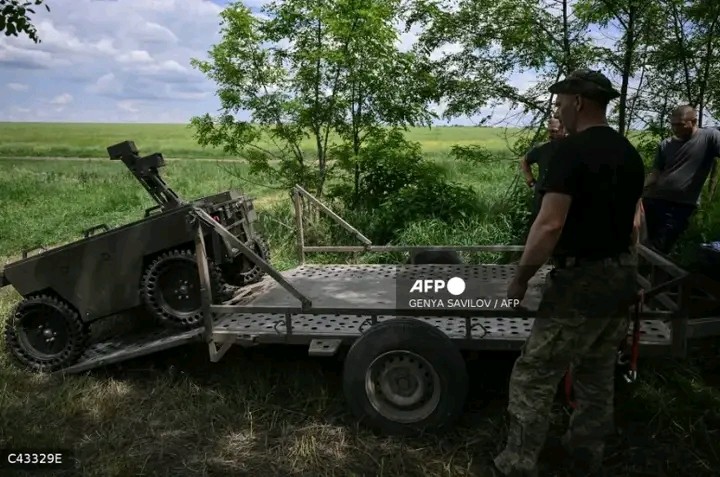
- Engineers are testing autonomous ground robots equipped with heavy weapons to reduce risks to frontline soldiers.
- Military commanders insist innovation is being driven by engineers and troops, not political leadership.
Ukraine is pressing ahead with the development of artificial intelligence-powered combat robots despite the recent dismissal of former Defence Minister Mykhailo Fedorov, whose reforms helped accelerate the country’s military technology sector.
Eko Hot Blog reports that the ongoing war with Russia has transformed Ukraine into one of the world’s leading developers of military drone technology, with engineers and private companies rapidly designing autonomous systems for the battlefield.
EDITOR’S PICK
- Tinubu Approves Army Expansion, Recruitment of 28,000 Personnel
- Aregbesola Claims Record as First Nigerian Governor to Serve Eight Years Without Owning a House
- Ikosi-Ejinrin LCDA Commissions Fully Equipped NSCDC Divisional Headquarters, Donates Patrol Vehicle and Motorcycle to Boost Security
One of those innovators is Eduard Trotsenko, founder and chief executive of robot manufacturer Temerland. Speaking to AFP from his workshop, Trotsenko said robots remain essential to protecting soldiers’ lives.
“In order to save human lives, to save soldiers, there must be robots,” he said.
Trotsenko’s company initially produced electric vehicle charging stations before Russia’s invasion forced a shift toward military technology.
His latest projects include autonomous ground robots designed to evacuate wounded soldiers, transport supplies and eventually engage enemy forces.
Among the systems under development are combat robots fitted with rocket-propelled grenade launchers and heavy machine guns, guided by onboard artificial intelligence.
According to Trotsenko, some prototypes are already undergoing field testing with Ukrainian brigades while awaiting wider approval from the military’s General Staff.
Beyond combat vehicles, he is also exploring futuristic concepts such as robotic dogs for battlefield operations and mechanical birds capable of landing on high-voltage power lines to recharge themselves.
Fedorov, who was widely credited with modernising Ukraine’s defence technology ecosystem, played a key role in creating the Defence AI Center A1. The initiative aimed to integrate artificial intelligence into military operations while allowing rapid adaptation based on frontline feedback.
He also encouraged private companies to compete for defence contracts, believing innovation could move faster outside traditional government structures.
His dismissal last month sparked concerns about whether Ukraine’s technological momentum would slow. However, industry leaders and military personnel insist the innovation drive has become too deeply rooted to reverse.
A military commander identified only by the call sign “Jason” said ground drones have become indispensable in reducing casualties.
“You can afford to lose a drone, but not a person. The probability of human losses there is reduced,” he said.
Jason added that Ukraine’s technology boom emerged from engineers, programmers and soldiers working together after Russia’s invasion, rather than from government directives alone.
He acknowledged that the biggest challenge now is finding enough skilled personnel to support the growing use of autonomous systems.
Despite the political changes within the defence establishment, developers like Trotsenko believe Ukraine’s future battlefield will increasingly rely on artificial intelligence, remote-controlled machines and autonomous combat systems.
He even envisions future wars being fought by humanoid robots controlled remotely by operators located far from the battlefield, allowing wounded soldiers and military personnel to continue serving from safer locations.
FURTHER READING