Nigeria and Morocco may be a step closer to locking in one of Africa’s most ambitious infrastructure projects.
Amina Benkhadra, head of Morocco’s national office of hydrocarbons and mines (ONHYM), disclosed this week that an intergovernmental agreement (IGA) on the $25 billion Nigeria-Morocco gas pipeline will be signed before the end of the year.
EDITOR’S PICKS
Speaking in a report by Reuters, Benkhadra said the agreement would be followed by the establishment of a pipeline authority in Nigeria, comprising ministerial representatives from 13 participating countries, to oversee political and regulatory coordination.
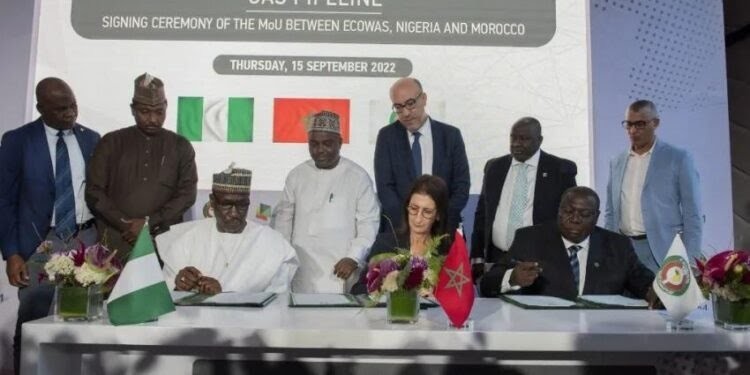
The announcement marks a significant escalation in the timeline of a project that has spent years in the planning stages. It comes nearly four years after Nigerian and Moroccan officials signed a Memorandum of Understanding (MoU) for the pipeline on September 15, 2022.
A Project Built to Last
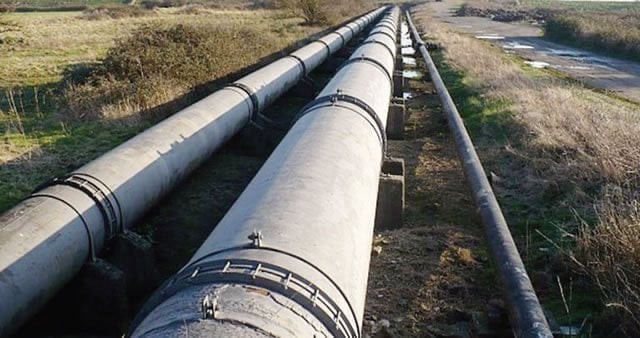
The African Atlantic Gas Pipeline (AAGP), as the project is formally known, is a 6,900-kilometre hybrid offshore-onshore route designed to carry up to 30 billion cubic metres of gas annually.
Its routing is ambitious by any standard: starting from Nigeria’s gas fields, it passes through Ghana, Cote d’Ivoire, and up through Mauritania and Senegal before reaching Morocco, which would use 15 billion cubic metres locally and channel the rest toward European markets.
Feasibility studies and front-end engineering design have been completed, and the project carries the backing of the Economic Community of West African States (ECOWAS). ONHYM and the Nigerian National Petroleum Company (NNPC) are expected to jointly establish a project company in Morocco to lead execution, financing, and construction.
Importantly, Benkhadra indicated that the pipeline is not designed as a single all-or-nothing bet. Each segment is structured as a standalone system, allowing early value to be realised before the entire route is complete. First gas from the initial phases is targeted for 2031.
What Nigeria Stands to Gain
For Nigeria, the stakes are considerable and not simply because of the revenue potential from monetising its vast gas reserves, which remain one of the largest on the continent.
The pipeline offers Nigeria a structural opportunity to transition from being a country that routinely flares gas to one that exports it at scale, and in doing so, anchor itself as the supply backbone of a transcontinental energy corridor.
There is also an industrial dimension. Benkhadra noted that the pipeline would encourage electricity generation across West Africa and facilitate mining and industrial development along the route.
For Nigeria, which has struggled with chronic power deficits, even the domestic and regional gas supply implications of the project carry real economic weight, particularly if gas can be channelled more reliably into power generation before it reaches Europe.
The geopolitical gains are equally significant. Nigeria’s participation in the AAGP, alongside its advanced discussions on the separate Trans-Sahara Gas Pipeline — a 4,128-kilometre route through Niger and Algeria also targeting European markets — positions the country as the fulcrum of Africa’s gas export strategy at a moment when Europe is actively seeking alternatives to Russian supply. That is not a position Nigeria should take lightly.
Hurdles Ahead
None of this comes without risk. No final funding commitments have been secured for the AAGP, and while the project is said to be attracting strong investor interest, mobilising a mix of equity and debt for a $25 billion infrastructure project crossing 13 countries is a formidable undertaking.
The intergovernmental agreement, once signed, will need to hold across governments with differing political cycles, security environments, and regulatory frameworks. The Niger corridor, relevant to the Trans-Sahara pipeline, is already complicated by that country’s post-coup political instability.
FURTHER READING
Still, the phased structure Benkhadra described — each segment developable independently — offers a pragmatic hedge against the all-too-familiar fate of African megaprojects that collapse under the weight of their own complexity. Remember the lacklustre electricity deal with Siemens? If Nigeria can hold its end, the rewards could redefine its place in global energy trade for decades.
Philip Ibitoye is a Special Correspondent with EKO HOT BLOG. Click here to find daily analysis and critical insight on trending issues in Lagos and other parts of Nigeria.
Click to watch the video of the week below: