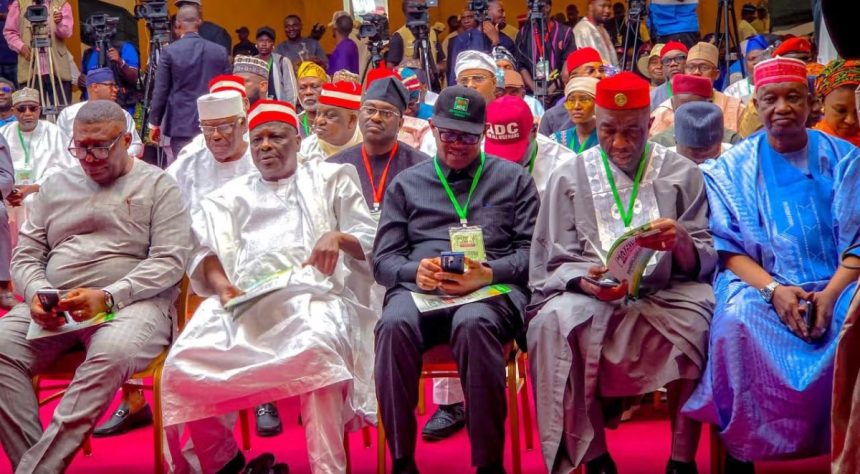
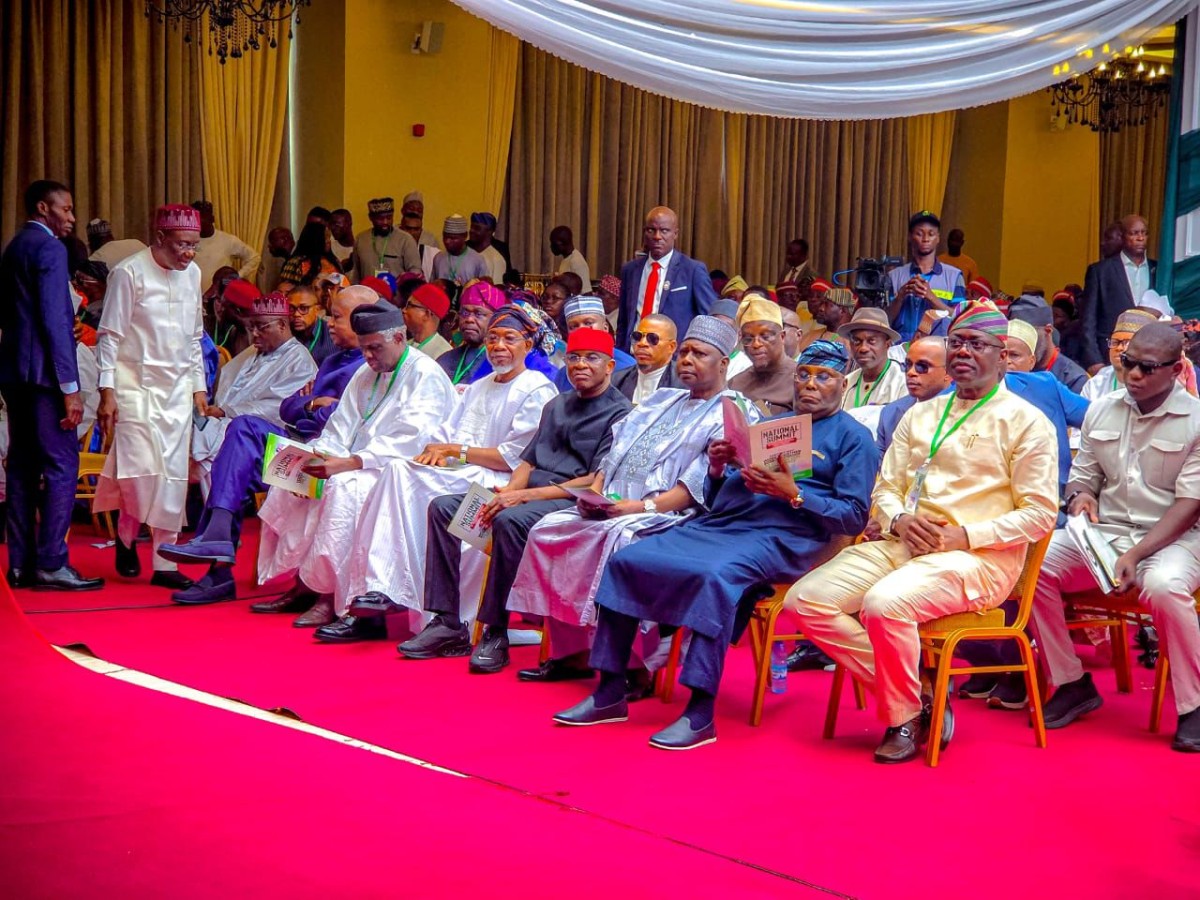
The opposition went to Ibadan last Saturday with something to prove. For months, critics had dismissed their coalition-building efforts as noise without structure. The All Opposition Political Party Leaders summit, chaired by former President Olusegun Obasanjo and hosted by Oyo Governor Seyi Makinde, appeared to change that narrative, at least on the surface.
Former Vice-President Atiku Abubakar, ex-Anambra Governor Peter Obi, former Kano Governor Rabiu Kwankwaso, and former Rivers Governor Rotimi Amaechi were all in the room. By the end of the day, a communiqué — the Ibadan Declaration — announced a collective resolve to field a single presidential candidate against President Bola Tinubu and the APC in 2027. It was the kind of show of force the opposition had long struggled to stage.
EDITOR’S PICKS
But a closer look at what happened — and what did not — tells a different story.
The Question Nobody Answered
The Ibadan summit did not resolve zoning. That single omission may prove to be its fatal flaw.
Zoning — the practice of rotating the presidency between Nigeria’s north and south — sits at the centre of every serious opposition conversation. Southern stakeholders argue that since Tinubu, a southerner, currently holds the presidency, 2027 should by convention produce another southern candidate. That logic directly challenges Atiku’s presidential ambitions.
Obi, who ran on the Labour Party ticket in 2023, has been the most consistent voice on this. As far back as December 2025, he publicly questioned the ADC-aligned coalition’s viability on the same grounds — arguing that without settling zoning and the distribution of key offices, any talk of unity was premature. His position has not shifted.
The summit’s communiqué, however, said nothing concrete about where the single candidate should come from. Insiders say that silence was not accidental — it was a political compromise designed to keep everyone in the tent without resolving the underlying tension.
“The summit ended politically as it was designed to,” one insider said. “They did not achieve what they wanted. It ended without addressing the basic issue.”
Reading Between the Lines
The clearest signal of trouble came not from anything said at the summit, but from what followed it.
Obi — typically active on social media after political engagements — has not commented publicly on the Ibadan Declaration. His verified X account has been quiet on the matter. What he did post were photos of himself playing tennis in Ibadan, a contrast that insiders say reflects his quiet displeasure with the outcome.
Amaechi, who is also nursing presidential ambitions under the ADC platform, has publicly demanded that the party’s ticket be zoned south. Yet even that pressure produced no commitment in the final communiqué.
Sources in Obi’s camp say the central question remains unanswered: will Atiku step aside for a southern candidate, or will Obi accept a supporting role? Neither side has blinked.
Meanwhile, Obi is said to be watching the Supreme Court’s pending judgment on the ADC leadership dispute while keeping communication channels open with Kwankwaso, signalling that his options remain open.
Unity in Name Only?
The Ibadan summit was a meaningful political moment. It demonstrated that opposition leaders can share a room, agree on a common enemy, and produce a joint statement. Those are not small things in Nigerian politics.
But a joint statement is not a coalition. And a coalition without a candidate selection framework — one that addresses zoning, equity, and regional trust — is little more than a press release.
FURTHER READING
Until the opposition answers the question of where power should reside, the Ibadan Declaration risks becoming a footnote: a promise of unity that buckled under the weight of ambition.
Philip Ibitoye is a Special Correspondent with EKO HOT BLOG. Click here to find daily analysis and critical insight on trending issues in Lagos and other parts of Nigeria.
Click to watch the video of the week below: